
Tools
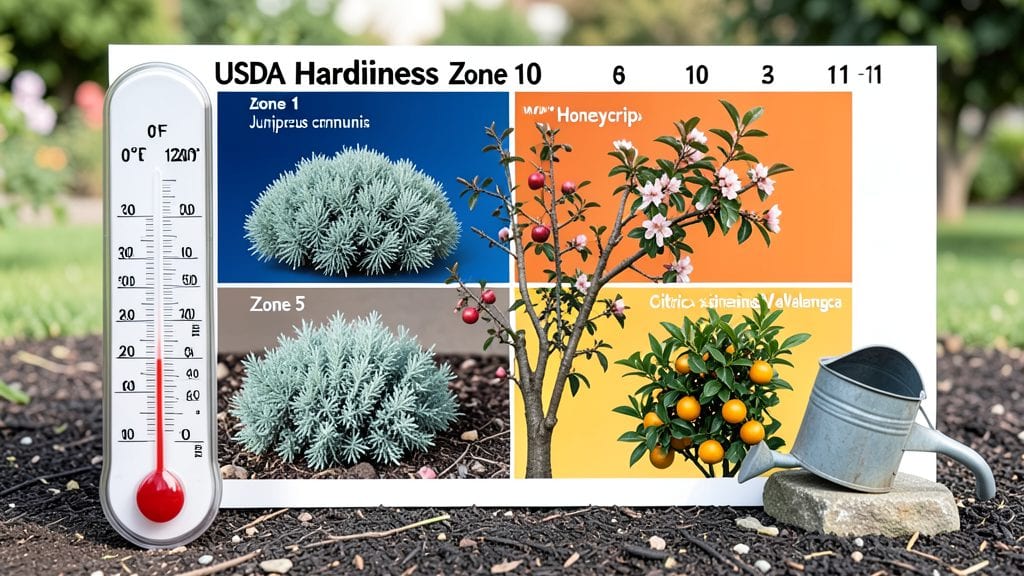
USA garden zones determine which plants thrive in your area by grouping regions with similar average minimum temperatures. Finding your hardiness zone helps select cold-resistant species and plan optimal planting times for seasonal success.
Understanding your USA garden zones means unlocking the secret to successful gardening in your specific climate.
These zones, developed by the USDA, divide the country into 13 distinct regions based on the coldest average winter temperatures. 🌱 For example, Zone 3 (like Minnesota) can handle plants that survive down to -40°F, while Zone 10 (like Southern California) supports tropical species that need warmth year-round.
Knowing your zone helps you avoid costly mistakes like planting frost-sensitive crops too early in colder areas.
Beyond just temperature, these zones account for regional growing seasons, which directly impact when to plant, fertilize, and harvest. Many gardeners also adjust for local microclimates—like a sunny south-facing wall or a shaded backyard—which can shift your effective zone by one or two levels.
The USDA even updated its zone map in 2012 to reflect climate change trends, making it more accurate than ever for modern gardeners.
💡 In This Article
- How USDA Plant Hardiness Zones Work
- Finding Your Zone and Adjusting for Microclimates
How USDA plant hardiness zones work
The USDA's plant hardiness zone system is built around the average annual minimum temperature—the coldest temperature a region typically experiences in a 20-year period.
These zones are mapped in 10°F increments, creating a grid where each zone represents a range (e.g., Zone 6a spans -10°F to -5°F).
This precision matters because plants have specific cold tolerance thresholds—just a few degrees difference can mean survival or death for sensitive species like citrus trees or roses.
The original 1960 map used 30-year climate data from weather stations, but the 2012 update incorporated 30 years of modern records (1976-2005) and added 13 zones (now 1-13) to account for warmer climates.
This reflects how global warming has shifted growing conditions—some areas now qualify for a higher zone than they did decades ago. For example, parts of New England that were Zone 5 in 1960 might now be Zone 6a due to milder winters.
Here's why this matters: Plants have dormancy mechanisms triggered by cold exposure, like bud scales forming or roots producing antifreeze proteins. If temperatures drop below a plant's tolerance, these defenses fail, leading to cell damage or death.
That's why a Zone 7 tomato plant (tolerating down to 0°F) won't survive a -15°F winter in Zone 5—its cells simply can't withstand the freeze.
The system also accounts for microclimates within zones, though the base map uses broad regional averages. For instance, a south-facing slope might be 5°F warmer than the surrounding area, creating a pocket where slightly tender plants can thrive.
This is why gardeners often adjust their zone by ±1 level based on local conditions like urban heat islands or lake effects.
What most people don't realize is how these zones interact with first and last frost dates. The USDA zones predict winter survival, but your local frost calendar determines planting windows.
For example, a Zone 8 gardener in Florida might plant tomatoes in February, while one in Zone 8 Oregon waits until May—same zone, completely different growing seasons.
The 2012 update also introduced letters (a/b) to further refine zones, splitting the 10°F range in half. This means the difference between Zone 7a (-5°F to 0°F) and 7b (0°F to 5°F) can determine whether your camellias survive winter.
The precision helps gardeners select varieties at the edge of their zone's tolerance.
Think of it like sizing shoes—just as a size 9 might be too tight or too loose, plants need the right "fit" for their temperature range. The zones provide that critical baseline for matching plants to your climate's harshest conditions. 🌡️