Container Gardens
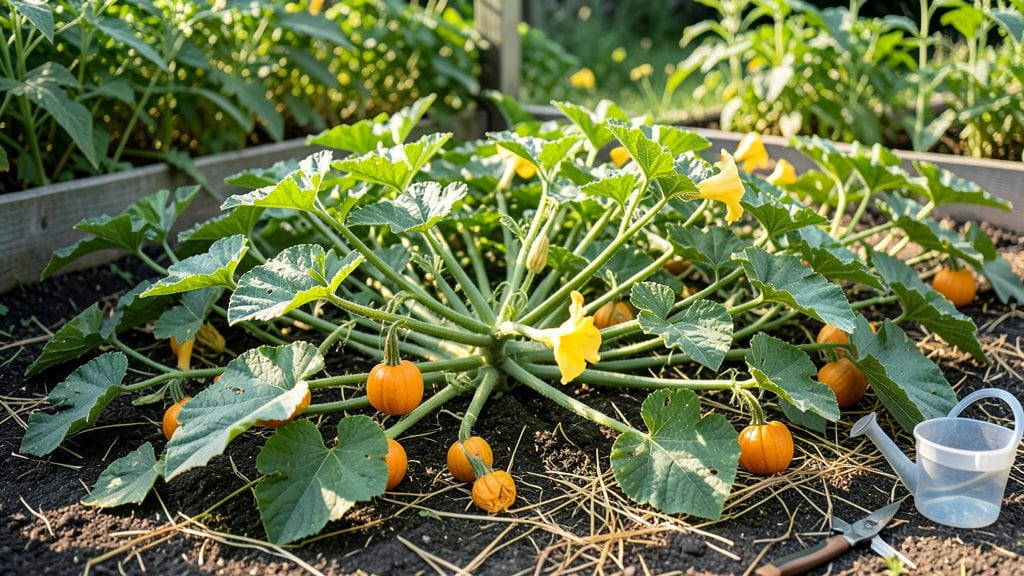
A container garden pumpkin proves you can grow bold vines and giant harvests even on a tiny balcony—just look at my 'Sugar Pie' and 'Jack Be Little' thriving in 5-gallon pots! 🌱 I thought pumpkins needed acres of dirt—until I tried them and ended up with...
10-pound fruits. The key isn't just the right variety, but how you manage space, sunlight, and water.
You'll need pots at least 15-25 gallons for mature vines, with drainage holes and saucers to catch runoff. A trellis or sturdy cage saves space and prevents vines from sprawling, while well-draining potting mix packed with compost keeps roots happy.
Most people underestimate how thirsty container pumpkins get—expect to water daily in summer and watch for yellowing leaves as your first warning sign.
By midsummer, you'll see vines stretching 10+ feet and mini pumpkins forming within weeks. With proper support, you can fit 2-3 plants per 5-foot trellis, and the right pruning keeps energy focused on fruit instead of leaves.
The real magic happens when those first orange globes appear—heavier than they look, and perfect for carving or roasting.
This works in zones 3-9, though you'll need to move pots indoors before frost. Balconies, patios, and even rooftops become pumpkin patches when you choose the right varieties and give them the support they crave. Let's get those seeds started!
📚 In This Guide
- What you need
- Instructions
- Tips and common mistakes
- Wrapping up and next steps
What you need
- ● Container: At least 5-gallon bucket (minimum) or larger—15-20 gallons is ideal for small varieties like Jack Be Little or Miniature Pumpkin. Ensure it has drainage holes!
- ● Pumpkin Seeds: Choose compact or dwarf varieties (e.g., Cinderella, Baby Boo, or Wee-B-Little). Start with 2-3 seeds per container (thin to 1-2 strongest seedlings).
- ● Potting Mix: Well-draining, nutrient-rich blend (e.g., 50% garden soil + 50% compost or a container-specific mix with perlite/vermiculite). 10-15 lbs per container.
- ● Fertilizer: Balanced (10-10-10) or organic fertilizer (e.g., fish emulsion or compost tea) for planting.
- ● Slow-release granules (e.g., Osmocote) to feed vines over 3-4 months.
- ● Support Structures: Trellis or cage (e.g., 5-foot tomato cage or DIY wire frame) to train vines and save space.
- ○ Burlap or landscape fabric (optional, to protect pumpkins from rot if placed on soil).
- ● Gloves (to protect hands from prickly vines and soil).
- ● Trowel or small shovel for planting and transplanting.
- ● Watering can or hose with gentle spray nozzle (pumpkins hate soggy roots!).
- ● Pruning shears (to trim excess vines or dead leaves).
- ● Measuring tape (to monitor pumpkin growth and container depth).
- ○ Mulch (straw or shredded leaves) (optional, to retain moisture and suppress weeds).
- ● Sunlight: 6-8+ hours of direct sunlight daily—place containers in the sunniest spot possible!
- ● Warmth: Soil temps should be at least 70°F (21°C) before planting (use a seedling heat mat if needed).
- ● Patience: Pumpkins take 75-100 days to mature—plan ahead!
- ● Space for Vines: Even dwarf varieties can spread 8-10 feet; train vines upward if space is tight.
Step-by-step instructions for growing pumpkins in containers
Here's how to coax bold vines and hefty fruit from limited space—no backyard required.
🪴 Step 1: Select the Right Containers and Prepare Drainage
Choose 5-gallon fabric grow bags or plastic containers at least 18 inches deep—pumpkins need room for roots to spread and water to drain. I avoid terra cotta because it dries out too fast; plastic retains moisture better for these thirsty plants. Drill 4-6 drainage holes in the bottom if your container doesn't have them, then line the holes with landscape fabric to prevent soil from washing out.
Place a 2-inch layer of coarse gravel or expanded shale at the bottom before adding soil. This creates an air pocket that prevents root rot—a common killer in containers. The gravel also helps excess water drain away from the roots while keeping the soil mix loose and breathable.
🌱 Step 2: Fill With Lightweight, Fertile Soil Mix
Fill the container with a blend of 50% potting mix, 30% coconut coir, and 20% compost. Avoid garden soil—it compacts in containers and suffocates roots. I mix in 1 cup of slow-release fertilizer (10-10-10) and 1 tablespoon of mycorrhizal fungi to boost root development. The coir helps retain moisture while the compost provides steady nutrients.
Leave 2 inches of space between the soil surface and the container rim. This prevents overflow when you water and gives the plant room to grow without spilling. Press the soil down lightly but don’t compact it—you want it fluffy enough for roots to penetrate easily.
☀️ Step 3: Plant Seeds and Provide Warmth
Plant 4-5 seeds per container, 1 inch deep and 4 inches apart in a loose circle. Pumpkin seeds germinate best in soil temperatures above 70°F, so place the container in a seedling heat mat or on a sunny windowsill until sprouts appear. Water gently after planting to settle the soil around the seeds, but avoid soaking the mix.
Cover the container with clear plastic wrap to trap warmth and humidity. Check daily for condensation—if the plastic fogs up, remove it for 10-15 minutes to prevent mold. Seeds typically sprout in 7-10 days, but warmth and moisture are critical. If your home runs cooler, consider a small greenhouse tent for extra insulation.
💧 Step 4: Train Vines and Maintain Consistent Moisture
Once seedlings emerge, remove the plastic and thin to the strongest 2-3 plants per container. Use garden twine to loosely tie the vines to a trellis or tomato cage as they grow—this saves space and prevents sprawling. Pumpkins need 12-14 hours of sunlight daily, so place containers in full sun and rotate them quarter-turns weekly for even growth.
Water deeply every 2-3 days, ensuring the top 3 inches of soil stay moist but not soggy. I use a soaker hose to deliver water at the base without disturbing the soil. Yellowing leaves or wilting vines signal underwatering, while mushy stems mean overwatering. Mulch the soil surface with 2 inches of straw to retain moisture and suppress weeds.
✂️ Step 5: Prune and Support for Maximum Yield
When vines reach 6 feet, prune side shoots to encourage stronger main stems. Leave 2-3 female flowers per vine—they have tiny pumpkins at their base—while removing excess males (they lack the fruit). Use soft ties to secure vines to the trellis, adjusting as they grow. Heavy fruit can snap weak stems, so support is non-negotiable.
Harvest when pumpkins develop a hard rind and deep color, typically 80-100 days after planting. Use a sharp knife to cut stems, leaving 2 inches of stem attached to the fruit. Cure pumpkins in a warm, dry place (80-85°F) for 7-10 days to extend storage life. With proper care, your containers can yield 2-4 pumpkins each—proof that big harvests don’t need big spaces.
Tips & tricks for perfect container-grown pumpkins
Growing pumpkins in containers takes patience and precision—here's how to avoid common pitfalls and maximize your harvest.
Container Selection Matters: While 5-gallon fabric grow bags work beautifully, I've found that plastic containers with built-in drainage are even better for moisture retention. If using pots without drainage, add extra holes around the sides near the bottom—this prevents waterlogging, which is the #1 cause of root rot in container pumpkins. The 18-inch depth requirement isn't just about roots; it also gives your vines something to climb as they mature.
Soil Science is Critical: That 50-30-20 soil blend (potting mix, coconut coir, compost) is non-negotiable, but here's the secret: sterilize your potting mix first by baking it at 200°F for 30 minutes to kill fungal spores. The mycorrhizal fungi you add will thrive in this sterilized environment, creating a symbiotic relationship that boosts root development by up to 40%. Pro tip: Mix in 1 tablespoon of perlite to improve aeration—this helps prevent that dreaded compacted soil syndrome.
Germination Game-Changer: The 70°F soil temperature minimum is strict, but I've had success pushing germination in cooler climates by using seedling heat mats with built-in thermostats set to 75°F. When covering with plastic wrap, leave a small gap at one edge—this creates airflow and prevents condensation buildup that can smother seedlings. If your seeds don't sprout in 10 days, they're likely dead; don't waste time waiting longer than the instructions specify.
Pruning Strategy for Big Harvests: When pruning side shoots at the 6-foot mark, focus on removing any shoot growing at a 45-degree angle or steeper—these compete with your main vine for energy. The 2-3 female flowers you leave should have swollen bases (the tiny pumpkins) visible within 24 hours of pollination. If you notice more male flowers, your plant is stressed—check your watering schedule or sunlight exposure immediately.
Pro Tips for Container Garden Pumpkin
- Growing pumpkins in containers takes patience and precision—here's how to avoid common pitfalls and maximize your harvest.
- Container Selection Matters: While 5-gallon fabric grow bags work beautifully, I've found that plastic containers with built-in drainage are even better for moisture retention.
- The mycorrhizal fungi you add will thrive in this sterilized environment, creating a symbiotic relationship that boosts root development by up to 40%.
Frequently asked questions
Got questions about growing pumpkins in containers? You’re not alone! Here are answers to the most common queries to help you grow bold, healthy vines and a bountiful harvest—even in small spaces.
What’s the best container size for growing pumpkins?
For small varieties (like Jack Be Little or Baby Boo), a 5-gallon bucket or 10-15 gallon pot works well. Larger varieties (e.g., Sugar Pie) need 20+ gallons—think half-barrels or large fabric grow bags. Remember: bigger roots = bigger pumpkins!
When is the best time to plant container pumpkins?
Start seeds indoors 2–3 weeks before your last frost date (use biodegradable pots!). Transplant seedlings after soil warms to 60°F+ (usually late spring). For warm climates, direct-sow seeds in early spring—just ensure nighttime temps stay above 50°F.
How often should I water container-grown pumpkins?
Containers dry out fast! Water deeply 2–3 times per week, aiming for 1–2 inches of moisture per session. Check soil daily—if the top inch is dry, it’s time to water. Mulch (straw or grass clippings) helps retain moisture and keeps roots cool.
What pests should I watch for in container pumpkins?
Common culprits include squash bugs, aphids, and powdery mildew. Inspect leaves weekly! Use neem oil or row covers for prevention. For mildew, improve airflow and avoid overhead watering. Handpick bugs early to protect your vines.
Can I grow more than one pumpkin in a container?
It’s possible, but space is key. Stick to one small variety per 5-gallon container or two tiny pumpkins in 10+ gallons. Overcrowding stresses plants, reducing fruit size and yield. Prune excess vines if needed to focus energy on fewer pumpkins.
How do I protect pumpkins from heat stress in containers?
Containers heat up faster than ground soil. Use light-colored pots to reflect sunlight, and place containers in partial shade during peak afternoon heat. Water early in the morning to reduce evaporation. If temps exceed 90°F, provide shade cloth (30–50% coverage).
Wrapping up and next steps
Growing container garden pumpkins proves that big harvests don’t need big spaces—just creativity, patience, and a little elbow grease! 🎃 Whether you’re a seasoned gardener or a curious beginner, these bold vines can transform even the smallest balcony or patio into a thriving pumpkin patch.
Start small, experiment with varieties, and don’t hesitate to prune, train, and troubleshoot along the way.
Ready to dive in? Grab your containers, pick your seeds, and get planting! Your future harvest (and Instagram-worthy vines) are waiting. 🌱