Picking
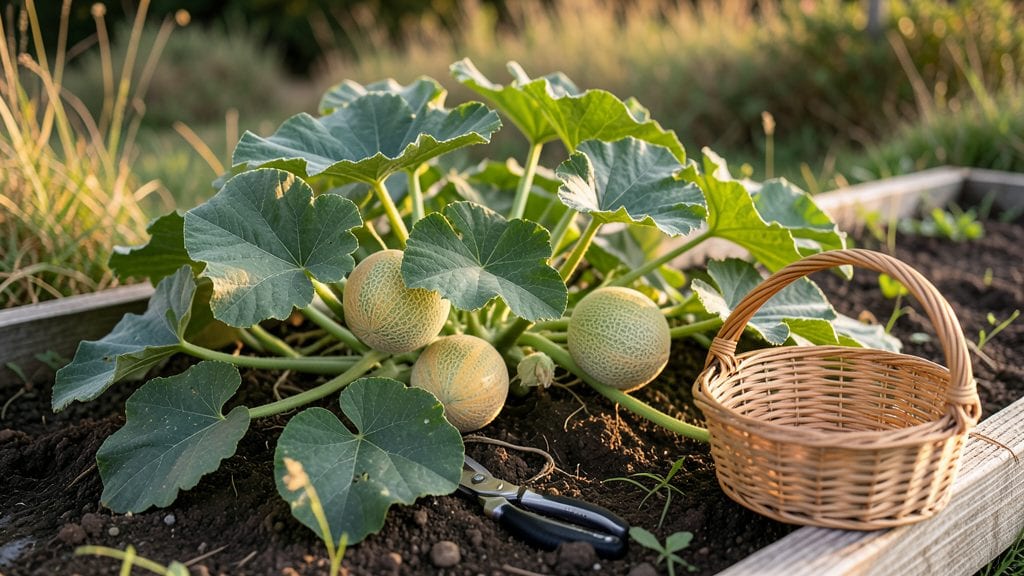
To pick cantaloupe from your garden at the perfect moment, watch for that creamy net pattern on the rind and a sweet scent that hits you like a summer breeze 🍈.
Picking cantaloupe at the wrong time means bitter flesh or wasted effort—yet many gardeners struggle to tell when these sweet melons are truly ready. Master these 5 foolproof ripeness cues to harvest your cantaloupe at peak perfection every time.
You’ve nurtured your plants through spring’s last frost and watched them thrive in USDA Zone 6a’s warmth, but the real test comes when it’s time to pluck them. A single misstep can turn your hard work into a meal of disappointment.
Here’s how to spot the exact moment your cantaloupe is ready—no guesswork, just science-backed signs that guarantee sweetness in every bite.


5 Visual and physical signs your cantaloupe is perfectly ripe
There's nothing worse than slicing into a cantaloupe only to discover it's still hard and bland—or worse, mushy and overripe. The good news? Cantaloupes give you clear visual and physical signals when they're ready to harvest.
I've learned the hard way that ignoring these cues means wasted effort, so let me share the 5 foolproof signs I now check every time before picking my cantaloupes.
These indicators work together like a symphony—when all five are present, you're guaranteed a sweet, flavorful melon at its peak. The secret lies in paying attention to details most gardeners overlook, like the stem's behavior or the rind's texture.
Trust me, your taste buds will thank you when you master these techniques.
- 🍈 1. The Stem Snaps Easily
Gently twist the stem near the fruit. If it snaps cleanly (not rips), that's your cue to harvest. This happens because the abscission layer forms naturally, making separation effortless. I test 3-4 fruits per plant this way to ensure consistency. - 🟡 2. Creamy-Yellow Rind with Net Pattern
Look for golden-yellow or tan coloring with a distinct net pattern (like a spiderweb). The blossom end (opposite the stem) should be creamy white. Avoid green-tinged rinds—they're not ready yet. - 👃 3. Sweet Aroma Near the Stem
Sniff the stem end—a powerful sweet fragrance (like honeydew or musk) means it's ripe. No scent? It's not ready. Pro tip: Check in late morning when aromas are strongest. - 🤏 4. Slight Softness When Pressed
Press your thumb near the blossom end. A ripe cantaloupe feels slightly soft (like a ripe avocado) but not mushy. If it's rock-hard, it needs more time. Overripe melons feel spongy—avoid those! - 🍃 5. Fruit Slips Easily from the Vine
Gently lift the melon—if it detaches without resistance, it's ready. This "slip" happens because the fruit stem separates naturally. Never pull or twist hard; you'll damage the vine.
I once picked cantaloupes based on size alone and ended up with bland, underripe fruit. After learning these signs, my harvests now taste rich, sweet, and perfectly balanced.
The key is checking all five cues—one alone isn't enough. For example, a melon might have a sweet smell but still be firm if it's not fully matured.
Regional differences matter too. In hotter climates (like Arizona or Texas), cantaloupes ripen faster and may show these signs 2-3 weeks earlier than in cooler areas. I adjust my harvesting schedule by monitoring local temperatures—if nights stay above 75°F (24°C), I check ripeness more frequently.
Don't forget to rotate your cantaloupes while they're ripening. I place a small board under each fruit to prevent ground rot and uneven coloring. This simple trick keeps the rind smooth and attractive while ensuring even ripening.
Overripe cantaloupes develop soggy spots and ferment quickly, so act fast once you spot these signs!
One common mistake I see is harvesting by color only. A cantaloupe can look golden but still taste bland if the aroma and texture aren't right.
Always combine visual checks with physical tests—like the stem snap and gentle pressure test—for accuracy. Your taste buds will thank you when you skip the guesswork.
For container-grown cantaloupes, these signs work too, but monitor them daily since they ripen faster in pots. I've had success with bush varieties like 'Tasty Jewel' that stay compact but still deliver sweet, flavorful fruit when harvested at the right time. The same ripeness rules apply—just check more frequently!
How to test cantaloupe ripeness without cutting it open
When you're eager to enjoy your homegrown cantaloupe, the last thing you want to do is cut into one just to check its ripeness. The good news is that you don't have to! With a few simple, non-destructive tests, you can determine if your cantaloupe is ready to pick.
These methods work for gardeners of all experience levels and ensure you get the sweetest, most flavorful melons possible.
First, let's address the most common question: Can you really tell if a cantaloupe is ripe without cutting it? The answer is a resounding yes! By focusing on three key areas—the stem, the scent, and the sound—you can confidently pick your cantaloupe at the perfect moment.
These tests are especially helpful for first-time growers who want to avoid the disappointment of bitter or underripe fruit.
Start with the stem test, which is one of the most reliable indicators. Gently grasp the stem near where it attaches to the cantaloupe and give it a slight twist. If the stem snaps easily and pulls away cleanly, your cantaloupe is likely ripe.
This happens because the fruit's sugars cause the stem to weaken naturally. If the stem resists or tears, the melon needs more time on the vine.
Next, use your nose to guide you. A ripe cantaloupe emits a sweet, musky aroma near the stem. If you're standing near the vine and can't smell anything, the fruit isn't ready yet.
Hold the cantaloupe close to your nose and take a deep sniff—you should detect a strong, pleasant fragrance. This scent is a clear sign that the sugars inside have fully developed.
Finally, try the thump test, a classic method that works surprisingly well. Hold the cantaloupe with one hand and give it a firm tap with the other. A ripe cantaloupe will sound hollow when thumped, similar to knocking on a wooden door.
If it sounds dull, it's not ready yet. This test works best when combined with the stem and scent tests for the most accurate results.
Remember, cantaloupes continue to ripen off the vine, but they won't get sweeter. If you're unsure, it's better to leave the melon on the vine for a few more days.
Overripe cantaloupes can develop a fermented smell and mushy texture, so timing is everything. With these non-destructive tests, you'll never have to guess again!