
Picking
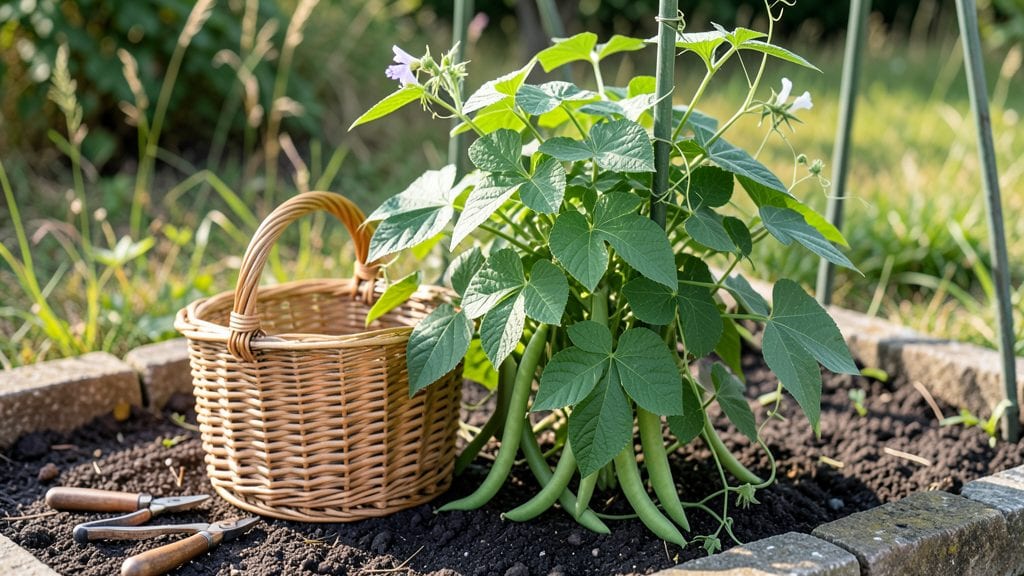
Picking beans from your garden at the right time ensures sweet, tender pods and keeps your 🌱 plants producing all season.
Too early, and you’re left with stringy, bitter beans—too late, and the pods turn tough or shrivel on the vine. The difference between a bland harvest and a flavor explosion comes down to a few simple checks: pod size, color, and that satisfying snap when you bend them.
Whether you’re growing pole beans, bush beans, or snap peas, this guide breaks down the exact visual cues to watch for—plus how often to harvest to keep your plants happy and productive.
You’ll learn how to avoid common mistakes, adjust for your climate, and even troubleshoot if your beans start tasting off. Ready to turn your garden into a bean bonanza?
How to determine when green beans are ready for harvest (by type and stage)
Knowing when to pick beans from your garden isn’t just about waiting for pods to appear—it’s about catching them at their peak flavor and texture.
Green beans, bush beans, and snap peas all have distinct maturity signals, and harvesting at the wrong time can mean the difference between a crisp, sweet pod and a woody, bland one. The key lies in understanding each type’s growth stages and visual cues.
For example, pole beans climb and produce pods along their vines, while bush beans grow compactly and yield all at once. Meanwhile, snap peas have a shorter window for harvest before they toughen up.
Most gardeners rely on a mix of pod size, color, and firmness to judge readiness, but timing also depends on your local climate and variety. In warmer regions, beans mature faster—sometimes in as few as 45 days—while cooler areas may take up to 70 days.
The days-to-maturity listed on seed packets is a great starting point, but environmental factors can shift that window by weeks. For instance, a late spring frost might delay flowering, pushing back your harvest timeline.
To avoid guesswork, I’ve broken down the exact visual and tactile clues for each bean type, plus a handy comparison to keep on hand while you’re harvesting.
Let’s start with the pod size, which is your first clue. For pole beans, aim for pods that are 4-6 inches long.
If they’re shorter, they’re likely still developing their sweetness. Bush beans, on the other hand, are ready when they reach 3-5 inches—any longer, and they’ll start to toughen. Snap peas are the smallest of the bunch, harvesting best at just 2-3 inches.
Pro tip: Use a ruler or measuring tape to check lengths if you’re unsure. This simple tool can save you from picking beans that are still underripe or already overripe.
Next, pay attention to the color of the pods. Bright, uniform green is your target for all three types, but subtle differences exist. Pole beans should have a vibrant, glossy hue, while bush beans often darken slightly to a deep green as they mature.
If you notice yellowing or brown spots, that’s a sign the pod is past its prime. Snap peas should remain a lively green with no dulling—once they start to pale, their sugar content drops, and they’ll taste bland.
In my garden, I’ve found that morning sunlight enhances the color, making it easier to spot ripe pods against the foliage.
Don’t skip the firmness test, which is the most reliable way to judge readiness. A ripe bean pod should snap cleanly when bent—think of it like a fresh carrot. If it bends without snapping or feels soft or mushy, it’s overripe.
For pole beans, run your thumb along the pod’s length; it should feel smooth and taut. Bush beans should have a slightly thicker wall but still be tender. Snap peas are the most delicate—press gently between your fingers, and they should give way slightly but not feel flimsy.
If you’re harvesting string beans (like Kentucky Wonder), the string along the seam should be tender, not tough or fibrous.
Now, let’s talk seeds, because what’s inside the pod tells you a lot about its readiness. In pole and bush beans, the seeds should be visible but not fully developed. If you can see them clearly but they’re still small and soft, that’s perfect.
However, if the seeds are large and hard, the pod has passed its prime. For snap peas, the seeds are almost invisible at the ideal harvest stage—just tiny specks. If you notice bulging seeds, it’s time to pick before the pod toughens.
I like to slice open a few pods to check the seeds, especially when I’m unsure about the timing. It’s a quick way to avoid wasting underripe or overripe beans.
One common mistake I see is harvesting based on calendar days alone. While seed packets provide a days-to-maturity range
5 Signs you’re picking beans too early (and how to fix it)
Harvesting beans too soon is a common mistake that turns sweet, crisp pods into bland, fibrous messes. When you pick green beans before they’re ready, you rob your plants of energy and flavor. The key is learning to recognize immature pods—those that haven’t reached peak sweetness or structural integrity.
Even experienced gardeners sometimes misjudge, especially in hot climates where beans mature faster or cool seasons where growth slows.
If your beans taste watery, look pale, or snap like wet paper, you’re likely harvesting too early. These signs aren’t just about flavor—they signal your plant’s reproductive cycle isn’t complete.
For example, pole beans and bush beans have different maturity timelines, and ignoring them can reduce your total yield by up to 30%. Let’s break down the red flags and how to adjust your harvesting schedule to avoid them.
- 1. Thin, Stringy Pods: Immature beans are under 4 inches long and feel hollow when squeezed. Fix: Wait 3-5 days for pods to thicken.
- 2. Pale Green Color: Ready beans are deep green with a slight waxy sheen. Pale pods lack chlorophyll and sweetness. Fix: Harvest in morning sunlight for vibrant color.
- 3. Soft or Mushy Texture: Overly tender pods bruise easily. Fix: Pick when they snap crisply like fresh asparagus.
- 4. Barely Visible Seeds: Seeds should be peanut-sized but not filling the pod. Fix: Monitor daily for seed development.
- 5. Hollow Sound: Tap a pod—ready beans sound solid. Hollow ones mean starch conversion hasn’t peaked. Fix: Use a wooden spoon to test acoustically.
Climate plays a huge role in bean maturity. In hot, dry summers, beans can go from flower to harvest in as few as 40 days, while cool, cloudy seasons may stretch that to 60 days.
If you’re in a short growing season (like Zone 5 or higher elevations), start harvesting earlier to avoid frost damage. For example, Blue Lake beans in July heat might need picking every 2 days, while Romano beans in June coolness can wait 3 days between harvests.
Another trick is to tag your plants with the variety name and planting date. Most bean seeds list days to maturity on the packet—use this as a baseline.
For instance, if your Kentucky Wonder pole beans have a 60-day maturity and you planted on May 15, start checking pods around July 14. But don’t rely solely on dates: always physically inspect pods for the signs above.
If you’ve already picked too early, don’t panic. Your plant will redirect energy to produce new flowers and pods within 7-10 days. To encourage recovery, water deeply and add a balanced fertilizer (like 10-10-10) to support regrowth.
For pole beans, prune any overcrowded vines to improve airflow and light penetration, which speeds up maturity.
Remember, the sweetest beans are those picked at the peak of ripeness—not a moment before or after. Train your eyes to spot the ideal pod: 4-6 inches long, deep green, and crisp to the touch.
With practice, you’ll develop a knack for timing that turns your bean harvest from so-so to showstopping. 🌱