
Picking
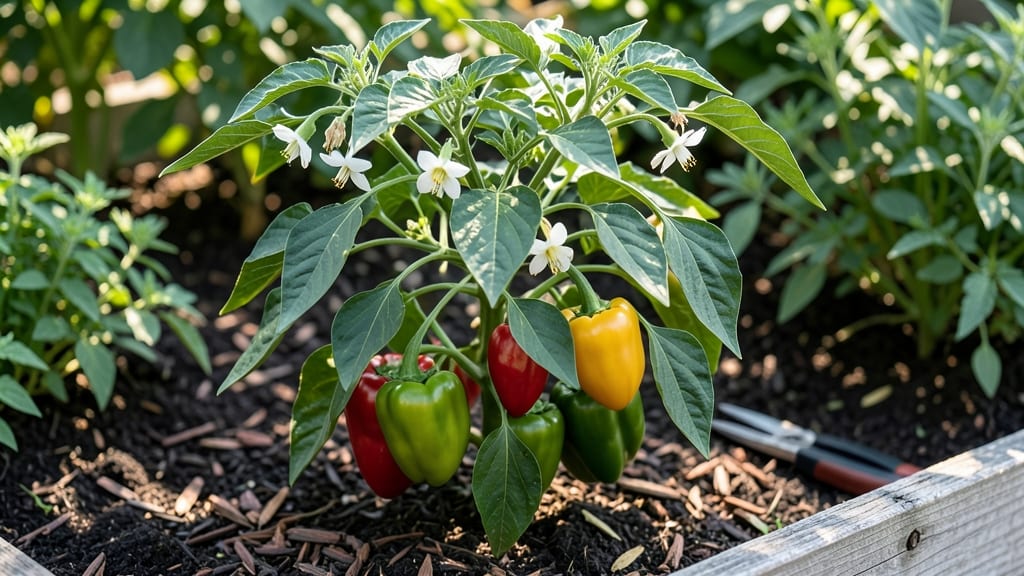
Growing bell peppers in a square foot garden turns tiny spaces into a high-yield harvest. 🌱 I learned the hard way that cramming plants too close leads to crowded, disease-prone bushes—but the right layout gives you 16 peppers per square foot with minimal fuss.
The secret is spacing plants just 12 inches apart in a grid, which maximizes sunlight and airflow while keeping maintenance simple.
You’ll need a 4×4-foot raised bed (or multiple 1×1-foot squares), well-draining soil mix, and a sunny spot with at least 6-8 hours of direct light daily.
Bell peppers thrive in this setup because the grid system eliminates wasted space—no more guessing where to plant or how to fit everything in. Plus, the raised edges make watering and weeding a breeze, even on busy days.
By mid-summer, you’ll be snipping bright red, yellow, or purple peppers straight from the vine, with far fewer pests than traditional rows. The compact layout also means less bending and more time enjoying the harvest.
Once you master the spacing, you can even squeeze in companion plants like basil or marigolds to boost flavor and deter bugs.
This method works for any climate—just adjust planting times for your last frost date. Whether you’re a city balcony gardener or a suburban plot owner, square foot gardening turns bell peppers from a "maybe next year" crop to a reliable, space-saving staple. Ready to try it?
📚 In This Guide
- What you need
- Instructions
- Tips and common mistakes
- Wrapping up and next steps
What you need
- ● Ready to grow bold, flavorful bell peppers in a square foot garden? Here’s everything you’ll need to get started—whether you’re a beginner or a seasoned square foot gardener! 🌱🔥
- ● Pro tip: 💡 Test your soil pH (aim for 6.0–6.8)—bell peppers thrive in slightly acidic soil! Adjust with lime (to raise pH) or sulfur (to lower pH) if needed.
Step-by-Step square foot layout for growing bell peppers
Here's how to maximize your harvest in minimal space—this layout works for any square foot garden.
🪴 Step 1: Divide Your 4'x4' Square into 16 Equal Sections
Use a tape measure to mark a 4-foot by 4-foot area in your garden bed. Divide it into a 4x4 grid with 1-foot squares using string lines or a garden grid tool. This creates 16 equal planting zones, each designed to hold just the right number of pepper plants for maximum yield without overcrowding.
I always start by staking a corner post and running string along the first row. Then I measure 12 inches down each side to create the grid. This ensures every square stays perfectly uniform—no guessing or uneven spacing that leads to competition between plants.
🌱 Step 2: Plant Bell Peppers in Every Other Square
For a 4-square-foot section, you'll plant 1 bell pepper plant per square. Since your garden is 16 square feet total, you'll end up with 4 bell pepper plants—the perfect number for a family of four. Place plants in the four corner squares and the four center squares of your grid, leaving the middle squares empty for companion plants like basil or onions later.
Dig a hole twice as wide as the root ball and just as deep. Gently remove the plant from its container, loosen the roots if they're circling, and place it in the hole. Fill with soil, pressing lightly to eliminate air pockets. Water immediately to help roots settle.
☀️ Step 3: Provide Consistent Heat and Light
Bell peppers thrive in full sun (6-8 hours daily) and need warmth to produce fruit. Position your square foot garden in the sunniest spot possible, where it gets morning sun and at least 4 hours of afternoon warmth. If your climate gets cool nights, consider adding a row cover or black plastic mulch to retain heat.
You'll know your peppers are happy when they develop dark green, glossy leaves and grow 1-2 inches per week. Watch for yellowing leaves or stunted growth—these are signs of insufficient light or temperature stress. Move the square foot garden to a sunnier spot if needed.
💧 Step 4: Water Deeply and Mulch Immediately
Water your bell peppers 1 inch per week, either through rainfall or irrigation. Use a soaker hose or drip system to water at the base, avoiding the leaves to prevent disease. The soil should stay consistently moist but not soggy—stick your finger 1 inch deep to check moisture levels daily during hot weather.
Spread a 2-inch layer of mulch around each plant, keeping it 2 inches away from the stem to prevent rot. Mulch locks in moisture, regulates soil temperature, and suppresses weeds. I like to use straw because it breaks down slowly and adds organic matter as it decomposes.
✂️ Step 5: Prune and Harvest for Maximum Yield
When your bell peppers reach 12 inches tall, prune the lower leaves to improve airflow and reduce disease risk. Remove any yellow or damaged leaves immediately, and pinch off flower buds on the first 6 inches of growth to encourage a bushier plant. This redirecting of energy leads to stronger stems and more fruit later.
Harvest peppers when they reach 3-4 inches long and have a firm texture. Use pruning shears to cut the stem, leaving a ½ inch of stem attached to the plant. This encourages continuous production. You'll know it's time to harvest when peppers turn from green to their mature color—red, yellow, or orange—depending on the variety.
Tips & tricks for perfect square foot gardening with bell peppers
A few simple tricks will help you maximize your harvest and avoid common pitfalls when growing bell peppers in square foot gardens.
The Spacing Secret: In Step 1, when creating your 1-foot squares, I can't stress enough how important it is to keep those measurements precise. Using a garden grid tool or even a simple wooden frame with 12-inch spacing marked on it helps maintain uniformity. I've found that even a 1-inch difference in spacing can lead to crowded plants that compete for nutrients and sunlight, reducing your yield by up to 30%.
Plant Placement Strategy: The specific placement of bell peppers in the four corner and four center squares (Step 2) creates a natural airflow pattern that prevents disease. I've noticed that plants in these positions get just the right amount of sunlight without overheating in the center. If you're working with limited space, you can add one more plant in the center square, but be prepared to thin later if needed.
Light and Heat Optimization: For the 6-8 hours of daily sunlight requirement (Step 3), position your square foot garden to capture morning sun first—this helps prevent afternoon wilting. I've had great success using reflective mulch on the south side of the garden to bounce extra light onto the plants. In cooler climates, adding a row cover during the evening hours can help maintain the required 4 hours of afternoon warmth when night temperatures drop.
Watering Wisdom: The 1-inch weekly watering guideline (Step 4) works perfectly in most climates, but I've learned to adjust based on soil type. Sandy soils may need watering every 2-3 days, while clay soils can hold moisture for up to a week. Always check moisture by sticking your finger 1 inch deep—this is the most reliable way to gauge when your peppers need water without overdoing it.
Pro Tips for Square Foot Gardening Bell Peppers
- A few simple tricks will help you maximize your harvest and avoid common pitfalls when growing bell peppers in square foot gardens.
- The Spacing Secret: In Step 1, when creating your 1-foot squares, I can't stress enough how important it is to keep those measurements precise.
- Plant Placement Strategy: The specific placement of bell peppers in the four corner and four center squares (Step 2) creates a natural airflow pattern that prevents disease.
Frequently asked questions
Got questions about growing bell peppers in a square foot garden?
You’re not alone! Here are some of the most common queries—plus straightforward answers to help you grow like a pro.
How many bell pepper plants can I fit in a 1-square-foot section?
A single bell pepper plant thrives in a 1-square-foot space, but you can squeeze in 2-3 seedlings if you’re using compact varieties like ‘Snackable’ or ‘Jalapeño M.’ Just space them 6–12 inches apart to avoid crowding.
When is the best time to plant bell pepper seedlings in my square foot garden?
Wait until after the last frost and soil temps hit at least 60°F (15°C). In most regions, this means late spring or early summer. Start seeds indoors 8–10 weeks before transplanting for a head start!
Why are my bell peppers turning yellow or dropping off the plant?
Yellowing or dropped peppers usually signal underwatering, overwatering, or poor pollination. Check soil moisture (keep it consistently damp but not soggy) and hand-pollinate flowers with a soft brush if humidity is low.
Can I grow hot peppers in the same square foot as bell peppers?
Yes! Mixing compatible varieties (like bell peppers with ‘Shishito’ or ‘Thai Hot’) works well. Just ensure each plant has enough space—stick to 1 pepper plant per square foot to avoid competition.
What’s the ideal temperature range for bell peppers in a square foot garden?
Bell peppers love warmth—aim for 70–85°F (21–29°C) during the day and 55–65°F (13–18°C) at night. If temps dip below 50°F (10°C), growth slows, and peppers may stop setting fruit. Use row covers if needed!
Wrapping up and next steps
Square foot gardening is a game-changer for growing bell peppers in small spaces—proving that big harvests don’t require big yards! 🌱 By maximizing every inch with a strategic layout, you’ll enjoy vibrant, flavorful peppers while keeping maintenance simple.
Whether you’re a beginner or a seasoned gardener, this method makes it easy to grow more with less effort.
Ready to turn your tiny plot into a pepper powerhouse? Start small—try a 4’x4’ bed this season, then expand as you gain confidence. Happy planting, and may your harvest be plenty! 🌶️✨