
Tools
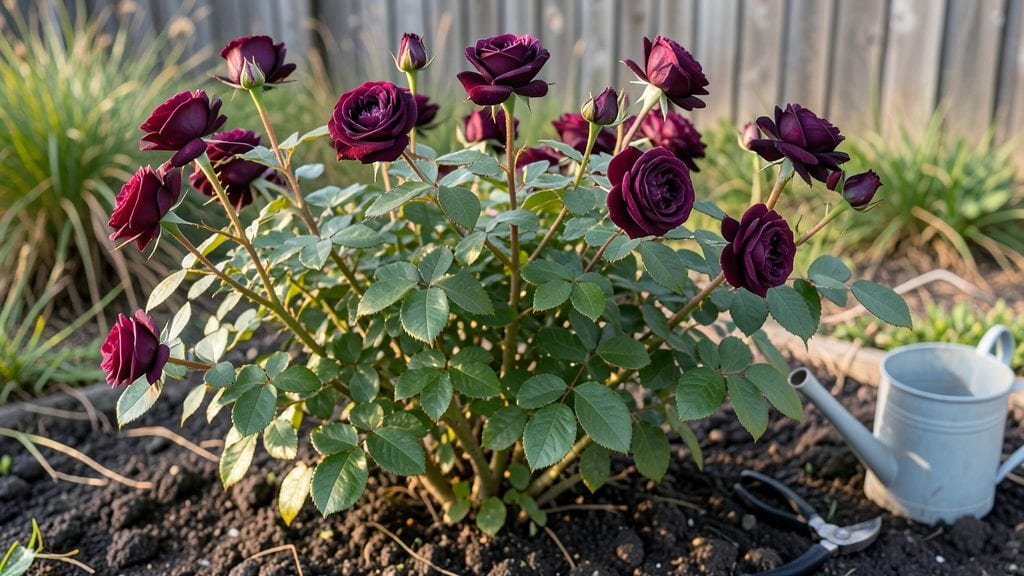
Purple roses transform any garden into a dreamy, romantic escape—no fancy skills required. ✨ I’ve designed gardens where these velvety blooms steal the show, whether as bold borders or soft focal points, and they thrive with surprisingly little fuss once planted right.
The key is pairing them with the right neighbors: silvery foliage like lamb’s ear softens their intensity, while climbing clematis adds vertical drama. My go-to layout? A 5-foot-wide swath of roses along a path, interspersed with dwarf coneflowers for height contrast.
The result? A year-round display that shifts from spring’s blush to fall’s deep magenta.
You’ll love how they anchor color schemes—think lavender, sage, and cream—while drawing in hummingbirds and butterflies. Even in winter, their skeletal stems add texture. The minimal care? Just deadheading spent blooms and an occasional mulch refresh to keep roots happy.
Works for small courtyards or sprawling backyards—adjust spacing for your space. Let’s make your garden the envy of the block with these effortlessly elegant blooms.
📚 In This Guide
- What you need
- Instructions
- Tips and common mistakes
- Wrapping up and next steps
What you need
- ● Purple rose bushes: 3–5 plants (choose disease-resistant varieties like 'Mister Lincoln' or 'Blaze' for low-maintenance beauty).
- ● High-quality potting soil: 10–15 bags (or 3–5 cubic yards for in-ground planting). Opt for a mix with compost and perlite for drainage.
- ● Organic fertilizer: 1–2 bags (balanced 10-10-10 or rose-specific formula like Miracle-Gro Rose Food).
- ● Mulch: 5–10 bags (wood chips or shredded bark to retain moisture and suppress weeds).
- ● Compost: 2–3 bags (to enrich soil and boost blooms).
- ● Garden trowel or spade: 1 (for planting and soil prep).
- ● Pruning shears: 1 pair (sharp, bypass-style for clean cuts).
- ● Garden gloves: 1 pair (to protect hands from thorns and soil).
- ● Watering can or hose with nozzle: 1 (for gentle, deep watering).
- ● Measuring tape or ruler: 1 (to space plants 2–3 feet apart).
- ○ Stakes or trellis (optional):strong> 3–5 (for climbing varieties like 'New Dawn').
- ● Sunlight: A spot with 6+ hours of direct sun daily (morning sun is ideal to prevent scorching).
- ● Well-draining soil: Test soil pH (aim for 6.0–6.5; amend with sulfur if needed).
- ● Water source: Easy access to water (roses need 1–2 inches per week).
- ● Protection from wind: Plant near a fence or wall if your area is breezy.
- ● Rose-specific fungicide (like Neem Oil) for pest/blight prevention.
- ● Decorative garden markers to label your purple beauties.
- ● A cozy seating area or pathway nearby for year-round enjoyment.
How to create a stunning purple roses garden that thrives year-round
Here's the method I rely on for a vibrant, low-maintenance purple rose garden that blooms reliably.
🌱 Step 1: Select the Right Purple Rose Varieties for Your Climate
Start with disease-resistant purple roses like 'Mister Lincoln' or 'Iceberg Purple'—they handle heat and humidity better than most. I always check my hardiness zone first; purple roses like 'William Shakespeare' thrive in zones 5-9, while 'Purple Dream' prefers zones 6-10. These varieties deliver consistent blooms without fuss.
If your area gets harsh winters, opt for shrub roses like 'The Fairy'—they're tougher and regrow quickly in spring. Purple roses need at least 6 hours of direct sun daily, but they tolerate partial shade better than white or red varieties. I plant mine where afternoon shade protects delicate blooms from intense midday heat.
🪴 Step 2: Prepare the Planting Site for Optimal Growth
Choose a location with well-draining soil—purple roses hate soggy roots. Amend your native soil with 3 inches of compost and 1 part perlite to improve aeration. I dig a hole twice as wide as the root ball but only as deep—planting too deep suffocates roots and causes stress.
Test your soil pH before planting; purple roses prefer 6.0-6.5. If your soil is too alkaline, mix in sulfur according to package instructions. Space plants 3-4 feet apart—crowding leads to poor airflow and fungal diseases. I always add a slow-release rose fertilizer at planting time to give roots a nutrient boost right away.
☀️ Step 3: Plant and Establish Roses for Lush Growth
Remove the rose from its container and loosen any circling roots gently with your fingers. Place the plant in the hole so the graft union sits 2 inches above soil level—this prevents soil-borne diseases from reaching the scion. Backfill with native soil mixed with compost, tamping lightly to remove air pockets.
Water deeply right after planting to settle the soil and encourage root contact. I always add 2-3 inches of mulch around the base (but not touching the stem) to retain moisture and suppress weeds. Purple roses need 1-1.5 inches of water weekly, but they're drought-tolerant once established—just watch for wilting leaves as your signal to water.
✂️ Step 4: Prune and Maintain for Continuous Blooms
Prune in early spring before new growth appears, cutting back one-third of the previous year's growth to encourage bushiness. Remove any dead, crossing, or weak branches first—this improves airflow and prevents disease. I always sterilize my pruners with rubbing alcohol between cuts to avoid spreading pathogens.
Deadhead spent blooms regularly to redirect energy into new flowers. Feed roses with balanced fertilizer every 6-8 weeks during growing season. Purple roses respond well to fish emulsion for extra phosphorus—this boosts bloom production dramatically. I also spray with neem oil preventatively in early summer to deter aphids before they become a problem.
⏰ Step 5: Winterize for Year-Round Success
In colder zones, mound 4-6 inches of soil or mulch around the base after the first hard frost to insulate roots. I wrap tender canes with burlap and secure with twine to protect against winter winds. Purple roses handle cold better than most, but young plants need extra protection their first winter.
Reduce watering in fall as growth slows, but don't let soil dry completely. In spring, remove winter protection when new shoots appear—usually by mid-April in my zone. This gradual exposure prevents transplant shock. With proper winter care, my purple roses return stronger each year with even more vibrant blooms.
Tips & tricks for perfect purple roses garden
Here's what I've learned after years of cultivating purple roses that stay vibrant and healthy all year—these tricks make the difference between a good garden and a showstopper.
Variety Selection Wisdom: Purple roses like 'Mister Lincoln' and 'Iceberg Purple' aren't just pretty—they're bred for resilience. I've found that these varieties handle heat and humidity better than their fancier cousins, which means fewer wilting blooms during summer. The key is matching your climate: 'William Shakespeare' thrives in zones 5-9, while 'Purple Dream' prefers zones 6-10. Don't overlook shrub roses like 'The Fairy' for colder climates—they bounce back like champions after winter.
Soil Preparation Secret: The 3 inches of compost and 1 part perlite I mix into the soil isn't just about drainage—it's about creating the perfect environment for those purple roots to thrive. I always test soil pH first; if it's above 6.5, I add sulfur gradually (following package instructions) until I hit that sweet spot of 6.0-6.5. The 3-4 feet spacing between plants might seem generous, but it prevents fungal diseases by ensuring proper airflow—something I learned the hard way after losing plants to black spot.
Planting Technique That Changed Everything: That 2-inch graft union above soil level isn't just a guideline—it's critical for preventing soil-borne diseases from reaching your precious rose scions. I've seen too many gardens where this was ignored, leading to sudden plant decline. After planting, I always water deeply to eliminate air pockets, then add that 2-3 inches of mulch—but here's the trick: keep it 2 inches away from the stem to prevent rot. The 1-1.5 inches of water weekly keeps them happy without drowning the roots.
Pruning and Maintenance Hack: When I prune in early spring, cutting back one-third of last year's growth, I always make my cuts at a 45-degree angle just above an outward-facing bud. This simple technique encourages bushier growth and better airflow. The 6-8 week fertilizer schedule keeps them blooming like crazy, but here's my secret weapon: I alternate between balanced fertilizer and fish emulsion every other feeding. The phosphorus boost from fish emulsion gives me those extra-vibrant purple blooms that everyone notices.
Pro Tips for Purple Roses Garden
- Here's what I've learned after years of cultivating purple roses that stay vibrant and healthy all year—these tricks make the difference between a good garden and a showstopper.
- Variety Selection Wisdom: Purple roses like 'Mister Lincoln' and 'Iceberg Purple' aren't just pretty—they're bred for resilience.
- Soil Preparation Secret: The 3 inches of compost and 1 part perlite I mix into the soil isn't just about drainage—it's about creating the perfect environment for those purple roots to thrive.
Frequently asked questions
Got questions about creating your dream purple roses garden? We’ve got answers! Whether you’re a first-time gardener or a seasoned pro, these FAQs will help you grow stunning blooms with ease.
What’s the best time to plant purple roses?
Plant your purple roses in early spring (after the last frost) or early fall (6-8 weeks before the first frost). This gives roots time to establish before extreme weather. Avoid planting in summer’s heat or winter’s cold—both can stress young plants.
How much sunlight do purple roses really need?
Purple roses thrive in full sun (6-8 hours daily). While they can tolerate partial shade (4-6 hours), expect fewer blooms. Morning sun + afternoon shade works in hot climates, but avoid deep shade—it leads to leggy growth and weak stems.
Can I grow purple roses in containers?
Choose a large container (at least 15 gallons) with drainage holes. Use well-draining potting mix and fertilize regularly. Dwarf or patio varieties (like ‘The Fairy’ or ‘Playboy’) are ideal. Just keep containers consistently moist and move them indoors if temperatures drop below 20°F.
Why aren’t my purple roses blooming?
Lack of blooms often stems from over-pruning, poor nutrition, or stress. Check these fixes:
- Fertilize: Use a rose-specific feed every 4-6 weeks during growing season.
- Prune correctly: Trim in late winter/early spring, cutting back to outward-facing buds.
- Check watering: Drought or soggy soil can shock plants.
- Deadhead: Remove spent blooms to encourage new growth.
What’s the easiest purple rose variety for beginners?
Start with ‘Iceberg’ or ‘Knock Out’ roses—both are disease-resistant, low-maintenance, and produce lush purple blooms. ‘Iceberg’ is a classic climber, while ‘Knock Out’ offers non-stop blooms with minimal fuss. Bonus: They’re deer-resistant!
How do I protect purple roses from pests?
Prevent pests with these tips:
- Neem oil spray: Natural remedy for aphids, spider mites, and black spot.
- Prune regularly: Remove diseased leaves to stop fungal spread.
- Encourage beneficial insects: Ladybugs and lacewings eat pests—plant companion flowers like marigolds nearby.
- Avoid overhead watering: Wet foliage invites fungal issues.
Wrapping up and next steps
Creating a purple roses garden is a dreamy way to bring elegance and color to your outdoor space—without the high-maintenance drama! 🌸 With the right soil, sunlight, and a little TLC, these stunning blooms can thrive year-round, offering romance on a budget.
Whether you're a seasoned gardener or a beginner, the key is patience and consistency.
Ready to dive in? Start small—plant a single purple rose bush or a cluster—and watch your garden transform into a fragrant, velvety sanctuary. Your next step? Grab your tools, pick your favorite purple variety, and let nature do the rest. Happy gardening! 🌿✨