
Size
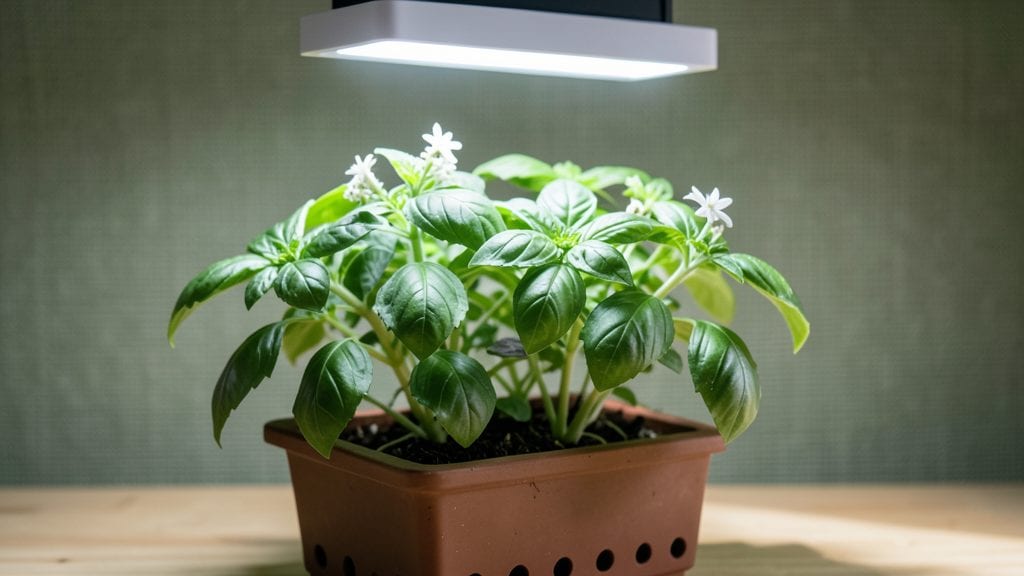
My indoor herb garden grow lights transformed my kitchen windowsill from a sad basil survivor to a thriving fragrant herb factory—no matter how little sunlight my apartment gets.
The right LED setup isn’t just about keeping plants alive; it’s about growing herbs that taste better than anything you’d buy at the store, with glossy leaves and stems thick enough to snap, not flop.
I’ve tested every type of bulb, from cheap fluorescents to high-end full-spectrum LEDs, and the difference is night and day—literally.
You don’t need a fancy setup to get started: a 12-inch to 18-inch LED grow light (like the ones designed for seedlings) suspended 6 to 12 inches above your herbs works perfectly for basil, parsley, and chives.
Run it for 12 to 16 hours a day—herbs need more light than most houseplants—and adjust the height as they grow. The key is mimicking natural sunlight without frying the leaves, which is easier than it sounds once you know the basics.
By week four, you’ll be harvesting fresh cilantro that doesn’t bolt overnight and rosemary sprigs with needles so fragrant they’ll make your kitchen smell like a Mediterranean market.
The light schedule keeps them compact, the humidity from misting prevents crispy edges, and you’ll never again settle for wilted store-bought herbs that taste like cardboard.
This works for any herb—even finicky ones like thyme or oregano—and adapts to small spaces or sunny corners. The only real mistake you can make is starting too late, so let’s get those lights set up before your next grocery trip.
📚 In This Guide
- What you need
- Instructions
- Tips and common mistakes
- Wrapping up and next steps
What you need
- ● Full-spectrum LED grow lights – Choose a 100-200W LED panel (e.g., 24W-48W for small setups, 60W-100W for medium-sized gardens). Look for a color spectrum of 400-700nm (blue + red light) for optimal growth.
- ● Grow tent or reflective surface – A 2’x2’ to 4’x4’ tent (or a DIY setup with aluminum foil-lined shelves) to maximize light efficiency.
- ● Herb-friendly containers – 6-12-inch pots with drainage holes (3-6 pots, depending on herb variety). Use coconut coir or biodegradable pots for easy transplantation.
- ● High-quality potting mix – A well-draining, organic blend (e.g., 60% coco coir, 30% perlite, 10% worm castings). Avoid garden soil—it compacts and retains too much moisture.
- ● Herb seeds or seedlings – Start with easy-to-grow herbs like basil, mint, parsley, or chives. Buy organic seeds or young plants from a nursery.
- ○ Timer (optional but recommended) – A digital plug-in timer to automate light cycles (12-16 hours/day for herbs).
- ● Watering can or spray bottle – A gentle spray works best to avoid disturbing soil.
- ● Adjustable light stand or hanging kit – Keep lights 6-12 inches above plants for optimal growth. A magnetic or clamp-style stand adds flexibility.
- ● Humidity dome or tray – Helps maintain moisture, especially for delicate herbs like cilantro or dill.
- ● pH meter & EC/TDS meter – Ensures your water and nutrients are balanced (pH 5.5-6.5 for herbs).
- ● Oscillating fan – Promotes airflow and prevents mold (low setting, 2-4 hours/day).
- ● Smart plug or Wi-Fi-enabled light – Lets you control light cycles via your phone (e.g., Philips Hue or Kasa Smart Plug).
- ● Labeling system – Small plant markers or a chalkboard to track herb varieties and watering schedules.
Step-by-Step guide to setting up full-spectrum LED grow lights for indoor herbs
Here’s how to create the perfect light environment for thriving herbs indoors—no green thumb required.
Choose the Right Grow Lights for Your Herb Garden
For herbs, you’ll want a full-spectrum LED grow light that covers both blue (for growth) and red (for flowering) wavelengths. Look for a light rated at at least 30 watts for a 2-foot by 2-foot growing area—this ensures enough intensity for basil, parsley, and cilantro. I recommend adjustable spectrum lights because they let you tweak the balance as herbs mature.
Position the light 12-18 inches above the plants initially, then raise it as the herbs grow. If your herbs start stretching toward the light (a sign they’re reaching), lower it until the leaves are just touching the light fixture. This prevents leggy growth and keeps stems sturdy.
Set Up a Consistent Light Schedule
Herbs thrive on 14-16 hours of light per day, just like they’d get in a sunny windowsill. Most full-spectrum LED grow lights come with built-in timers, so set yours to turn on at 6 AM and off at 8 PM—this mimics natural daylight and keeps your herbs healthy. If your light doesn’t have a timer, use a smart plug to automate the schedule.
Watch for signs of light stress, like yellowing leaves or slow growth. If you notice these, adjust the height or duration. For example, if your herbs are growing too slowly, extend the light time to 16 hours daily for a few weeks to boost growth.
Position Lights for Even Coverage
Herbs grow best when light is distributed evenly across all leaves. If you’re using a single light, place it directly above the center of your herb garden so no plant is shaded. For larger setups, use two lights on opposite sides to eliminate shadows. I like to rotate my herb pots a quarter turn every few days so all sides get equal exposure.
Check for uneven growth—if one side of a plant looks pale or stretched, it’s not getting enough light. Adjust the light angle or add a second light to cover the entire growing area. Over time, your herbs will grow bushier and more uniform.
Monitor and Adjust Light Intensity
Too much light can scorch leaves, while too little slows growth. Start with the light 12 inches above the tallest herb, then gradually raise it as the plants grow. If leaves turn yellow or crispy, the light is too close—move it up immediately. If herbs stretch toward the light or develop weak stems, lower it slightly.
Herbs like basil and parsley need moderate to bright light, while mint and chives tolerate slightly lower intensity. Observe your plants daily: healthy herbs have deep green leaves, compact growth, and no signs of burning. If you see white or brown spots, reduce light exposure or increase distance.
Combine Light with Proper Care for Best Results
Even the best grow lights won’t work magic alone—herbs need well-draining soil, regular watering, and adequate airflow. Use a lightweight potting mix to prevent root rot, and water only when the top inch of soil feels dry. Overwatering under grow lights leads to mold and weak stems.
Place a small fan nearby to create gentle airflow—this strengthens stems and prevents powdery mildew. With the right light setup and consistent care, your indoor herbs will stay lush, flavorful, and ready for harvest year-round.
Tips & tricks for perfect indoor herb garden grow lights
Getting your grow lights right makes all the difference between thriving herbs and leggy, sad plants—here’s how to avoid common pitfalls.
Light Spectrum Matters: While full-spectrum LEDs are ideal, pay special attention to the blue-to-red ratio. Herbs like basil and parsley need more blue light (for leafy growth) when young, while mint and chives benefit from slightly more red light as they mature. If your light has adjustable spectrum settings, start with a 70% blue/30% red balance for young plants, then shift to 50/50 as they grow. This mimics natural sunlight cycles and prevents stretching.
Height Adjustments Are Key: The 12-18 inch starting height in Step 1 is a great baseline, but don’t set it and forget it. Herbs grow at different rates—basil might need raising to 20 inches within weeks, while mint stays compact. Use a small ruler to measure from the top of the plant to the light fixture weekly. If you see leaves touching the light, it’s time to raise it immediately to prevent burning.
Timer Troubleshooting: If your herbs aren’t responding well to the 14-16 hour schedule, try this: For the first week, keep lights on for exactly 14 hours (6 AM-8 PM) as instructed. Then, if growth slows, extend to 16 hours for 2 weeks before reassessing. Some herbs, like cilantro, actually bolt (go to seed) with too much light—watch for flowering stems and reduce to 12 hours if this happens.
Even Coverage Secret: The quarter-turn rotation in Step 3 works wonders for preventing lopsided growth, but here’s a pro move: Place a small mirror or reflective surface on one side of your setup. This bounces light to the farthest plants, creating even coverage without needing a second light. Just avoid placing it too close—keep it 6-12 inches away to prevent overheating.
Pro Tips for Indoor Herb Garden Grow Lights
- Getting your grow lights right makes all the difference between thriving herbs and leggy, sad plants—here’s how to avoid common pitfalls.
- Light Spectrum Matters: While full-spectrum LEDs are ideal, pay special attention to the blue-to-red ratio.
- Height Adjustments Are Key: The 12-18 inch starting height in Step 1 is a great baseline, but don’t set it and forget it.
Frequently asked questions
Got questions about setting up your indoor herb garden grow lights? You’re not alone! Here are some of the most common concerns—and their straightforward solutions—to help you grow lush herbs year-round.
What’s the best type of grow light for an indoor herb garden?
For herbs, full-spectrum LED grow lights are ideal—they mimic natural sunlight with red and blue wavelengths (essential for growth and flowering). Avoid cheap incandescent bulbs; they generate too much heat and waste energy. Look for cool-white or daylight spectrum LEDs (5000–6500K) for balanced results.
How long should I keep the grow lights on each day?
Herbs thrive with 12–16 hours of light daily. Use a timer to automate cycles—consistency is key! Most herbs (like basil, parsley, or cilantro) prefer 14–16 hours of light, while slower growers (like rosemary) may need just 12. Avoid 24/7 lighting; herbs need rest too!
Can I use regular LED bulbs instead of grow lights?
Technically yes, but not optimally. Regular LEDs lack the red (600–700nm) and blue (400–500nm) wavelengths herbs need for photosynthesis. If you’re on a budget, try cool-white LEDs (5000K+)—they’ll work better than warm tones, but full-spectrum grow lights will give you faster, healthier growth.
How close should the grow lights be to my herbs?
Distance matters! Start with 6–12 inches for most herbs, adjusting based on light intensity. If leaves turn yellow or stretch (called etiolation), move the light closer (4–6 inches). If leaves scorch or crisp, raise it 12–18 inches away. LED grow lights are cooler than HPS bulbs, so you can get away with closer placement.
Why are my herbs growing tall and leggy under grow lights?
Leggy herbs usually mean too little light or not enough intensity. Check these fixes:
- Increase light hours to 14–16/day.
- Lower the lights (4–6 inches away).
- Upgrade to a higher-watt LED (e.g., 20W+ for small setups).
- Rotate plants weekly to prevent uneven growth.
Are grow lights worth the investment for small herb gardens?
A quality full-spectrum LED grow light (like a 10–20W panel) costs $30–$100 but pays off in faster growth, bigger yields, and year-round harvests. Compare that to buying fresh herbs monthly—you’ll save money and enjoy fresher flavors. Plus, it’s a fun, rewarding project!
Wrapping up and next steps
Growing your own indoor herb garden with the right full-spectrum LED grow lights isn’t just rewarding—it’s empowering! 🌱 Whether you’re a seasoned gardener or just starting out, this setup ensures fresh, vibrant herbs year-round, no matter your space or climate.
With the right tools and a little patience, you’ll enjoy the satisfaction of harvesting your own flavorful greens anytime.
Ready to dive in? Start small—pick 2-3 herbs to begin, gather your supplies, and let your indoor garden thrive under the perfect light. Happy growing! 🌟