
Size
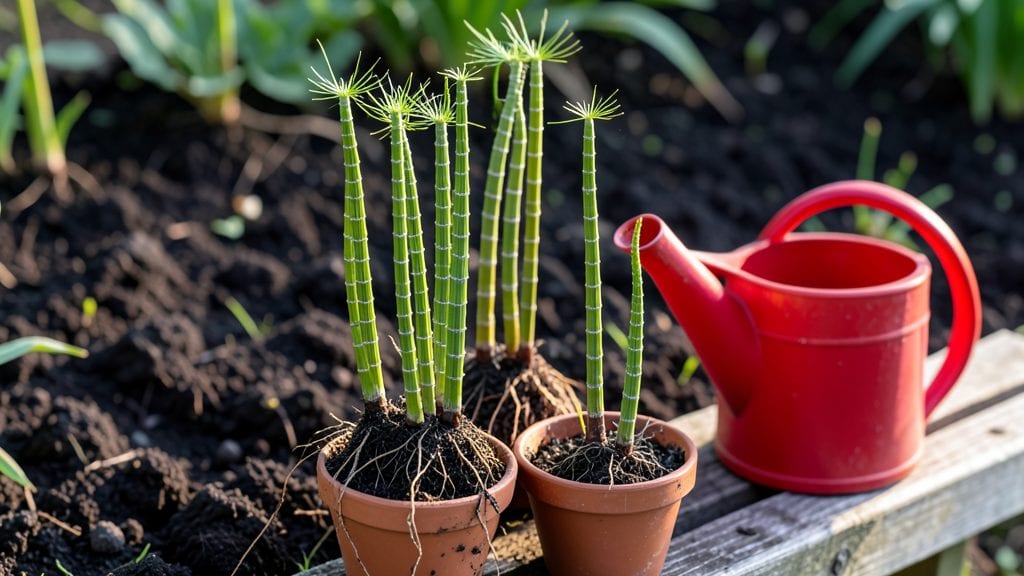
Growing horsetail in your garden is easier than you think—it thrives where most plants won't. ✨ I’ve watched this tough, ancient plant push through cracks in concrete and still grow lush and green, proving it’s the ultimate low-maintenance addition for shady spots or damp areas.
The key isn’t fancy soil or constant care—it’s letting it do its thing in the right conditions.
You’ll need a spot with partial to full shade and soil that stays consistently moist, whether that’s a boggy corner, a rain garden, or even a container with good drainage. Horsetail spreads quickly, so give it space—think of it as a living ground cover rather than a showy plant.
The real magic happens when you stop fussing over it and let nature take over.
Once established, horsetail needs almost no maintenance—just occasional trimming to keep it tidy and prevent it from taking over unwanted areas. It’s perfect for year-round interest, turning bare spots into a textured, green carpet that stays vibrant even in winter.
The only rule? Don’t let it dry out completely, or it’ll go dormant faster than you’d like.
It’s worth noting that horsetail can be invasive in the right (or wrong) conditions, so keep an eye on its spread if you’re not aiming for a full takeover. For most gardeners, though, this is a plant that rewards patience with resilience and beauty—no green thumb required.
📚 In This Guide
- What you need
- Instructions
- Tips and common mistakes
- Wrapping up and next steps
What you need
- ● Horsetail plants: 1–3 mature horsetail plants (for division) or
- ● Horsetail spores (from a reputable supplier, ~$10–$20 for a small packet)
- ● Growing medium: 1–2 gallons of well-draining potting mix (peat-based or coco coir blend with perlite)
- ● Sand or gravel (1 part sand to 2 parts soil for moisture control)
- ● Growing containers: Small pots (4–6 inches deep) for spores/seeds
- ● Larger containers (10+ inches) for established plants
- ● Garden trowel or small shovel (for transplanting)
- ● Spray bottle (for misting spores)
- ● Garden gloves (horsetail fronds can be prickly!)
- ● Watering can or hose with a gentle spray nozzle
- ○ Optional: Greenhouse or propagator (for faster spore germination)
- ● Mulch (straw or pine needles to retain moisture)
- ● pH test kit (ideal soil pH: 6.0–7.0)
- ● Partial to full sun (4+ hours daily)
- ● Moist, well-draining soil (horsetail hates soggy roots!)
- ● Patience! Horsetail grows slowly—spores may take months to sprout.
Step-by-Step instructions for cultivating horsetail in your garden
Here's the straightforward method I've used to grow lush horsetail year after year—no special soil required.
🌱 Step 1: Identify the Right Horsetail Variety for Your Climate
Horsetail (Equisetum) thrives in USDA zones 3-10, but varieties differ in cold tolerance. For northern gardens, Equisetum hyemale handles below-zero winters, while Equisetum arvense (common horsetail) spreads aggressively in mild climates. I always check local nurseries for native strains—they adapt best.
If you're unsure, start with Equisetum pratense (meadow horsetail). It's hardy, non-invasive, and perfect for borders or moist areas. Avoid buying from wild sources—many horsetail species are protected, and nursery stock is disease-free.
💧 Step 2: Prepare the Planting Site for Moisture-Loving Growth
Horsetail demands consistently moist soil—never soggy, but never dry. Test your spot by digging a 6-inch hole and filling it with water. If it drains within 1 hour, amend the soil with 2 inches of compost (mixed into the top 6 inches of soil). For sandy soil, add 1 part peat moss to 3 parts garden soil to retain moisture.
I plant horsetail in partial shade to full sun—morning sun with afternoon shade works best in hot climates. Avoid deep shade; stems grow leggy and weak. If your garden is dry, group horsetail with other moisture-lovers like ferns or astilbe to create a microclimate.
☀️ Step 3: Plant and Establish Horsetail for Year-Round Interest
Dig a hole twice as wide as the root ball but only as deep. Horsetail spreads via underground rhizomes, so plant 12-18 inches apart for a dense border. Gently tease apart roots if the plant looks root-bound—this encourages faster establishment. Place the plant so the top of the root ball sits just below soil level (horsetail hates crown rot).
Water deeply right after planting, then keep soil evenly moist for the first 4-6 weeks. You'll see new growth within 2-3 weeks—watch for bright green, jointed stems that mark successful rooting. Mulch with 2 inches of shredded bark to lock in moisture and suppress weeds.
✂️ Step 4: Maintain and Control Spread for a Tidy Look
Horsetail spreads aggressively—cut back stems to 4 inches in early spring before new growth starts. This prevents clumping and keeps the plant tidy. For Equisetum arvense, dig up and remove unwanted rhizomes in fall if it invades lawns or beds. I always wear gloves; the stems are abrasive and can irritate skin.
Fertilize lightly in spring with a balanced 10-10-10 formula—horsetail doesn't need much. Too much nitrogen leads to weak, floppy stems. Instead, focus on watering during dry spells (stems wilt if soil dries out). In winter, leave stems standing—they add texture to snow-covered gardens.
🌿 Step 5: Harvest and Use Horsetail for Garden and Home
Harvest young, tender stems in late spring for medicinal teas or silica-rich compost. Cut stems at the base with clean shears, then dry them in bundles. Mature stems (by summer) are tougher but great for natural brushes or rustic decor. I always leave at least half the plant to ensure regrowth.
If horsetail spreads beyond your desired area, divide clumps in early spring** by digging up sections with a sharp spade. Replant divisions in moist areas or share with fellow gardeners—horsetail’s rhizomes multiply fast! Just avoid planting near water sources; it can outcompete native plants.
Tips & tricks for perfect horsetail cultivation
A few key insights will help you avoid common pitfalls and get the most out of your horsetail garden.
Variety Matters: When selecting your horsetail in Step 1, pay close attention to your local climate. For example, Equisetum hyemale thrives in northern gardens where temperatures drop below zero, while Equisetum arvense spreads aggressively in milder climates. I've found that Equisetum pratense is the most versatile for beginners—it's hardy, non-invasive, and adapts well to different growing conditions. If you're unsure, ask your local nursery for recommendations based on your USDA zone.
Soil Test Tip: In Step 2, when testing your soil moisture by digging a 6-inch hole and filling it with water, watch how quickly it drains. If it disappears within 1 hour, you'll need to amend your soil with 2 inches of compost mixed into the top 6 inches. For sandy soil, the 1:3 peat moss to garden soil ratio is crucial—this helps retain moisture without creating waterlogged conditions that horsetail dislikes. I always test multiple spots in my garden to find the perfect location.
Planting Depth Secret: During Step 3, when planting your horsetail, remember that the top of the root ball should sit just below soil level. This might seem counterintuitive, but horsetail is particularly susceptible to crown rot if planted too deeply. I've learned this the hard way—after planting a batch too deeply, I lost several plants to rot within weeks. Also, those 12-18 inches of spacing between plants might seem generous, but it's essential for preventing overcrowding as the rhizomes spread.
Watering Wisdom: After planting, maintaining even moisture for the first 4-6 weeks is critical. I've found that using a soaker hose set on a timer for 15 minutes twice daily works perfectly. This mimics natural rainfall and prevents the soil from drying out between waterings. The bright green, jointed stems you should see within 2-3 weeks are your confirmation that the plant is establishing well. Don't skip the 2 inches of shredded bark mulch—it's your best defense against moisture loss and weeds.
Pro Tips for Get A Horsetail In Grow A Garden
- A few key insights will help you avoid common pitfalls and get the most out of your horsetail garden.
- Variety Matters: When selecting your horsetail in Step 1, pay close attention to your local climate.
- Soil Test Tip: In Step 2, when testing your soil moisture by digging a 6-inch hole and filling it with water, watch how quickly it drains.
Frequently asked questions
Got questions about growing horsetail in your garden? You’re not alone! Here are some of the most common queries—plus straightforward answers to help you succeed.
How long does it take for horsetail to grow from seed?
Horsetail grows fast—expect seedlings to emerge in 1-2 weeks under ideal conditions (moist, well-drained soil and indirect sunlight). Within 4-6 weeks, you’ll see mature shoots ready for harvesting. Patience pays off, but don’t wait too long—it’s a short-lived perennial!
Can I grow horsetail year-round, or is it seasonal?
Horsetail thrives in cool to moderate climates and can grow year-round in USDA Zones 3-9. In warmer zones, it may go dormant in summer but rebounds with rain. For indoor growing, use a sunny windowsill or grow light—just keep the soil moist!
Why is my horsetail turning yellow or brown?
Yellowing or browning usually means overwatering (horsetail hates soggy roots) or nutrient deficiency. Check your soil—it should stay consistently damp but not waterlogged. A light fertilizer (like fish emulsion) every 4-6 weeks can help. If leaves crisp, it’s too dry!
What’s a good alternative if horsetail is hard to find?
If horsetail (Equisetum) is elusive, try these similar medicinal greens:
- Nettle – Rich in iron, grows fast, and tolerates poor soil.
- Dandelion greens – Nutrient-packed and edible (cook to remove bitterness).
- Lemon balm – Calming tea herb with mild horsetail-like properties.
Can I harvest horsetail more than once a season?
Horsetail is perennial and regrows quickly after cutting. Harvest young shoots (under 12 inches) in early spring for the highest silica content. Avoid over-harvesting—leave at least 30% of the plant to ensure regrowth. Pro tip: Freeze harvested shoots for later use!
Wrapping up and next steps
Growing horsetail in your garden is simpler than you might think—even in less-than-ideal soil! With the right timing, preparation, and a little patience, you’ll soon have a lush, year-round addition that thrives with minimal fuss.
Whether you’re a seasoned gardener or just starting, this hardy plant rewards effort with its unique texture and resilience.
Ready to take the next step? Start small: plant a few horsetail shoots in a sunny spot, monitor their progress, and soon you’ll be sharing your green success with fellow plant enthusiasts! 🌱✨