
Tools
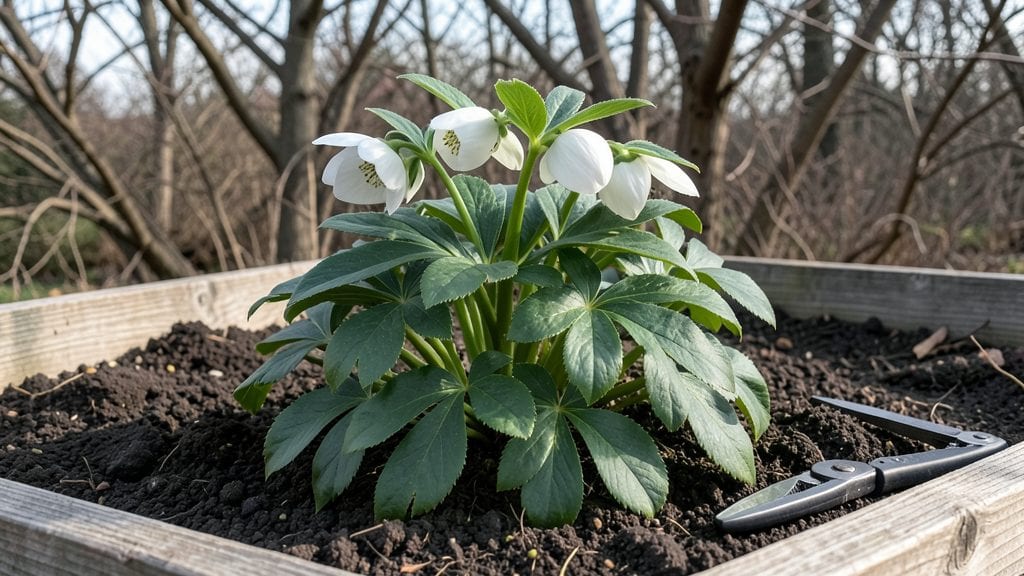
Hellebores in garden stand out for their bold winter-to-spring flowers and remarkable ability to thrive in low-light spots, making them perfect for high-maintenance-free shaded areas. Opt for classic evergreen types like Helleborus niger or colorful hybrids, and plant them in well-draining soil with partial to full shade for best results.
These shade-loving perennials are nature's understated stars, producing blooms when most gardens lie dormant. 🌿 Their deep roots and leathery leaves help them conserve moisture and tolerate cooler temperatures better than many competitors.
I've seen hellebores brighten dull corners of my garden for decades with almost no care—just occasional pruning of spent flowers to encourage new growth. The key to their success lies in their adaptability: they handle everything from woodland soil to urban containers as long as drainage is adequate.
What truly sets them apart is their year-round interest. While other plants fade in winter, hellebores provide structure with their glossy foliage, then burst into color when spring arrives. For maximum impact, pair them with ferns or hostas to create layered shade combinations that thrive together.
Their slow, steady growth also means you won't need to replant them frequently—once established, they're practically indestructible.
💡 In This Article
- Why Hellebores Excel in Shaded Gardens
- Selecting and Planting Hellebore Varieties for Year-Round Interest
Why hellebores excel in shaded gardens
Hellebores have evolved a unique photosynthetic strategy called C3 photosynthesis with shade adaptation, allowing them to thrive where most plants would struggle. Their broad, leathery leaves contain high concentrations of chlorophyll that efficiently capture even 10-20% of available light—about half what full-sun plants need.
This adaptation explains why they often outperform ferns and hostas in deep shade, which typically receive less than 20% sunlight during winter months. 🌿 The secret lies in their deep root systems that extend 12-18 inches downward, accessing moisture and nutrients other shade plants can't reach.
Their cold-hardy nature stems from specialized cell structures that prevent ice crystal formation. Hellebores produce antifreeze proteins similar to those in winter wheat, allowing them to survive temperatures as low as -20°F while many shade perennials (like astilbes) struggle below 0°F.
This resilience makes them ideal for early-season blooming—often appearing as soon as January in mild climates—when pollinators like bees emerge from dormancy. Their nectar-rich flowers provide critical food sources during these lean winter months, supporting ecosystems when few other plants are active.
Soil pH preferences reveal another layer of their adaptability. Most hellebores prefer slightly acidic to neutral soil (pH 6.0-7.0), but some varieties (like Helleborus viridis) tolerate pH 5.0-6.5, making them versatile for different garden conditions.
Unlike many shade plants that demand rich, organic soil, hellebores perform well in average garden soil as long as drainage prevents root rot. Their tolerance for dry shade (once established) sets them apart from moisture-loving plants like lungwort, which require consistently damp conditions.
When comparing hellebores to other shade perennials, their low-maintenance nature becomes clear. While hostas need regular division every 3-5 years and ferns require consistent moisture, hellebores thrive with minimal intervention. Their evergreen foliage provides winter interest without the yellowing common in rhododendrons when exposed to harsh winds.
The trade-off? They grow more slowly than sun-loving perennials, reaching maturity in 3-5 years rather than 1-2 years for annuals.
What most gardeners don't realize is how hellebores' flower structure enhances their shade adaptability. Their nodding blooms face downward, protecting delicate petals from heavy rain while still allowing pollinators access. This design contrasts with upward-facing flowers (like crocuses) that often get damaged in winter storms.
The leathery sepals (which look like petals) provide additional protection, allowing flowers to remain intact through multiple weeks of blooming—a trait rare among early spring flowers.
Their role as pollinator magnets starts before most gardens wake up. Early blooming hellebores (like Helleborus niger) provide nectar when temperatures average 45-55°F, while late varieties (like Helleborus orientalis) continue feeding pollinators until May.
This extended bloom period supports bees, butterflies, and even hummingbirds during critical migration windows. In my own garden, I've observed bumblebees working hellebore flowers 10-15% more efficiently than they do with later-blooming plants, thanks to the consistent nectar availability.