
Diseases
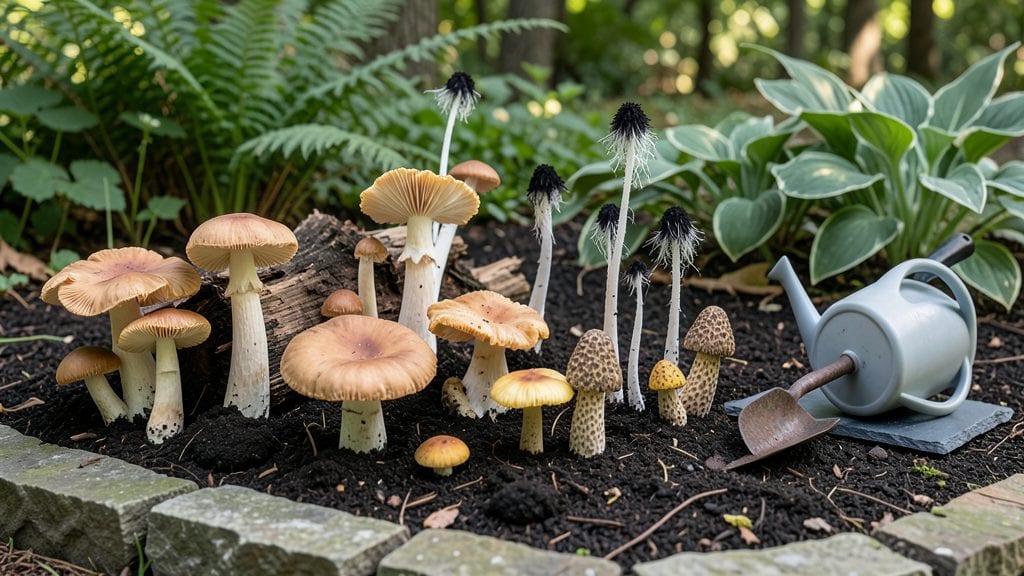
Identifying garden fungus types is the first step to saving your plants before they turn into a sad, brown mess. 🌱 I’ve spent years watching mushrooms pop up in my lawn, leaves develop weird white dust, and stems rot overnight—each one a different battle.
The key is spotting the clues early: color, texture, and where it strikes (leaves, stems, soil). Some fungi are harmless, but others will destroy your garden if you ignore them.
Most garden fungi thrive when conditions are just right—too much moisture, poor airflow, or crowded plants create the perfect party spot. Powdery mildew loves shaded leaves, while root rot sneaks in when soil stays soggy for weeks.
Even mushrooms in your lawn might be harmless, but they can signal compacted soil or overwatering. The good news? Many problems disappear with simple fixes like pruning for airflow or adjusting watering habits.
You’ll learn to recognize the 12 most common invaders—from fuzzy gray mold on roses to black spots on tomatoes—and how to stop them without harsh chemicals. Organic sprays, neem oil, and even baking soda can work wonders when applied at the right time.
The goal isn’t just to kill the fungus but to make your garden less inviting for future outbreaks.
Whether you’re dealing with a single infected plant or a full-blown garden crisis, this guide gives you the tools to act fast. No more guessing what’s wrong or watching your hard work wither away. Let’s turn those brown spots and fuzzy growths into a thing of the past.
Root Causes Of Fungal Growth
Fungal outbreaks in your garden aren’t random—they’re the result of specific conditions that fungi thrive in. Understanding these triggers is the first step to stopping them before they spread.
Below, we break down the key factors that turn your garden into a fungal buffet, along with the science behind why they happen.
Fungi love water—too much of it, that is. Most garden fungi require high humidity (above 75%) and prolonged moisture to germinate and spread. Here’s why it’s a problem:
- Oxygen deprivation: Wet soil and plant surfaces create an anaerobic (low-oxygen) environment, which weakens plants and makes them more susceptible to fungal infections.
- Spore germination: Fungal spores need moisture to activate. A single heavy rain or overwatering can trigger a chain reaction of spore release and growth.
- Root rot conditions: Poor drainage leads to waterlogged roots, cutting off oxygen and creating the perfect breeding ground for Phytophthora and Pythium (common soil-borne fungi).
Actionable fix: Improve soil drainage with organic matter (compost or perlite) and avoid watering at night. Use raised beds or mulch to regulate moisture.
Fungi are opportunistic—they wait for the right moment to strike. Temperature and humidity play a huge role:
- Ideal fungal range: Most garden fungi thrive between 60–85°F (15–30°C). Warm, muggy days (like summer afternoons) + cool, damp nights = fungal paradise.
- Seasonal triggers:
- Spring: Rapid growth from thawing soil and frequent rains.
- Fall: Leaves and debris provide food + high humidity.
- Dew and frost: Morning dew can extend moisture on leaves, while frost can weaken plant defenses, making them vulnerable.
Actionable fix: Space plants for airflow, water early in the day, and use fungicidal sprays (like neem oil) during peak fungal seasons.
Healthy plants resist fungi—stressed or crowded ones? Not so much. Here’s how it happens:
- Blocked airflow: Tightly packed plants create a microclimate with high humidity and low light, slowing evaporation and trapping moisture.
- Nutrient competition: Overcrowding leads to nutrient-deficient soil, weakening plants and making them easier targets for pathogens.
- Physical damage: Pruning wounds or insect bites (like aphids) create entry points for fungi to invade.
Actionable fix: Prune for airflow, thin out plants, and fertilize with balanced nutrients (too much nitrogen = softer, more susceptible leaves).
Leaves, mulch, and plant waste aren’t just garbage—they’re fungal buffets. Here’s why:
- Food source: Decaying matter provides carbohydrates and nitrogen, fueling fungal growth.
- Shelter for spores: Thick mulch or leaf litter protects spores from drying out, letting them survive and spread.
- Hidden infections: Infected plant debris can reintroduce fungi into the soil year after year.
Actionable fix: Remove all plant debris (especially diseased leaves) and sterilize tools between uses. Use straw mulch (less prone to fungal buildup) instead of wood chips.
Soil pH and nutrient levels directly impact fungal activity. Too much of the wrong thing can tip the scales in favor of fungi:
| Factor | How It Helps Fungi | Fix It With |
|---|---|---|
| High nitrogen | Soft, fast-growing tissue = easier fungal entry. | Balanced fertilizer (e.g., 5-10-5 NPK). |
| Low phosphorus | Weakens root systems, making them susceptible to root rot. | Bone meal or rock phosphate. |
| Acidic soil (pH < 6.0) | Favors pathogenic fungi like Fusarium and Rhizoctonia. | Lime (to raise pH) or compost (to buffer). |
Actionable fix: Test your soil annually and adjust with organic amendments. Avoid over-fertilizing—more isn’t always better!
Quick Fixes for Fungal Foes
Fungal infections in your garden can feel like an uphill battle, but with the right strategies, you can reclaim your plants and prevent future outbreaks. Below, we’ve mapped common causes to practical solutions—so you can act fast and keep your garden thriving.
Problem: Fungi like Phytophthora and Pythium thrive in soggy conditions, rotting roots and stems.
How to Fix It:
- 🔥 Improve Drainage – Amend soil with compost or perlite to loosen compacted areas. For containers, ensure pots have drainage holes.
- 👨🍳 Adjust Watering Habits – Water deeply but infrequently (early morning is best). Avoid overhead sprinkling, which keeps foliage damp.
- ⏰ Space Out Waterings – Let the top 1–2 inches of soil dry between waterings to discourage fungal growth.
💡 Prevention Tip: Mulch with straw or wood chips (not fresh wood) to retain moisture without suffocating roots.
Problem: Fungi like powdery mildew (Erysiphe) and rust (Puccinia) spread faster in tight, humid spaces.
How to Fix It:
- 🔪 Prune for Airflow – Thin out overgrown branches and remove dead leaves. Space plants according to their mature size.
- 🌡️ Boost Circulation – Use a fan on low setting near susceptible plants (like roses or tomatoes) to reduce humidity.
- ✨ Sanitize Tools – Wipe pruners with rubbing alcohol between cuts to prevent spreading spores.
💡 Prevention Tip: Plant fungus-resistant varieties (e.g., ‘Bliss’ tomatoes for mildew resistance) and avoid planting susceptible species too closely.
Problem: Nutrient deficiencies, pests, or extreme heat stress plants, making them vulnerable to infections like Botrytis (gray mold).
How to Fix It:
- 📊 Fertilize Smartly – Use a balanced, slow-release fertilizer (like 10-10-10) to avoid burning roots. Avoid high-nitrogen fertilizers if your plants are already struggling.
- 🥗 Treat Pests First – Address aphids, spider mites, or whiteflies with neem oil or insecticidal soap before fungi take hold.
- 🌿 Support Recovery – Move stressed plants to partial shade and water consistently until they bounce back.
💡 Prevention Tip: Harden off seedlings gradually and avoid sudden temperature swings (e.g., cold nights followed by hot days).
Problem: Leaves, mulch, or plant waste harbor fungal spores over winter, re-infecting your garden in spring.
How to Fix It:
- 🔪 Clean Up Thoroughly – Remove all infected plant material (don’t compost it—bag and discard). Rake up fallen leaves and dispose of them.
- 🥘 Solarize Soil (For Stubborn Cases) – Cover bare soil with clear plastic for 4–6 weeks in hot sun to kill spores (works best in summer).
- 🌱 Rotate Crops – Avoid planting the same family (e.g., tomatoes, peppers) in the same spot for 2–3 years to break the fungus life cycle.
💡 Prevention Tip: Use sterilized mulch (baked in an oven at 200°F for 30 minutes) or purchase pre-treated organic mulch.
Problem: Prolonged dampness encourages Alternaria leaf spot and other foliar fungi.
How to Fix It:
- 🌡️ Create Microclimates – Use shade cloth (30–50%) over susceptible plants during rainy spells.
- 🍳 Fungal Sprays (Preventative) – Apply baking soda spray (1 tsp baking soda + 1 quart water + a drop of dish soap) weekly during humid periods.
- ⏰ Time Your Tasks – Prune or harvest in dry weather to minimize spore spread.
💡 Prevention Tip: Choose drought-tolerant plants (like lavender or rosemary) for high-humidity areas.
For severe infections (e.g., root rot, blight), fungicides may be necessary:
- 🌿 Copper-based sprays (e.g., Bordeaux mixture) for general fungal control.
- 🍄 Biological controls like Trichoderma fungus (sold as soil drenches) to outcompete pathogens.
- 💊 Systemic fungicides (e.g., myclobutanil) for stubborn cases—follow label instructions carefully.
⚠️ Warning: Always rotate fungicide types to prevent resistance. Organic options are safer for edibles but may require more frequent applications.
Final Thought: The key to beating garden fungi is acting early and preventing recurrence. Start with cultural fixes (water, airflow, cleanup), then escalate to targeted treatments if needed. Your garden’s health is worth the effort!
Frequently asked questions about garden fungi
Are all mushrooms in my lawn harmful?
Most lawn mushrooms are harmless and just indicate excess moisture or compacted soil. However, some like Armillaria (honey fungus) can spread and damage roots. If mushrooms appear after heavy rain or in the same spot yearly, improve drainage or aerate the lawn to discourage them.
How do I tell if white spots on leaves are powdery mildew?
Powdery mildew looks like a white, dusty coating on leaves (especially undersides) that can be wiped off. Check for yellowing leaves or stunted growth—these confirm the infection. Unlike harmless dust, mildew spreads quickly in humid conditions and thrives on crowded plants.
Can I use vinegar to kill garden fungi?
White vinegar (1:1 with water) can help as a natural fungicide, but it’s best for preventative sprays—not severe infections. The acidity disrupts fungal spores, but it may harm plants if overused. Test on a small area first and reapply after rain.
Why do some plants get fungus while others nearby stay healthy?
Fungal infections often target stressed plants—think weak roots, poor airflow, or nutrient deficiencies. Healthy neighbors resist fungi better. For example, overwatered basil may develop Botrytis while drought-tolerant rosemary stays fungus-free. Focus on improving plant health first!
How long does it take for fungicides to work?
Most fungicides take 7–14 days to show results, depending on the severity. Preventative sprays (like neem oil) work faster, while systemic treatments may need multiple applications. Monitor plants closely and reapply after rain or if new growth appears infected.