Planting
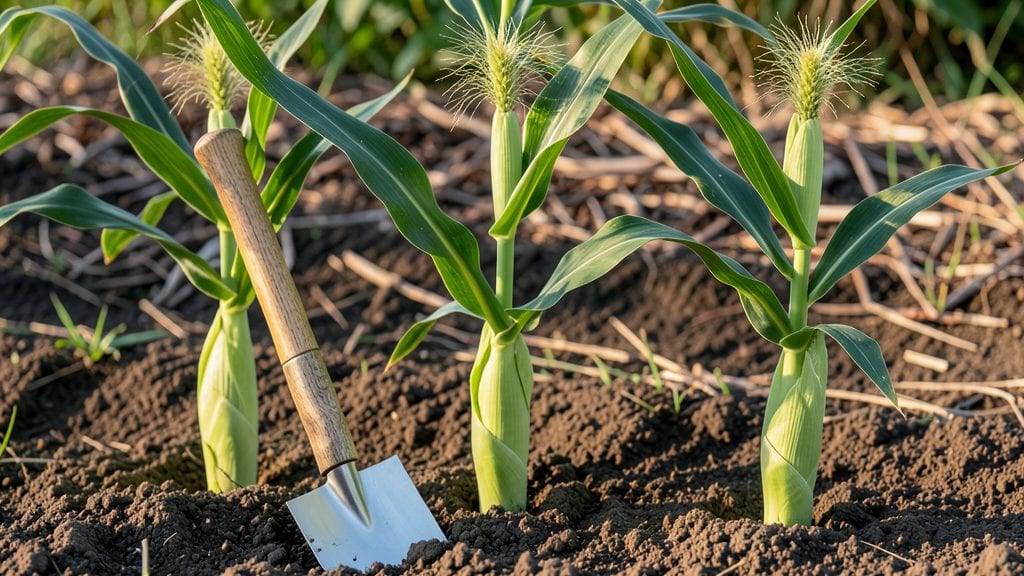
Getting your garden corn spacing right means the difference between a handful of ears and a towering harvest. I learned this the hard way—my first attempt had plants so crowded they fought for sunlight, leaving me with stunted stalks and half-formed cobs.
The right spacing isn’t just about fitting more plants in; it’s about giving each one room to grow strong and produce heavy, sweet kernels.
Most garden corn varieties need 12 to 18 inches between plants, with rows spaced 24 to 36 inches apart. Dwarf varieties can handle the tighter end of that range, while tall, sweet corn like Silver Queen needs the extra room to avoid shading.
The key is air circulation—crowded plants trap moisture, inviting fungal diseases that turn your harvest into a sad, moldy mess. Trust me, you’ll thank yourself later when you’re pulling ears instead of pulling weeds.
Once you nail the spacing, you’ll see the payoff in plump, uniform cobs that fill your kitchen with the smell of summer. The stalks stay sturdy, the silk dries faster, and you avoid the heartbreak of blighted plants.
Even if you’ve struggled before, this method works—just measure carefully, mark your rows, and let those plants breathe. The effort is worth every ear you harvest.
This approach works for home gardens, community plots, or even small urban spaces with containers. Whether you’re growing sweet corn, popcorn, or field corn, the principles stay the same. Let’s get those rows straight and those harvests bountiful.
📚 In This Guide
- What you need
- Instructions
- Tips and common mistakes
- Wrapping up and next steps
What you need
- ● Garden corn seeds – Choose a variety suited to your climate (e.g., Sweet Corn like 'Silver Queen' or 'Bodacious'). Aim for 1–2 seeds per hill (or 3–4 seeds per hill if thinning later). Plan for 1–2 lbs of seed per 100 ft of row.
- ● Well-draining soil – Test your soil’s pH (ideal: 6.0–6.8) and amend with compost or aged manure if needed.
- ● Organic fertilizer – A balanced 10-10-10 or 5-10-10 (nitrogen-heavy) or composted manure (e.g., 5 lbs per 100 ft of row).
- ● Watering system – Drip irrigation or a garden hose with a gentle spray nozzle (corn needs 1–1.5 inches of water per week).
- ● Garden trowel or hoe – For marking rows and planting holes.
- ● Measuring tape or ruler – To maintain 12–18 inches between plants and 36 inches between rows.
- ○ Stakes or labels – Optional but helpful for tracking varieties and spacing.
- ● Gloves and knee pads – For comfort during planting and maintenance.
- ● Mulch (straw or grass clippings) – To retain moisture and suppress weeds.
- ● Corn trellis or cages – For varieties that may need support (e.g., popcorn).
- ● Row cover or shade cloth – To protect seedlings from pests or harsh sun.
- ● Corn-specific pest control – Neem oil or diatomaceous earth for corn earworms or cutworms.
Step-by-Step instructions for planting corn with proper spacing
Follow these simple steps to ensure your corn plants have the room they need to grow strong and produce plentiful ears.
Prepare the Planting Site
Choose a location with full sun exposure, as corn thrives in at least 6-8 hours of direct sunlight daily. Clear the area of weeds and debris, then loosen the soil to a depth of 12 inches using a garden fork or tiller. This helps roots penetrate easily and prevents compaction.
If your soil is heavy or clay-like, mix in 2-3 inches of compost to improve drainage and fertility. Corn is a heavy feeder, so enriching the soil beforehand ensures strong stalks and abundant harvests. Test the soil pH—corn prefers a slightly acidic to neutral range of 6.0 to 6.8. If your soil is too alkaline, amend it with sulfur or peat moss before planting.
Mark and Space the Rows
Corn plants need 12-18 inches of space between each stalk to prevent overcrowding, which leads to poor air circulation and increased disease risk. For a 4-row planting, mark rows 30-36 inches apart using a garden hose or string lines. This spacing allows for easy access between rows when cultivating and harvesting.
Within each row, place seeds every 12 inches for single varieties or 18 inches if planting a mix of early and late-maturing types. Use a stick or dowel to poke small holes at the marked intervals—this ensures consistent depth and spacing. Planting too closely results in weak stalks and fewer ears, while over-spreading wastes space and reduces yield.
Plant the Seeds Correctly
Drop 2-3 seeds per hole at a depth of 1-1.5 inches, which is roughly 3 times the diameter of a corn kernel. Cover the seeds lightly with soil and firm gently to eliminate air pockets. Planting deeper than 1.5 inches delays germination because the seedling struggles to reach the surface.
Thin the seedlings to 1 strong plant per hill when they reach 6-8 inches tall. Use scissors or your fingers to snip or pull the weaker stalks at the base, leaving the healthiest one. Avoid yanking plants—this can disturb the roots of remaining seedlings. Water the area lightly after thinning to help the remaining plants establish quickly.
Maintain Proper Spacing as Plants Grow
As corn grows, monitor the spacing between stalks to ensure no overcrowding occurs. If plants begin to lean or touch, gently spread them apart to maintain the 12-18 inch spacing. This prevents competition for nutrients and sunlight, which can reduce ear size and quality.
Corn also benefits from succession planting if you have limited space. Plant a second crop 2-3 weeks after the first to extend your harvest season. Just be sure to stagger rows to avoid overcrowding the garden bed. Mulch around the base of plants with 2-3 inches of straw or grass clippings to retain moisture and suppress weeds without smothering the soil.
Harvest at Peak Ripeness
Corn is ready to harvest when the silks turn brown and the kernels are fully plump. Test a kernel by piercing it with your fingernail—if it releases a milky liquid, it’s at peak sweetness. Harvest by twisting the ear gently or cutting the stalk 1 inch above the ear. Avoid pulling stalks, as this can damage the plant.
Leave 1-2 ears per plant to allow for natural seed production if you plan to save seeds for next year. After harvesting, replant the area with a nitrogen-fixing crop like beans or peas to replenish the soil for future plantings. Proper spacing ensures your corn garden remains productive for seasons to come.
Tips & tricks for perfect garden corn spacing
These precision planting tips will help you maximize your corn harvest while avoiding common spacing mistakes that many gardeners make.
The Sunlight Factor: When selecting your planting site, prioritize areas that receive the full 6-8 hours of sunlight daily. I've learned the hard way that even partial shade can lead to weak stalks and poor ear development. If your garden has limited full-sun spots, consider using reflective surfaces like white plastic mulch to redirect sunlight to your corn plants during the critical afternoon hours.
Row Spacing Precision: The 30-36 inch row spacing in Step 2 isn't just arbitrary—it creates the perfect balance between yield and accessibility. I recommend using a 36-inch spacing for easier access between rows, especially if you have larger equipment or mobility concerns. For smaller gardens, 30 inches still provides excellent air circulation while saving space.
Seed Depth Consistency: Planting seeds at exactly 1-1.5 inches deep might seem straightforward, but maintaining this depth consistently across your entire planting area can be challenging. I've found that using a simple DIY seed depth gauge—a wooden dowel marked with the 1.5-inch depth—helps ensure uniformity. This prevents some seeds from being too shallow (which causes drying) or too deep (which delays germination).
Thinning Technique: When thinning seedlings in Step 3, I've discovered that timing is everything. Wait until plants reach 6-8 inches tall before thinning, but don't delay too long—once they start competing for sunlight, they're harder to separate cleanly. Use clean, sharp scissors to snip at the base rather than pulling, which can damage the remaining plants' roots. This careful approach ensures your strongest plants get an optimal start.
Pro Tips for Garden Corn Spacing
- These precision planting tips will help you maximize your corn harvest while avoiding common spacing mistakes that many gardeners make.
- The Sunlight Factor: When selecting your planting site, prioritize areas that receive the full 6-8 hours of sunlight daily.
- Row Spacing Precision: The 30-36 inch row spacing in Step 2 isn't just arbitrary—it creates the perfect balance between yield and accessibility.
Frequently asked questions
Got questions about getting that perfect corn spacing? You’re not alone! Here are some of the most common queries—and their straightforward answers—to help you plant with confidence.
How close can I plant corn without overcrowding?
For most sweet corn varieties, aim for 12–18 inches apart in rows spaced 30–36 inches apart. Overcrowding leads to poor air circulation, increasing disease risk and reducing ear size. If growing pole or popcorn, you can space plants slightly closer (10–12 inches), but prioritize row spacing for airflow.
When is the best time to plant corn for optimal spacing?
Plant corn after the last frost when soil temps reach 60°F+. For cooler climates, start seeds indoors 2–3 weeks before transplanting. Pro tip: If your growing season is short, opt for early-maturing varieties (50–60 days) to maximize yield before heat stress sets in.
Can I adjust spacing for different corn varieties?
Yes! Sweet corn needs the standard 12–18" spacing, while flint or dent corn (like field corn) can tolerate tighter rows (10–12"). Popcorn often benefits from slightly wider spacing (18–24") to prevent lodging. Check seed packets for variety-specific recommendations—some even suggest hill planting (multiple seeds per mound)!
What if my corn plants look crowded or stunted?
If leaves are yellowing or ears are small, it’s likely overcrowding. Thin seedlings to the recommended spacing ASAP—keep the strongest stalk per hill. For already-planted rows, consider side-dressing with compost or nitrogen-rich fertilizer to boost growth. If disease (like rust or blight) appears, improve airflow by widening rows temporarily.
Does container growing change spacing rules?
For containers, use 5-gallon pots per plant with at least 12" spacing between pots. Dwarf varieties (like ‘Golden Bantam’) work best in small spaces. Ensure pots have drainage holes—corn hates soggy roots! If growing in raised beds, treat spacing like open-ground rows but add 2–3 inches extra for root spread.
Wrapping up and next steps
Perfecting your garden corn spacing is the secret to a thriving harvest—think taller stalks, sweeter ears, and fewer struggles with pests or disease! 🌽 By following the right spacing guidelines (whether for sweet corn, popcorn, or field corn), you’re not just planting seeds; you’re investing in a lush, productive garden.
Now that you’re armed with the knowledge, grab your gloves and head to the garden—your future corn cobb salad (or fresh-off-the-cob feast!) is waiting.
Next step: Mark your rows, prep the soil, and plant with confidence. Happy growing! 🌱