
Tools
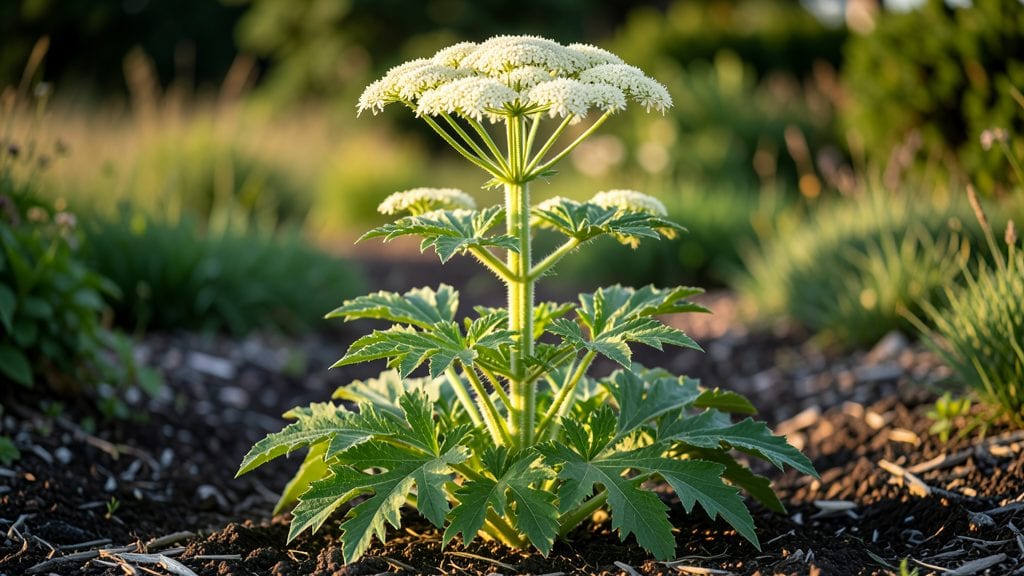
Growing angelica flower in your shade garden means fragrant, towering stems that hummingbirds adore and chefs covet. 🌿 I’ve grown this bold perennial for years, and it’s become my go-to for adding height and texture where sun struggles to reach.
The key? Rich soil, patience, and a spot where it won’t bake in summer heat.
Angelica thrives in partial to full shade, tolerating even deep shade once established—perfect for under trees or north-facing borders. Start seeds indoors 8-10 weeks before last frost or plant nursery starts in early spring.
The soil should be moist but well-draining; amend heavy clay with compost to keep roots happy. Fertilize lightly in spring with compost or a balanced organic fertilizer.
By midsummer, you’ll see 6-foot-tall stalks topped with lacy white flowers that attract pollinators. Prune spent blooms to encourage more flowers, but leave some seed heads for birds. Harvest leaves and stems in early summer for culinary or medicinal use—just avoid over-pruning, or you’ll stunt next year’s growth.
This shade-loving giant handles frost well and often self-seeds, making it a low-maintenance perennial. In cold climates, mulch heavily in winter to protect the crown. Whether you’re growing it for its striking foliage, medicinal properties, or just to fill a shady corner, angelica delivers drama with minimal fuss.
📚 In This Guide
- What you need
- Instructions
- Tips and common mistakes
- Wrapping up and next steps
What you need
- ● Angelica seeds or nursery-grown plants: 3–5 plants (or 1 packet of seeds, ~50 seeds). Opt for Angelica archangelica for the classic variety.
- ● Well-draining soil: Mix 60% garden soil with 30% compost and 10% perlite or sand for optimal aeration.
- ● Organic mulch: 2–3 inches of shredded bark or straw to retain moisture and suppress weeds.
- ● Garden trowel or spade – For digging holes (6–8 inches deep).
- ● Pruning shears – To trim dead foliage or overgrown stems.
- ● Watering can or hose with a gentle nozzle – Angelica loves moisture but hates soggy roots!
- ● Garden gloves – Protect your hands from thorns (yes, they’re mild but present!).
- ○ pH testing kit (optional) – Ideal soil pH: 6.0–7.0. Adjust with lime or sulfur if needed.
- ● A shady to partially shaded spot (dappled sunlight or 4–6 hours of indirect light daily).
- ● Patience! Angelica grows slowly but rewards you with fragrant blooms in year 2–3.
- ● Consistency in watering – Keep soil evenly moist, especially during the first growing season.
Step-by-step guide to planting and cultivating angelica flowers
Here’s how to establish a thriving patch of this fragrant, shade-loving perennial with minimal fuss.
🌱 Step 1: Select the Perfect Planting Site
Angelica thrives in partial to full shade, so choose a location with 4-6 hours of dappled sunlight daily—think under tall trees or along north-facing walls. The soil should be moist, well-draining, and rich in organic matter, as angelica hates soggy roots but demands consistent hydration. I always test the soil first by squeezing a handful: if it crumbles easily but holds shape when damp, it’s ideal.
If your soil is heavy clay, amend it with 2-3 inches of compost mixed into the top 12 inches of soil. Angelica’s deep roots need room to spread, so avoid compacted areas. A slight slope helps prevent water pooling—just enough to keep roots aerated without drying out.
🌿 Step 2: Plant Crowns at the Right Depth and Spacing
Dig holes twice as wide as the root ball but only as deep as the crown—burying too deep suffocates the plant, while planting too shallow invites rot. Space plants 3-4 feet apart to allow their 3-5 foot tall stems to grow without crowding. I like to arrange them in loose clusters of three for a natural, fragrant border.
Gently loosen the roots if they’re circling the root ball, then place the plant so the crown sits just above soil level. Backfill with native soil mixed with a handful of slow-release organic fertilizer (like composted manure) to give it a nutrient boost. Water deeply right after planting to settle the soil and eliminate air pockets.
💧 Step 3: Water Consistently Without Overdoing It
Angelica’s deep roots mean it needs 1-2 inches of water per week, but the key is deep, infrequent watering rather than light daily sprinkles. Water at the base of the plant in the morning to reduce fungal risks—avoid wetting the foliage, which can promote mildew. You’ll know moisture is right when the top 2 inches of soil feel damp but not soggy.
Mulch around the base with 2-3 inches of shredded bark or leaves to retain moisture and suppress weeds. Replenish mulch annually in early spring, keeping it 2 inches away from the stem to prevent rot. In drought-prone areas, I water every 5-7 days instead of relying on rainfall, adjusting based on soil dryness.
✂️ Step 4: Prune for Health and Fragrance
Deadhead spent flower stalks in late summer to encourage a second flush of blooms and redirect energy into next year’s growth. Use clean, sharp shears to cut back 1/3 of the plant’s height in early spring before new growth begins—this prevents flopping and improves air circulation. I always leave a few stems standing for winter interest and seed dispersal.
If stems become leggy or flop over, trim them back to half their height in late summer. Avoid heavy pruning after mid-August, as new growth won’t harden off before frost. Angelica’s fragrant leaves can be harvested sparingly throughout the season—just snip outer stems to encourage bushier regrowth.
☀️ Step 5: Protect and Maintain for Long-Term Growth
Angelica is hardy in USDA zones 3-8, but young plants benefit from a light frost blanket in their first winter. In colder climates, mound 4-6 inches of mulch around the base before the first freeze. Over time, the plant’s deep roots make it drought-tolerant, but first-year plants need extra care—water them every 5-7 days if rainfall is scarce.
Fertilize lightly in early spring with a balanced organic fertilizer (like 10-10-10) to support new growth. Too much nitrogen leads to leafy growth at the expense of flowers, so I skip heavy feeding after the first year. Watch for aphids or slugs—handpick pests early and use beer traps for slugs to keep the garden chemical-free.
Tips & tricks for perfect angelica flower gardens
A few simple strategies will help you cultivate angelica that thrives for years with minimal effort. Here's what I've learned after watching my own garden flourish.
The Light Factor: Angelica's tolerance for shade can be misleading—those 4-6 hours of dappled sunlight should be bright enough to cast shadows, not just filtered light. I've found that planting near deciduous trees works beautifully in spring and summer, but the same spot becomes too shady in winter when leaves fall. Consider this seasonal shift when choosing your location.
Soil Preparation Secret: The 2-3 inches of compost mixed into the top 12 inches of soil isn't just about nutrients—it's about creating the perfect crumbly texture. I take this a step further by adding a handful of perlite to the mix, especially if your native soil is dense. This improves drainage while maintaining moisture retention, which angelica absolutely craves. The goal is soil that feels like a damp sponge when squeezed.
Planting Depth Technique: Getting the crown depth just right is crucial—planting too deep suffocates the plant while too shallow risks rot. I use a simple trick: after placing the crown, gently press the surrounding soil until it's firm enough to support the stem. Then I make a small well around the base to catch water, preventing it from running away from the roots during watering.
Watering Wisdom: Those 1-2 inches of water per week are non-negotiable, but timing matters just as much. I've found that watering in the early morning gives the foliage plenty of time to dry before evening, reducing fungal risks. For the first year, I set up a drip irrigation system on a timer for 20 minutes every 5-7 days—this ensures consistent moisture without overwatering.
Pro Tips for Garden Angelica Flower
- A few simple strategies will help you cultivate angelica that thrives for years with minimal effort.
- The Light Factor: Angelica's tolerance for shade can be misleading—those 4-6 hours of dappled sunlight should be bright enough to cast shadows, not just filtered light.
- Soil Preparation Secret: The 2-3 inches of compost mixed into the top 12 inches of soil isn't just about nutrients—it's about creating the perfect crumbly texture.
Frequently asked questions
Got questions about growing garden angelica flower? You’re not alone! This fragrant perennial is stunning but has some quirks. Below, we’ve answered the most common questions to help you cultivate it with confidence.
How do I know if my garden angelica flower is getting enough shade?
Garden angelica thrives in partial to full shade, but it can tolerate dappled sunlight in cooler climates. If leaves turn yellow or crispy, it’s likely getting too much sun—relocate it to a spot with 4–6 hours of indirect light daily. Conversely, if growth is leggy or sparse, it may need a little more brightness.
When is the best time to plant garden angelica?
The ideal time to plant is early spring or early fall, when soil is cool and moist. Avoid extreme heat or frost, as young plants are delicate. If starting from seed, sow in late winter under cover or directly in spring after the last frost for best results.
Can I grow garden angelica in containers? What size pot do I need?
Yes! Angelica adapts well to containers, but choose a large pot (at least 12–18 inches wide) with drainage holes. Use well-draining potting mix and place it in a spot with morning sun and afternoon shade. Repot every 2–3 years to refresh the soil.
Why are my angelica leaves turning brown or spotted?
Brown or spotted leaves often signal fungal issues (like powdery mildew) or pests like aphids. Improve airflow by spacing plants 18–24 inches apart, and spray with neem oil if pests appear. Avoid overhead watering to keep foliage dry.
What can I plant alongside garden angelica for a shade-friendly garden?
Pair it with hostas, ferns, astilbes, or lungwort for a lush, low-light garden. Angelica’s tall stems also make a great backdrop for bleeding hearts or Japanese forest grass. Just ensure companions have similar moisture and shade needs!
Wrapping up and next steps
Growing garden angelica in your shade-loving garden isn’t just rewarding—it’s a breath of fresh air (literally!). This fragrant perennial brings elegance, pollinator support, and low-maintenance beauty to dimmer corners, proving that shade doesn’t mean sacrificing charm.
Whether you’re drawn to its lacy blooms, culinary uses, or wildlife-friendly appeal, angelica is your ticket to a thriving, sensory-rich garden.
Ready to dive in? Start small—plant a single clump this season and watch it multiply into a lush, fragrant focal point. You’ve got this! 🌿✨