
Pests
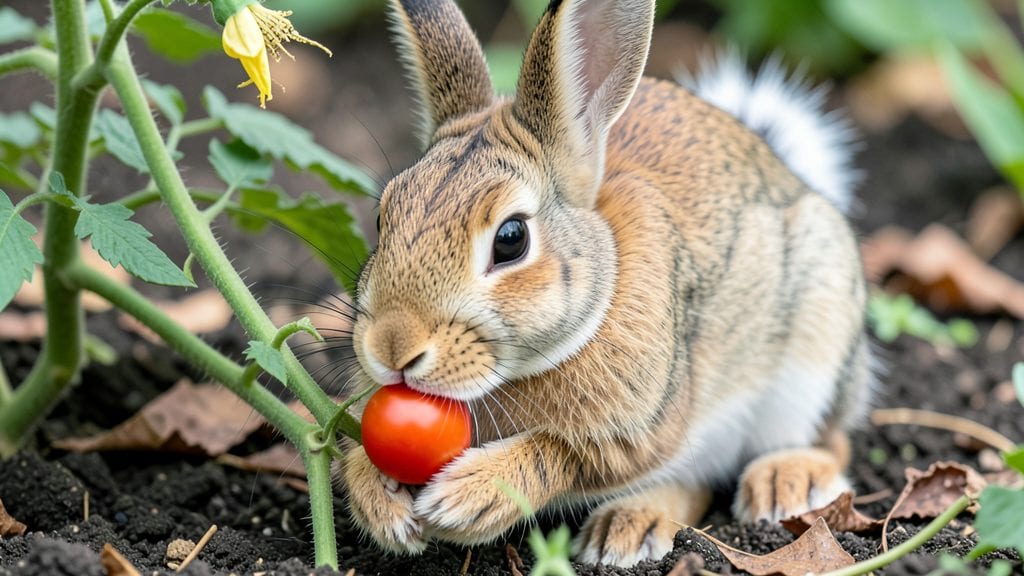
Rabbits will eat tomatoes in the garden, but this is risky because their solanine content can trigger mild digestive issues or toxicity when consumed in large amounts. Opt for safer greens like cilantro, parsley, or leafy lettuce instead.
While rabbits may nibble on tomatoes out of curiosity, the solanine in unripe or green tomatoes poses a bigger threat than ripe fruit. 🌱 This natural toxin can cause stomach upset, lethargy, or even neurological symptoms in severe cases—especially for young rabbits with sensitive systems.
Even ripe tomatoes contain small amounts, so it's best to keep them out of reach entirely. Instead, focus on rabbit-safe plants like basil, dandelion greens, or clover, which provide essential nutrients without the risks.
To protect your garden, consider installing a chicken wire fence around tomato plants or interplanting with rabbit-deterring herbs like rosemary. 🌿 Rabbits are more likely to avoid areas with strong aromas, so companion planting can save both your harvest and your pets' health.
Always monitor your garden for signs of grazing, as even small bites can add up over time.
💡 In This Article
- Solanine in Tomatoes: Risks for Rabbit Health
- Rabbit-Friendly Garden Alternatives to Tomatoes
Solanine in tomatoes: risks for rabbit health
Tomatoes contain solanine, a glycoalkaloid toxin naturally produced as a defense mechanism against pests.
In ripe red tomatoes, solanine levels typically measure between 2-5 milligrams per 100 grams, but this concentration spikes dramatically in green or unripe tomatoes, reaching up to 10 times higher—sometimes exceeding 50 milligrams per 100 grams.
For comparison, a single green tomato (100g) could contain enough solanine to cause noticeable digestive distress in a 5-pound rabbit, while ripe tomatoes pose less immediate danger but still carry risk when consumed regularly.
The danger lies in how solanine affects rabbits' delicate systems.
This compound disrupts acetylcholine receptors in the nervous system, potentially causing neurological symptoms like muscle weakness, tremors, or even paralysis in severe cases. 🔥 Rabbits also lack the liver enzymes to efficiently metabolize solanine, meaning what they ingest stays active longer in their systems.
Young rabbits are particularly vulnerable because their developing organs are more sensitive to toxins. Even ripe tomatoes contain small amounts of solanine, but the real concern comes from accidental consumption of green tomatoes or tomato leaves, which can contain 3-5 times more than the fruit itself.
Potatoes offer a useful comparison—both belong to the nightshade family and contain solanine, but potatoes are far more concentrated. A single green potato (100g) can contain 200-300 milligrams of solanine, making it far more toxic than tomatoes.
However, rabbits are more likely to encounter tomatoes in gardens, where they might nibble on fallen fruit or young plants.
The key risk factor is consistency: occasional small bites of ripe tomato may cause mild stomach upset, but regular exposure—especially to green tomatoes or foliage—can lead to cumulative toxicity over time.
What makes this particularly tricky is that rabbits often show no immediate reaction to small amounts of solanine.
Symptoms like lethargy, loss of appetite, or diarrhea may only appear 6-12 hours after consumption, by which point the damage could already be underway. 💫 This delayed response makes it easy for well-meaning owners to underestimate the risk.
The safest approach is to treat tomatoes as you would any other nightshade—completely off-limits in a rabbit's diet, regardless of ripeness. Even organic tomatoes carry the same risks, as solanine production isn't affected by farming practices.
For gardeners concerned about rabbits munching on their tomato plants, the solution lies in prevention rather than cure. Installing chicken wire fencing (1 foot high) around tomato beds or using companion plants with strong scents (like rosemary or thyme) can deter rabbits effectively.
The key is understanding that while rabbits might eat tomatoes out of curiosity, the long-term health risks—especially for young or pregnant rabbits—far outweigh any temporary satisfaction of a garden snack.
Here's what you should watch for if your rabbit has access to tomatoes: uneaten leaves on tomato plants, small bite marks on fruit, or changes in your rabbit's behavior like hiding more often or eating less hay.
These could signal early-stage solanine exposure. 🌿 The good news is that rabbits have resilient digestive systems, and with prompt removal of tomatoes from their diet, most cases resolve within 24-48 hours without permanent damage. Prevention, however, remains the most reliable strategy.