
Flowers
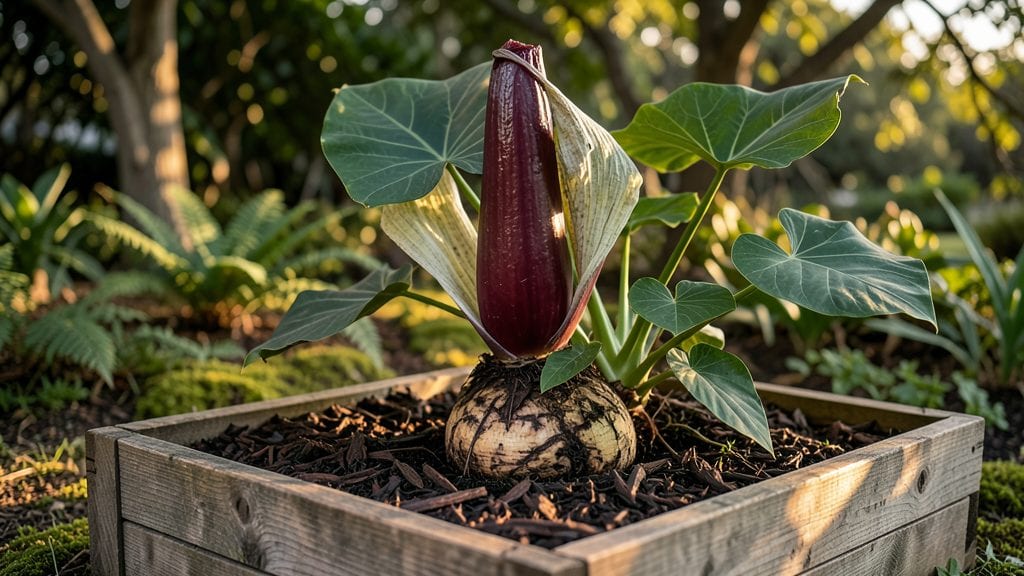
Growing a corpse flower in a botanic garden requires tropical greenhouse conditions, rich organic soil, and precise humidity control between 70-90%. Bloom timing is unpredictable but often occurs every 7-10 years, triggered by temperature shifts and plant maturity. Patience and specialized care are essential for this rare, carnivorous-smelling Amorphophallus titanum.
A corpse flower botanic garden thrives by mimicking its native Sumatra rainforest habitat, where temperatures rarely dip below 75°F and moisture stays high year-round. 🌿 The plant's dramatic blooms—often smelling like rotting meat to attract flies—demand a 10+ year investment before flowering, as it stores energy in its massive underground corm.
My experience shows that even slight deviations in humidity can stall growth, so automated misting systems prove invaluable for maintaining those 70-90% levels consistently.
What truly sets these gardens apart is their ability to replicate the plant's natural triggers. The corpse flower's bloom cycle kicks off after years of dormancy when nighttime temperatures drop just 5-10°F—a shift that signals maturity.
Many botanic gardens use ethylene gas treatments to simulate this, though the results remain unpredictable. The reward? A spectacle that lasts just 24-48 hours, making every condition perfect the difference between success and disappointment.
💡 In This Article
- Understanding Corpse Flower Bloom Cycles and Triggers
- Botanic Garden Setup Guide for Corpse Flower Cultivation
Understanding corpse flower bloom cycles and triggers
The corpse flower's bloom cycle is governed by a fascinating interplay of biological signals and environmental cues. Here's what's actually happening: the plant's massive underground corm (which can weigh 100+ pounds in mature specimens) acts like a biological battery, storing starches and nutrients over decades.
When the corm reaches critical mass—typically after 10-15 years—it triggers a hormonal cascade. The key factor is ethylene gas production, which spikes when nighttime temperatures drop 5-10°F below daytime highs, mimicking Sumatra's seasonal patterns. 🌡️
In its native Sumatra habitat, the corpse flower experiences 24-hour temperature swings between 80-85°F days and 65-70°F nights, creating this natural trigger. Botanic gardens replicate this using programmable cooling systems that simulate these fluctuations.
What most people don't realize is that the plant's root pressure builds dramatically during this period—sometimes reaching 10-15 PSI—which forces the flower spike upward through the soil in just 24-48 hours. This hydraulic mechanism is similar to how bamboo shoots emerge, but on a much grander scale.
The science behind this involves two critical phases: vegetative growth and reproductive maturity. During the first 5-7 years, the plant focuses on corm expansion, while the final 3-5 years are spent building energy reserves.
The bloom itself is a 24-72 hour event that consumes 40-60% of the corm's stored energy, which is why the plant often enters dormancy afterward. This energy expenditure explains why blooms occur so infrequently—it's an all-or-nothing biological gamble for the plant.
Botanic gardens face unique challenges replicating these conditions. While Sumatra's rainforests maintain 90-95% humidity naturally, garden environments require artificial misting systems or pebble trays to achieve 70-90% humidity. The most successful programs use ethylene-releasing compounds to simulate the natural trigger, though results vary.
For example, the New York Botanical Garden's specimen bloomed after a 12-year cycle when nighttime temps were lowered to 68°F for 3 consecutive weeks, demonstrating how precise these environmental cues must be.
What truly separates expert cultivation from casual attempts is understanding the plant's energy budget. The corpse flower's corm contains up to 30% starch content by weight—similar to a potato but on a 100-pound scale. This starch converts to sugars during bloom, which is why gardeners monitor soil moisture carefully.
Too much water dilutes nutrient uptake, while too little stresses the corm. The optimal balance is achieved through bottom-watering systems that maintain consistent moisture without waterlogging the roots.
Here's a practical insight: many botanic gardens use infrared thermometers to monitor corm temperature, as even 1°F variations can delay blooming. The plant's natural response to temperature shifts is so precise that some institutions now use automated climate chambers to test different trigger scenarios.
While we've learned much about the process, the corpse flower's bloom timing remains an art as much as a science—partly because each specimen has its own internal clock influenced by genetic factors.