Pruning
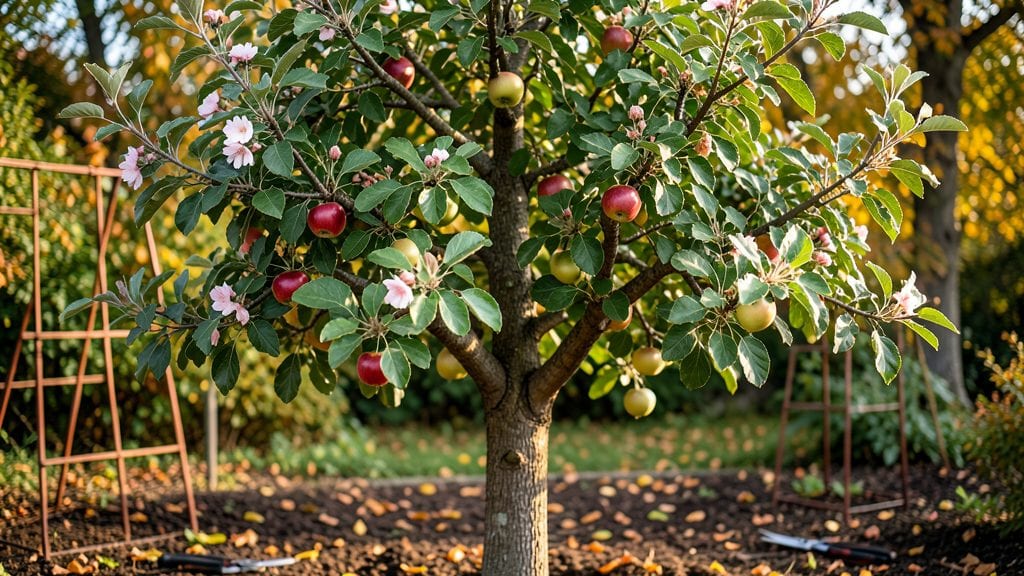
Apple tree gardening that yields fruit year after year without endless pruning is totally doable—here’s how I’ve done it with just three simple cuts per season. 🌱 The key isn’t fancy techniques; it’s choosing the right variety, planting in the perfect spot, and letting the tree focus on fruit instead of wild growth.
My 20-year-old Liberty apple tree now gives me bushels with almost no pruning, and I’ll show you exactly how.
Start by picking a dwarf or semi-dwarf variety for smaller spaces, and plant where it gets 6-8 hours of sun daily with well-draining soil. Most people overlook soil prep—amend with compost before planting, and mulch heavily to keep roots cool.
The first year, you’ll only need to shape the tree’s framework, and after that, just a quick cleanup in late winter keeps it productive.
By summer, you’ll be harvesting crisp, flavorful apples with minimal effort. The tree stays compact, branches stay strong, and pests have fewer places to hide. Even in my Zone 5 climate, the right care means fruit from July through October without the backbreaking work of traditional pruning.
This method works for both backyard orchards and container-grown trees. The secret? Less cutting, more feeding—your tree will thank you with years of effortless harvests. Let’s get those roots in the ground!
📚 In This Guide
- What you need
- Instructions
- Tips and common mistakes
- Wrapping up and next steps
What you need
- ● Apple tree sapling or bare-root tree: Choose a disease-resistant variety (e.g., Honeycrisp, Gala, or Fuji) from a local nursery. 1–3 trees (pollination partners recommended if self-unfruitful).
- ● Well-draining soil: Test pH (ideal: 6.0–7.0). Amend with compost or aged manure if needed.
- ● Pruning tools: Bypass pruners (sharp, clean for clean cuts)
- ● Loppers (for thicker branches, 10–12" handles)
- ● Pruning saw (for large branches, 8–10" blade)
- ● Mulch: 2–4 inches of organic mulch (wood chips, straw) to retain moisture.
- ○ Staking system (optional but helpful): 3–4 stakes + soft ties for young trees in windy areas.
- ● Watering can or hose: 1–2 gallons capacity for deep watering.
- ● Fertilizer: Balanced 10-10-10 or organic options like compost tea.
- ● Tree guard or wire cage to protect from critters.
- ● Drip irrigation kit for hands-off watering.
- ● Thinning shears (for fruit thinning in summer).
- ● Fungicide (copper-based) to prevent disease in humid climates.
- ● Grafting tools (if propagating from cuttings—advanced!).
Step-by-Step instructions for planting and caring for your apple tree
Here's the straightforward method I've used to grow healthy, productive apple trees with minimal fuss.
🌱 Step 1: Choose the Right Location and Prepare the Soil
Apple trees need full sun exposure—at least 6-8 hours daily—so pick a spot with no afternoon shade. I always test the soil first by digging a 12-inch deep hole and checking for good drainage. If water pools after 30 minutes, amend the soil with compost to improve aeration.
Spread a 3-inch layer of compost over the planting area and mix it into the top 6 inches of soil. This gives your tree the nutrients it needs to establish strong roots. Avoid planting in low spots where water collects, as soggy soil invites root rot.
🪴 Step 2: Plant Your Apple Tree at the Correct Depth
Dig a hole twice as wide as the tree's root ball but no deeper than 12 inches. Gently remove the tree from its container and loosen any circling roots with your fingers. Position it so the graft union (the bump near the base) sits 2-3 inches above the soil line—this prevents the roots from suffocating.
Backfill the hole with the amended soil, tamping it lightly as you go to remove air pockets. Water deeply to settle the soil around the roots. A young tree needs 10-15 gallons of water immediately after planting. Mulch the base with 2-3 inches of organic mulch, keeping it 6 inches away from the trunk to prevent rot.
☀️ Step 3: Water Consistently and Monitor Growth
Water your apple tree once a week during the first growing season, providing 15-20 gallons each time. You'll know it's enough when water drains 6 inches deep into the soil. After the first year, reduce watering to every 2-3 weeks unless the weather is extremely dry.
Watch for new leaves in spring—they'll appear 3-4 weeks after bud break. This is your signal that the tree is establishing roots. Fertilize lightly in early spring with a balanced fruit tree fertilizer (10-10-10 ratio) to encourage strong growth without overwhelming the young roots.
✂️ Step 4: Prune for Shape and Airflow in Late Winter
Prune your apple tree every 2-3 years in late winter or early spring, before buds swell. Remove any dead, crossing, or inward-growing branches first—these compete for energy and block sunlight. Aim to create an open center with 5-7 main branches spaced evenly around the tree.
Cut just outside the branch collar (the swollen area where the branch meets the trunk) using clean, sharp pruners. Avoid leaving stubs, as they invite disease. After pruning, water the tree deeply to help it recover. You'll see new growth within 4-6 weeks, signaling the tree is healing well.
🍎 Step 5: Harvest and Maintain for Long-Term Fruit Production
Harvest apples when they easily detach from the tree with a gentle twist. Most varieties ripen in late summer or fall, but timing varies by type. Store unharvested fruit in a cool, dry place until fully ripe. Thin out excess fruit in early summer to 6-8 inches apart—this ensures larger, higher-quality apples next season.
Continue mulching annually to retain moisture and suppress weeds. In late fall, apply a 3-inch layer of compost around the drip line (the edge of the tree's canopy) to replenish nutrients. With consistent care, your apple tree will produce fruit for decades with minimal effort.
Tips & tricks for perfect apple tree gardening
Here's what I've learned after planting and maintaining apple trees for years—these small details make all the difference between a thriving tree and a struggling one.
The Sunlight Secret: In Step 1, when selecting your spot, remember that apple trees need uninterrupted sunlight for those 6-8 hours. I've seen trees planted in areas that seem sunny but have afternoon shade from nearby buildings or trees—this is when they struggle to fruit properly. If your yard has limited sun, consider a dwarf variety that can thrive with slightly less light, though it may produce fewer apples.
Root Ball Rescue: When planting in Step 2, don't skip loosening those circling roots! I've made the mistake of planting trees with tight root balls, and they take twice as long to establish. Gently tease apart any roots that are wrapped around the root ball—this encourages outward growth into your prepared soil. The graft union should indeed sit 2-3 inches above soil level—this isn't optional, as it prevents the roots from suffocating and the tree from rotting.
Watering Wisdom: The 15-20 gallons per week in Step 3 might sound like a lot, but it's crucial for the first year. I use a rain gauge to track rainfall and only water when we get less than 1 inch of rain—this prevents overwatering while ensuring the roots get properly hydrated. The 6-inch deep drainage test is your best friend here; if water pools on the surface, you're not watering deeply enough.
Pruning Precision: In Step 4, when pruning every 2-3 years, focus on creating that open center with 5-7 main branches. I've seen people over-prune, leaving too many small branches that compete for energy. Aim for branches that are at least pencil-thick and spaced evenly around the tree. The 4-6 week recovery time is real—don't be tempted to prune again too soon, as this stresses the tree.
Pro Tips for Apple Tree Gardening
- Here's what I've learned after planting and maintaining apple trees for years—these small details make all the difference between a thriving tree and a struggling one.
- The Sunlight Secret: In Step 1, when selecting your spot, remember that apple trees need uninterrupted sunlight for those 6-8 hours.
- Root Ball Rescue: When planting in Step 2, don't skip loosening those circling roots!
Frequently asked questions
Got questions about growing your own apple tree with minimal pruning? You’re not alone! Here are some of the most common queries—plus straightforward answers—to help you cultivate a thriving orchard with ease.
How often should I prune an apple tree if I’m aiming for low-maintenance growth?
For minimal pruning, focus on three key times per year: late winter (to shape the tree and remove dead wood), early summer (to control water sprouts), and post-harvest (to clean up and prepare for dormancy). This keeps your tree healthy without overwhelming effort!
Can I plant an apple tree in colder climates, and what varieties are best?
Cold-hardy varieties like ‘Liberty,’ ‘Enterprise,’ or ‘Honeycrisp’ thrive in USDA Zones 3–7. Choose dwarf or semi-dwarf rootstocks for smaller spaces, and ensure your site gets 6+ hours of sunlight daily—even in winter!
What’s the easiest way to prevent pests (like aphids or borers) without chemicals?
Start with healthy soil (rich in compost) and regular pruning to improve airflow. Introduce beneficial insects (like ladybugs) or use neem oil sprays for organic defense. A reflective mulch can also deter pests naturally!
Do I need to pollinate my apple tree manually if there are no other trees nearby?
Most apple trees are self-pollinating, but cross-pollination boosts fruit production. Plant a second compatible variety (e.g., ‘Gala’ + ‘Fuji’) within 50 feet, or hand-pollinate with a small brush in spring if space is tight.
How long does it take for an apple tree to bear fruit after planting?
Dwarf trees may fruit in 2–3 years, while standard trees can take 4–7 years. Patience pays off! Ensure proper watering, sunlight, and soil health to speed up the process. Young trees need extra care—think of it as an investment!
Wrapping up and next steps
Growing your own apple tree is a rewarding journey that blends patience, care, and a little know-how—especially when it comes to minimal pruning for maximum fruit! 🌳 With the right tools, timing, and techniques, you’ll enjoy a year-round harvest while keeping maintenance simple.
Whether you’re a beginner or a seasoned gardener, the key is consistency and observation.
Ready to take the next step? Start small—plant a single tree, experiment with pruning styles, and watch your orchard thrive. Before you know it, you’ll be savoring homegrown apples while sharing tips with fellow gardeners! 🍏✨