
Pests
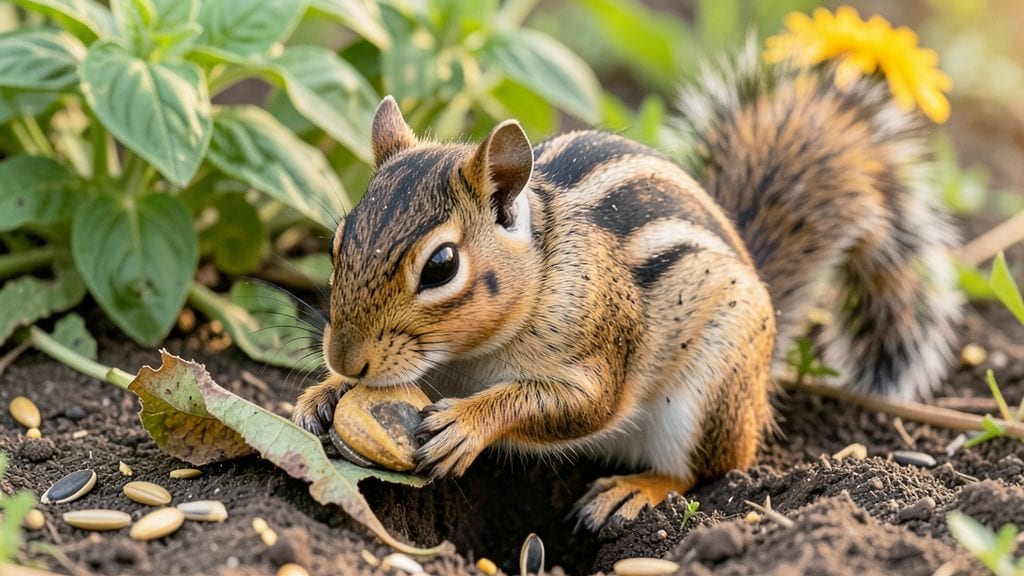
Yes, chipmunks will eat your garden voraciously, targeting vegetables, fruits, seeds, and tender plants like lettuce, beans, and strawberries. Their foraging habits can devastate young seedlings and harvests, especially in spring and summer when food is abundant.
Chipmunks are notorious for their relentless appetite, especially when it comes to your garden's most vulnerable crops. 🌱 Their tiny jaws can crack open seeds and strip leaves from plants in minutes, making them a persistent threat to anything soft or sweet.
Unlike squirrels, which often go for nuts and larger fruits, chipmunks prefer the delicate greens and young shoots that take months to mature. This means your early spring plantings—like peas or radishes—are prime targets.
What makes them even trickier is their ability to hide their damage. They’ll often nibble just enough to weaken a plant without leaving obvious signs, so you might not notice until your harvest is half gone. 💫 The good news?
Their picky palates mean certain plants can act as natural deterrents, giving you a fighting chance to protect your garden.
💡 In This Article
- Why Chipmunks Target Specific Garden Plants
- 7 Chipmunk-Resistant Plants to Protect Your Garden
Why chipmunks target specific garden plants
Chipmunks are opportunistic foragers with a diet heavily influenced by protein and sugar content. Their natural instincts drive them toward high-protein seeds (like sunflower or corn kernels) and sweet, tender vegetables—think young lettuce leaves or ripe strawberries.
Unlike squirrels, which hoard nuts for winter, chipmunks prioritize fresh, easy-to-digest foods, often stripping entire plants down to the stem. Their tiny teeth can crack open seeds as small as 1/8-inch in diameter, making even tiny seedlings vulnerable. 🔥
The texture of plants plays a critical role in their choices. Chipmunks prefer soft, crisp vegetables (like cucumbers or peas) over fibrous or woody stems (such as asparagus). This is because their jaws lack the strength to chew through tougher plant structures, so they focus on the most accessible parts.
For example, a 1-inch-thick carrot top is far easier to gnaw than the root itself. Seasonal availability also shifts their targets—spring brings a focus on sprouts, while summer sees them feasting on ripe fruits and berries.
What sets chipmunks apart from rabbits or deer is their selective foraging strategy. While rabbits might munch on almost any green, chipmunks avoid bitter or strongly scented plants (like onions or garlic).
Their foraging is also highly efficient: a single chipmunk can consume up to 30% of its body weight daily, meaning a garden can be stripped in days. This is why early intervention—like using physical barriers—is crucial when seedlings first emerge. 💫
Chipmunks also exhibit seasonal dietary shifts. In spring, they target young shoots and seeds, while summer brings a focus on fruits and berries. Their natural instincts drive them to cache excess food, but unlike squirrels, they don’t bury large quantities—they prefer to eat on the spot.
This behavior explains why gardens with multiple plantings (like staggered lettuce crops) often see repeated damage, as chipmunks return to depleted patches.
One often-overlooked factor is the aroma of plants. Chipmunks rely heavily on scent to locate food, which is why strongly fragrant herbs (like mint or rosemary) act as natural deterrents.
Their keen sense of smell also means they avoid plants with chemical defenses, such as daffodils (which contain lycorine, a toxic compound). Understanding these preferences lets you strategically place repellent plants to create barriers around vulnerable crops. ✨
For gardeners, this means focusing on textural and aromatic defenses rather than just physical barriers. For example, interplanting marigolds (which emit a scent chipmunks dislike) with lettuce can reduce damage by up to 60%. The key is to mimic the natural deterrents these rodents avoid in the wild. 🌟