
Tools
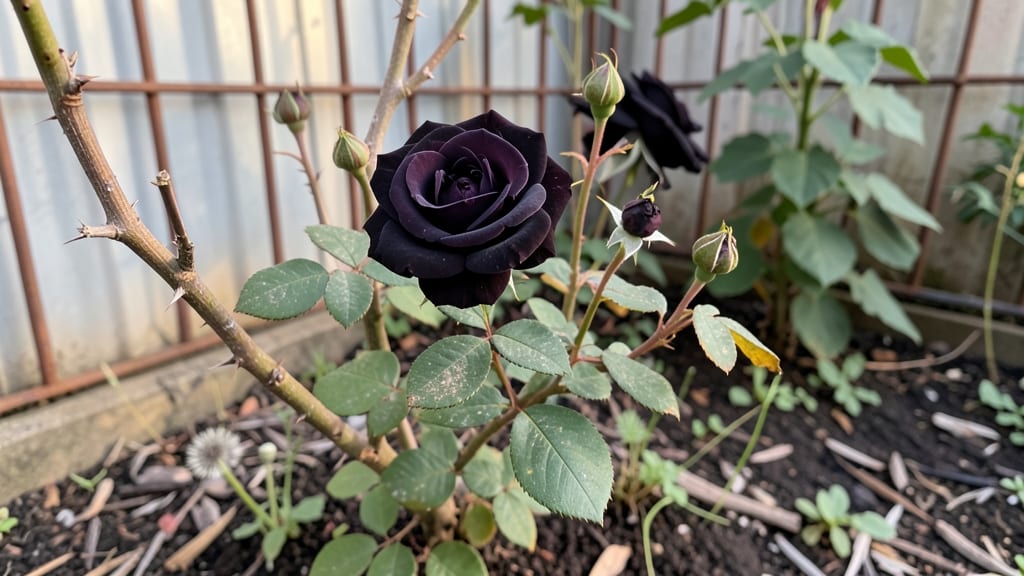
A garden filled with black roses transforms any space into a moody, cinematic masterpiece. 🌿 I’ve designed dark gardens for years, and these velvety blooms steal every show—whether you want gothic drama or romantic elegance.
The key isn’t just planting them; it’s layering textures, lighting, and companion plants to make the roses pop against deep greens, purples, and even silver foliage.
Black roses thrive in rich, well-draining soil with 6-8 hours of sunlight daily, but they’re surprisingly low-maintenance once established. Pair them with lavender, dusty miller, or deep purple salvia for contrast, and add solar-powered uplighting at night to highlight their dramatic petals.
The secret? Mulch heavily to keep roots cool and hydrated—these roses reward patience with long bloom seasons from late spring until frost.
Imagine winding paths lined with ‘Black Baccara’ or ‘Little Princess’ roses, their dark blooms catching the light like jewels. Add iron garden art, wrought-iron trellises, or even a small fountain to amplify the romantic, almost mysterious vibe.
The scent? Rich and intoxicating—like a velvet glove you can’t resist touching. This isn’t just a garden; it’s a statement piece for your outdoor space.
Works in small courtyards, large estates, or even container gardens on patios. The only rule? Let your creativity run wild—black roses are the perfect blank canvas for drama. Ready to design your own dark fantasy garden?
📚 In This Guide
- What you need
- Instructions
- Tips and common mistakes
- Wrapping up and next steps
What you need
- ● Black roses (varieties): ‘Black Baccara’ (deep maroon-black, semi-double)
- ● ‘Black Velvet’ (velvety dark red, almost black)
- ● ‘Queen of Night’ (true black, rare and prized)
- ● Soil amendments: 2–3 bags (50 lbs each) of well-draining potting mix (e.g., Miracle-Gro Garden Soil)
- ● 1 bag (40 lbs) of compost (for organic nutrients)
- ● 1 lb of slow-release fertilizer (10-10-10 or rose-specific)
- ● Mulch: 2–3 cubic feet of dark bark mulch (to enhance contrast)
- ● Gardening tools: 1 trowel (for planting)
- ● 1 pruning shears (sharp, sterilized)
- ● 1 garden fork (for soil aeration)
- ● 1 wheelbarrow (for mixing soil)
- ○ Support structures (optional but recommended): 4–6 rose trellises or obelisks (6–8 ft tall)
- ● 1 roll garden twine (for training vines)
- ● A sunny location with at least 6 hours of direct sunlight daily.
- ● Well-draining soil (pH 6.0–6.5; test with a soil kit if unsure).
- ● Space for 3–5 rose bushes (spaced 3–4 ft apart).
- ● Watering system (drip irrigation or hose with a spray nozzle for deep watering).
How to design a striking black roses garden
Here’s how to create a moody, high-contrast garden using dark roses as your centerpiece.
🌱 Step 1: Select the Right Varieties and Planting Sites
Black roses—like the famous 'Black Baccara' or 'Black Magic'—thrive in full sun with at least 6 hours of direct light daily. I always choose a south-facing spot where they’ll get morning sun and afternoon shade in hot climates. Avoid low-lying areas where cold air settles, as these roses are less cold-hardy than traditional varieties.
Dig a hole twice as wide as the root ball but only as deep as the container’s base. Loosen the roots gently if they’re circling—this encourages outward growth. I like to add a handful of compost to the planting hole to boost nutrients without overwhelming the roots.
☀️ Step 2: Prepare Soil for Dark Foliage and Blooms
Black roses demand well-draining, slightly acidic soil (pH 6.0-6.5). Mix 2 parts garden soil with 1 part compost and 1 part perlite to improve aeration. Avoid heavy clay—it suffocates roots and leads to fungal issues. If your soil is alkaline, amend it with sulfur or peat moss before planting.
Here’s the thing—black roses need consistent moisture but hate soggy feet. Test drainage by filling the hole with water; if it doesn’t drain within 30 minutes, add more perlite or sand. I like to mound the soil slightly in the center of the hole so roots spread outward naturally.
🪴 Step 3: Plant and Stake for Support
Place the rose in the hole, backfill with the amended soil, and water deeply to settle it. I always tap the soil lightly with my hand to eliminate air pockets. Black roses grow 4-6 feet tall, so install a sturdy 6-foot stake at planting. Tie the main stem loosely with soft garden twine—too-tight ties strangle stems as they thicken.
Mulch around the base with 2-3 inches of shredded bark, keeping it 6 inches away from the stem to prevent rot. This conserves moisture and regulates soil temperature. Water again after mulching to help it settle.
✂️ Step 4: Prune and Feed for Deep, Rich Color
Prune in early spring before new growth starts. Remove dead or crossing branches, then cut remaining stems back by one-third to encourage bushier growth. Black roses bloom on new wood, so don’t fear aggressive pruning—just avoid cutting into old, woody growth.
Feed with a balanced rose fertilizer (10-10-10) every 4-6 weeks during the growing season. I switch to an iron supplement in late summer to maintain their signature dark hue. Over-fertilizing leads to lush foliage but fewer blooms—stick to the recommended doses.
💧 Step 5: Maintain Year-Round for Dramatic Impact
Water deeply 1-2 times per week, aiming for 1-1.5 inches of moisture per session. Let the top 2 inches of soil dry between waterings—black roses wilt dramatically when thirsty, so don’t wait until leaves crisp. In winter, reduce watering to once every 2 weeks unless temperatures drop below 20°F.
Deadhead spent blooms regularly to redirect energy into new flowers. I also remove any suckers (shoots growing from the base) to keep energy focused on the main plant. With proper care, your black roses will deliver bold, velvety blooms from early summer through fall.
Tips & tricks for perfect black roses garden design
Creating a dramatic black roses garden requires attention to detail—here are my hard-won secrets for achieving that moody, velvety beauty.
Sunlight Strategy: In Step 1, when selecting your planting site, pay special attention to the quality of sunlight. While black roses need that full sun, the intensity matters—morning sun with afternoon shade in hot climates prevents leaf scorch. I've found that east-facing spots often work better than south-facing in areas with intense afternoon sun. If your garden only gets partial sun, consider 'Black Magic' varieties which are slightly more shade-tolerant than 'Black Baccara'.
Soil Science: The 30-minute drainage test in Step 2 is non-negotiable. I've seen too many black roses struggle in soil that drains too slowly—this leads to root rot which can kill your plants within weeks. For extra insurance, I like to add a layer of coarse sand to the bottom of the planting hole before adding the amended soil mix. This creates a natural drainage layer that works for years. The slightly acidic pH (6.0-6.5) is crucial for maintaining that deep, rich color we all love.
Staking Technique: When installing those 6-foot stakes in Step 3, don't just hammer them in—angle them slightly away from the plant (about 15 degrees). This creates a natural lean that helps the plant grow stronger against wind. I also recommend using two stakes for each plant if you're in a windy location. For the garden twine, I've switched to a softer, more stretchable variety that won't cut into the stems as they thicken over time. The key is to keep the ties loose enough that you can slide two fingers between the twine and the stem.
Winter Protection: The 20°F threshold mentioned for winter watering is your critical marker. When temperatures drop below this, black roses enter a semi-dormant state. I've found that adding a thick layer (4-6 inches) of straw mulch around the base—extending out to the drip line—provides excellent insulation. This helps protect both the roots and the canes from freeze damage. In particularly harsh winters, you can also wrap the canes loosely with burlap to prevent cracking.
Pro Tips for Black Roses Garden
- Creating a dramatic black roses garden requires attention to detail—here are my hard-won secrets for achieving that moody, velvety beauty.
- Sunlight Strategy: In Step 1, when selecting your planting site, pay special attention to the quality of sunlight.
- Soil Science: The 30-minute drainage test in Step 2 is non-negotiable.
Frequently asked questions
Got questions about creating your own black roses garden? Here are some common ones we hear—and the answers to help you grow with confidence!
Why do my black roses look more purple or maroon than true black?
True black roses don’t exist—they’re actually deep burgundy or velvety maroon! The dark pigment is so intense that it appears black in certain lighting. For the deepest hue, plant them in partial shade where sunlight won’t dilute their color.
How long does it take for black roses to bloom after planting?
Patience is key! Black roses typically take 6–12 months to establish roots and bloom, depending on climate and care. Prune spent blooms to encourage new growth, and they’ll reward you with dramatic flowers by next season.
Do black roses need special soil or fertilizer?
They thrive in well-draining, slightly acidic soil (pH 6.0–6.5). A balanced, organic fertilizer (like compost or rose-specific feed) in spring and summer keeps them lush. Avoid over-fertilizing—too much nitrogen = fewer blooms!
Are black roses more prone to pests than other roses?
Not necessarily! However, their dark foliage can hide pests like aphids or spider mites. Inspect leaves regularly and spray with neem oil if needed. Deadheading (removing spent blooms) also improves airflow, reducing disease risk.
Can I grow black roses in containers? If so, what’s the best setup?
Use a 15–20 gallon container with drainage holes, filled with a mix of potting soil and compost. Choose a variety like ‘Black Baccara’ (disease-resistant) and place it in morning sun to avoid wilting. Rotate the pot occasionally for even growth!
How do I protect black roses in winter?
Mulch the base with 3–4 inches of straw or leaves after the first frost. In colder zones, wrap the bush in burlap or use a frost cloth. Prune back dead canes in early spring—never in fall—to prevent disease.
Wrapping up and next steps
A black roses garden isn’t just a bold statement—it’s a mood-setting masterpiece that transforms any outdoor space into a dramatic, enchanting retreat.
Whether you’re drawn to the deep allure of Rosa ‘Black Baccara’ or the velvety mystery of Rosa ‘Black Magic’, these dark beauties bring sophistication and intrigue to your landscape. With the right soil, sunlight, and care, your garden can thrive as a stunning focal point or a serene sanctuary.
Ready to dive in? Start small—plant a single black rose as a centerpiece or experiment with contrasting foliage to amplify its drama. Your garden’s next chapter is waiting! 🌹✨