
Vegetables
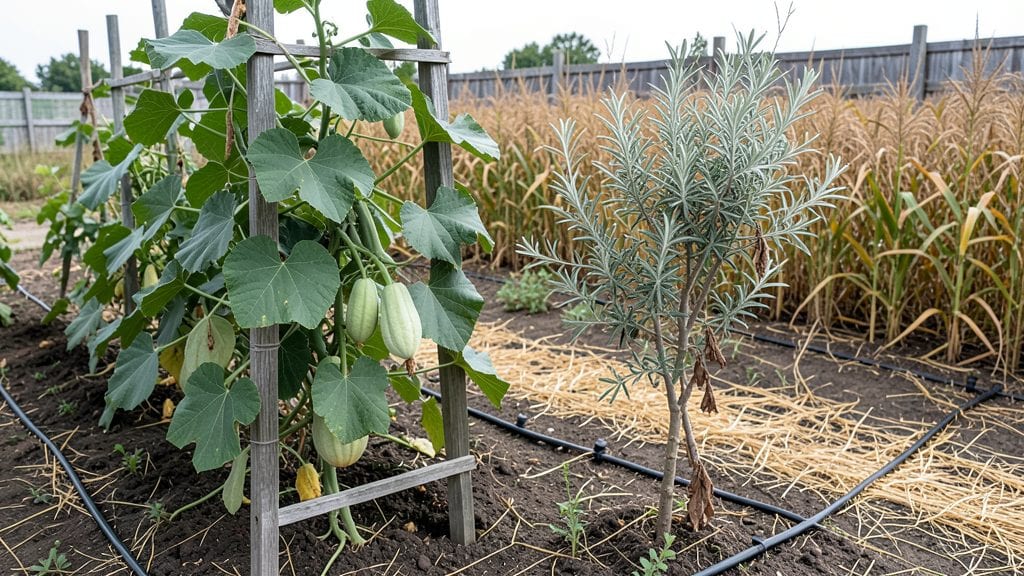
Texas A&M agriculture gardening programs specialize in climate-adapted plant selection and soil management to thrive in Texas’ extreme heat and drought conditions, featuring drought-resistant crops like pecan trees, native wildflowers, and warm-season vegetables. Their evidence-based approaches focus on water conservation and natural pest control for long-term garden success.
Texas A&M’s gardening expertise shines in its ability to match plants with Texas’ diverse microclimates—from the clay-rich Blackland Prairies to the rocky Hill Country. 🌵 Their research identifies heat-tolerant varieties that minimize irrigation needs while maximizing yield, such as Texas Superstar™ plants bred for resilience.
What sets their approach apart is the integration of traditional farming knowledge with modern soil science, ensuring gardens flourish even during 100°F+ summers.
Beyond plant selection, A&M’s techniques emphasize mulching systems that lock in moisture and companion planting to deter pests naturally. For example, their recommended spring planting calendar aligns with Texas’ erratic rainfall patterns, while neem oil treatments provide chemical-free pest control.
These methods aren’t just theoretical—they’re battle-tested in real Texas gardens, from urban backyards to large-scale farms.
💡 In This Article
- Texas-Specific Plant Hardiness Zones and Climate Adaptations
- Step-by-Step Texas Gardening Techniques from A&M Experts
Texas-specific plant hardiness zones and climate adaptations
Texas A&M's plant hardiness zone mapping system (ranging from 8a to 10a) reflects the state's dramatic climate variations, where summer temperatures can soar to 110°F in West Texas while coastal areas maintain more moderate 90°F conditions.
Their research identifies heat tolerance thresholds for plants—like 105°F for pecan trees—which determines which species thrive in each zone. The key factor? Texas A&M's scientists measure not just temperature but also humidity levels and soil moisture retention, creating a three-dimensional climate profile that standard hardiness zones miss. 🔥
Soil composition plays a critical role in plant survival. The clay-heavy Blackland Prairies (zones 8a-8b) retain moisture longer but can become waterlogged during heavy rains, while the sandy soils of the Hill Country (8b-9a) drain quickly but struggle to hold nutrients.
A&M's research shows that native grasses like buffalo grass thrive in clay soils because their deep root systems access moisture at 3-4 feet depth, while Texas bluebonnets prefer sandy loams where they can spread aggressively without competing for water.
The university's soil tests reveal that amending clay with 20% sand improves aeration, while sandy soils benefit from 30% compost to boost water-holding capacity.
Microclimates create additional challenges. In the Hill Country, rocky limestone bedrock forces plants to develop shallow but wide root systems to capture sparse rainfall, while the Rio Grande Valley (10a) offers frost-free growing seasons that enable year-round production of citrus and tropical vegetables.
A&M's data shows that evapotranspiration rates (water loss) in West Texas can exceed 0.3 inches per day during peak summer, making irrigation timing critical. Their research demonstrates that drip irrigation systems applied at dawn reduce evaporation by 40% compared to overhead watering.
Plant selection must account for these variables.
For example, native wildflowers like blackfoot daisies have evolved to flower prolifically after just 1 inch of rain, while pecan trees require 120 frost-free days and 30-50 inches of annual rainfall—making them ideal for East Texas (8a) but unsuitable for West Texas (9a-10a).
A&M's Texas Superstar™ program identifies plants that combine heat tolerance, drought resistance, and low maintenance, such as Turk's cap (a native shrub that thrives on 10 inches of water per year) and Mexican feather grass, which requires no irrigation once established.
Pest pressure varies dramatically by region. In humid East Texas, fungal diseases like powdery mildew thrive in the 90%+ humidity common during summer, while West Texas faces aphid infestations that multiply rapidly in the dry heat.
A&M's integrated pest management (IPM) strategies recommend neem oil sprays for fungal control in East Texas and beneficial nematodes for aphid management in West Texas. Their research shows that companion planting—like pairing basil with tomatoes—can reduce pest damage by 30-50% by disrupting insect life cycles.
The university's climate adaptation research extends to urban gardening, where heat island effects can make city microclimates 5-10°F warmer than surrounding areas. A&M recommends reflective mulches (like white gravel) to lower soil temperatures by 10-15°F and shade cloths that reduce leaf temperatures by 20°F during peak afternoon heat.
These adaptations ensure that even small urban gardens can produce heat-tolerant vegetables like Okra and Sweet Potatoes, which thrive in 100°F+ conditions with minimal water.