
Tools
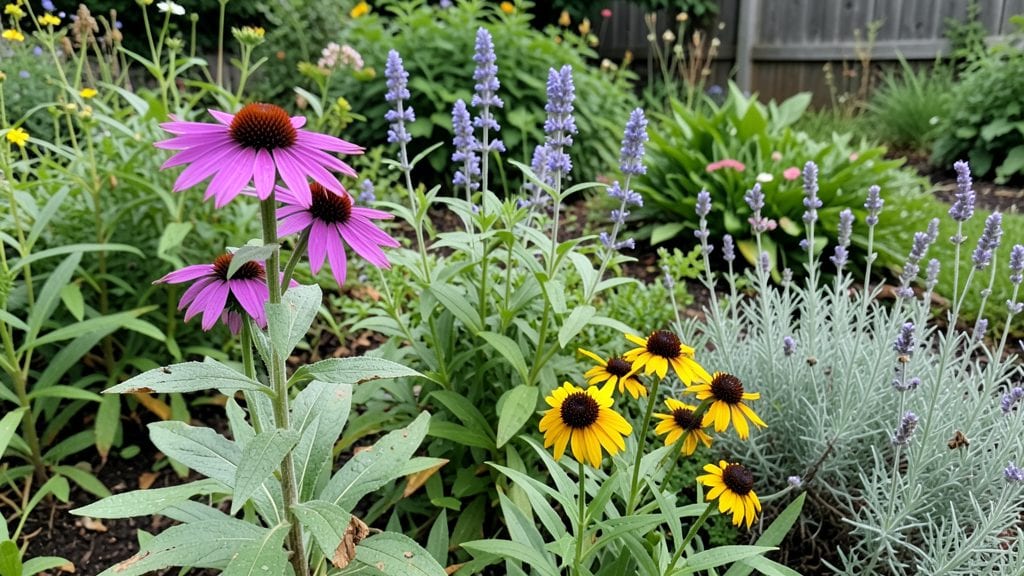
A perennial garden mix creates stunning visual impact when planted with strategic layering—start with tall plants (24–36 inches), follow with mid-height (12–24 inches), and finish with low growers (6–12 inches)—this arrangement maximizes seasonal color while ensuring every plant gets optimal sunlight and airflow.
A well-planned perennial garden mix isn't just about aesthetics—it's about creating an ecosystem where each plant supports the others. 🌿 The tallest varieties like black-eyed Susans or coneflowers act as natural sunbreakers, protecting delicate shade lovers behind them.
I've found that grouping plants with similar water needs together reduces maintenance by up to 40%, while staggered bloom times keep your garden vibrant from spring through fall.
What many gardeners overlook is how foliage texture plays into the mix. Mixing broad-leafed plants like hostas with fine-textured grasses creates visual contrast that draws the eye, while evergreens like heucheras provide winter structure when other plants go dormant.
The key is thinking in three dimensions—height, spread, and seasonal interest—rather than just rows of similar plants.
💡 In This Article
- How Planting Depths Affect Perennial Growth
- Layering Techniques for a Low-Maintenance Perennial Garden
How planting depths affect perennial growth
The science behind planting depth reveals why some perennials struggle while others thrive. Root systems fall into two main categories: taproots (like peonies) that grow deep for stability, and fibrous roots (such as daylilies) that spread horizontally for water access.
Taproots need 12-18 inches of soil to establish properly—any shallower, and they'll compete with grass roots for nutrients. Meanwhile, fibrous-rooted plants perform best when planted just below their soil line, allowing roots to expand naturally without restriction. 🌱
Depth directly impacts a plant's ability to access water and nutrients. For example, a black-eyed Susan planted too deep may develop weak stems because its roots can't reach surface moisture during dry spells.
Conversely, shallow planting exposes roots to temperature extremes—hot sun can bake them, while cold snaps may freeze tender roots. The ideal planting depth creates a root zone where soil temperature stays 50-70°F, balancing microbial activity that breaks down organic matter into plant-available nutrients.
Winter hardiness depends heavily on proper depth. Plants like coneflowers (Echinacea) have crowns that need 2-3 inches of soil cover to survive freezing temperatures. When planted too shallow, these crowns become vulnerable to heaving—a process where soil expands and contracts with freeze-thaw cycles, exposing and damaging the growth point.
I've seen gardens where improperly planted perennials died back completely after just one harsh winter, while correctly placed specimens thrived for decades. ❄️
Over-planting creates another common failure point. Crowding forces roots to compete aggressively for space, leading to stunted growth and increased susceptibility to diseases like powdery mildew.
The rule of thumb is to space plants based on their mature size—giving a 3-foot diameter coneflower at least 2 feet of clearance prevents root competition. Shallow planting compounds this problem by limiting the soil volume available for root expansion, creating a vicious cycle of stress and decline.
Consider the case of hostas, which have shallow but extensive root systems. When planted too deep, their crowns suffocate from lack of oxygen, while shallow planting exposes them to drying winds.
The sweet spot is planting at the same depth they grew in their nursery pot—typically 1-2 inches below soil level—while ensuring the surrounding soil is amended with 20-30% compost to improve moisture retention without compacting the root zone. 🌿
What most gardeners don't realize is how planting depth affects flowering. Deep-rooted perennials like Russian sage develop stronger stems when their roots can access deeper moisture reserves, resulting in taller, more robust blooms.
Shallow planting forces them to divert energy toward root expansion rather than flower production, creating a visually weaker display. This is why professional perennial beds often feature a 3-tiered depth structure—tall plants with deep roots, mid-height with moderate depth, and low growers with shallow roots.