
Tools
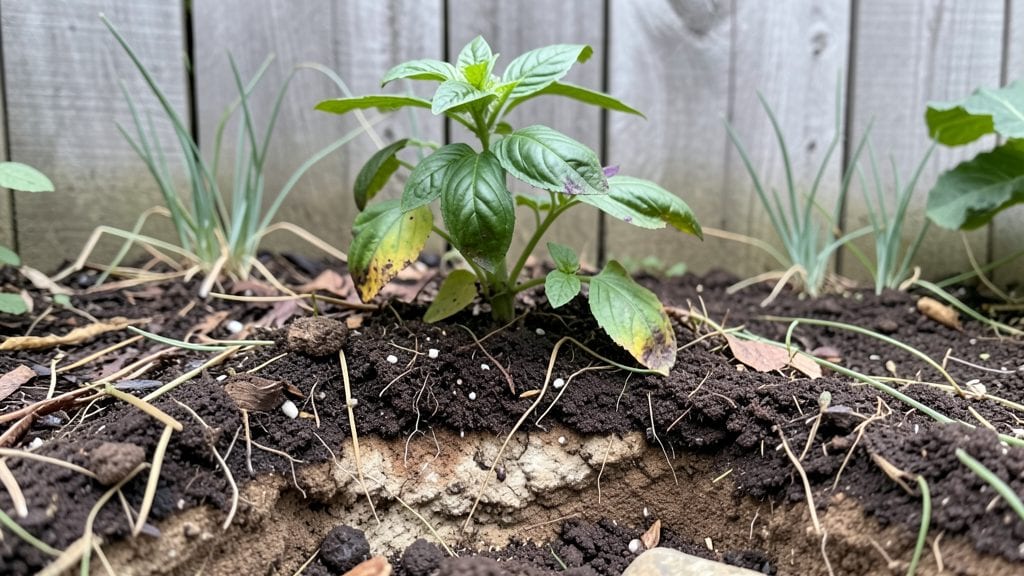
Understanding garden soil layers reveals how natural processes create distinct zones—organic-rich topsoil, clay-heavy subsoil, and weathered parent rock—each playing a vital role in plant development and nutrient cycling.
These layers aren't just random—they're a living ecosystem shaped by centuries of organic decay and mineral shifts. 🌱 The topmost layer, where most roots thrive, is packed with decomposed plant matter and microbes, while deeper layers store minerals that gradually feed upward.
For gardeners, recognizing these zones helps you know exactly where to add compost (topsoil) or break up compacted clay (subsoil) for healthier plants.
What's fascinating is how these layers interact: water filters through topsoil, carrying dissolved nutrients down to subsoil where they're stored until roots reach them. This natural plumbing system explains why some plants struggle in heavy clay while others thrive in loose, airy topsoil.
Knowing your soil's profile lets you match plants to their ideal growing conditions.
💡 In This Article
- How Soil Horizons Develop Naturally
- Improving Garden Soil Structure by Layer
How soil horizons develop naturally
The transformation of raw rock into layered soil begins with biological and chemical weathering. At the surface, organic matter like fallen leaves and plant debris accumulate in the O horizon, where decomposers like fungi and bacteria break down materials into humus—a dark, crumbly substance rich in nutrients.
This process can take decades, with each layer of organic debris adding about 0.1-0.5 inches of new topsoil annually in temperate climates. The key factor here is moisture: too dry, and decomposition slows; too wet, and anaerobic conditions create smelly, slow-breaking matter.
Beneath this organic layer lies the A horizon, or true topsoil, where mineral particles mix with remaining organic material. This zone typically ranges from 2-12 inches deep and contains about 5-10% organic matter by volume.
The science here involves leaching—water carrying dissolved nutrients downward while leaving behind finer particles like silt. This creates the crumbly texture ideal for root penetration. For example, a well-developed A horizon might contain 40% sand, 40% silt, and 20% clay, creating perfect drainage while retaining moisture for plants.
Deeper still is the B horizon, where minerals like iron, aluminum, and silica accumulate through illuviation—the process where water deposits dissolved materials from above. This layer often feels denser due to clay accumulation, which can make it waterlogged during heavy rains.
The contrast between horizons becomes obvious when you dig: the A horizon might feel like moist sponge cake, while the B horizon resembles packed clay. This density difference explains why some plants struggle to root deeper than 12-18 inches in heavy soils.
At the bottom, the C horizon contains partially weathered parent material—broken rock fragments with minimal organic content. Here, physical weathering dominates: freeze-thaw cycles crack rocks, and plant roots wedge into fractures. Over centuries, this material gradually breaks down into finer particles that migrate upward.
What's surprising is how slowly this happens—some minerals take thousands of years to fully weather into plant-available forms. This explains why volcanic soils remain fertile for centuries after eruptions.
The entire process creates what scientists call a soil profile, where each horizon plays a specialized role. The O and A horizons act like a living filter, while the B horizon serves as a mineral reservoir.
Understanding this helps explain why some garden spots produce lush vegetables while others struggle—it's all about which layers are well-developed and how they interact. For gardeners, this means testing your soil's depth and structure before planting deep-rooted crops like carrots versus shallow ones like lettuce.
What most people don't realize is how connected these layers are. A healthy topsoil depends on the subsoil beneath it—if the B horizon is too dense, water and roots get stuck, creating poor drainage.
This interconnectedness is why amending just the top layer often leads to temporary improvements, while true soil health requires addressing the entire profile. 🌟