
Light Requirements
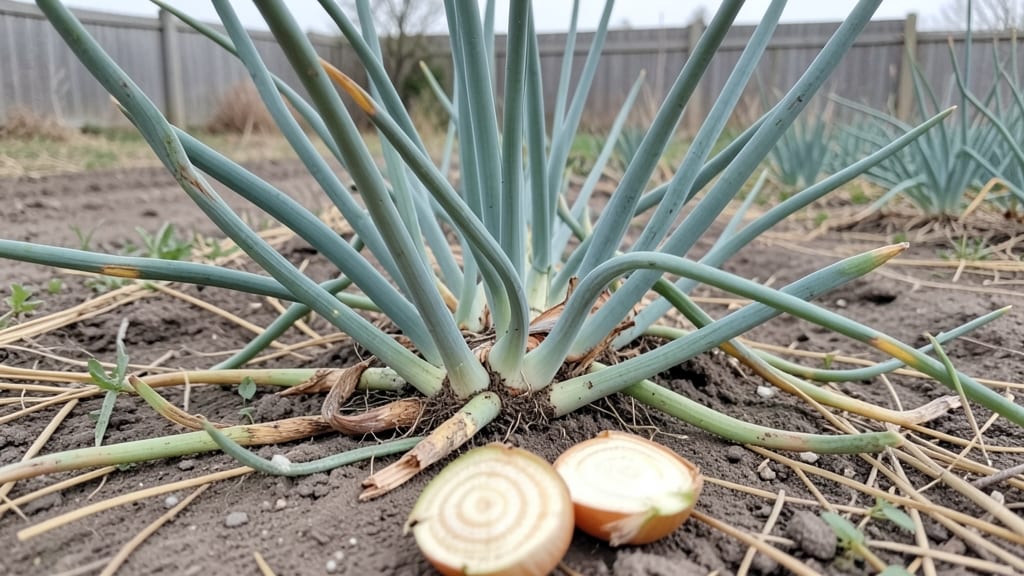
You can eat wild onions from your yard only if you’ve positively identified them as edible Allium species—such as wild onions, chives, or garlic—while ruling out toxic doubles like wild garlic mustard or death camas. Double-check with a field guide or local expert before eating them raw or cooked.
Many home gardeners overlook the edible potential of wild onions growing in their lawns, but these plants can be a flavorful addition to meals—if identified correctly. 🌱 The key lies in distinguishing between harmless Allium varieties and their dangerous look-alikes, which often share similar leaf shapes but vastly different effects.
For example, wild onions have hollow, grass-like leaves and a strong onion scent, while poisonous plants like death camas release a bitter, soapy odor when crushed. Always harvest during the day when plants are fully visible, and avoid areas treated with herbicides or pesticides.
Once confirmed safe, wild onions can be used like store-bought varieties—raw in salads, sautéed as a garlic substitute, or blended into pestos. Their milder flavor works particularly well in soups or as a fresh garnish.
Just remember: never eat anything you haven’t verified, as even small mistakes can lead to serious health risks.
💡 In This Article
- Identifying Edible Wild Onions vs Poisonous Look-Alikes
- Safe Harvesting and Cooking Wild Onions from Your Yard
Identifying edible wild onions vs poisonous look-alikes
Edible wild onions belong to the Allium genus, which includes species like wild onions (Allium canadense), ramps (Allium tricoccum), and garlic (Allium ursinum). The key distinguishing feature is their hollow, cylindrical leaves that grow in clusters from a round bulb.
When crushed, true wild onions release a strong, pungent aroma reminiscent of cultivated onions or garlic—this scent comes from sulfur compounds like allyl propyl disulfide, which also give them their characteristic flavor. 🌿
Toxic look-alikes often mimic these visual traits but lack the telltale onion scent. For example, wild garlic mustard (Alliaria petiolata) has heart-shaped leaves and a mild mustard-like odor when crushed, while death camas (Zigadenus spp.) produces bulbs that smell bitter and soapy.
Another dangerous mimic is lily-of-the-valley (Convallaria majalis), which has smooth, lance-shaped leaves and a sweet fragrance—completely different from the sharp, sulfurous smell of edible Allium species.
Regional variations exist too: in the Pacific Northwest, Allium cernuum (nodding onion) grows wild, while in the Southeast, Allium vineale (crow garlic) thrives in disturbed soils.
The bulb structure is another critical clue. Edible wild onions develop round, papery white bulbs (often smaller than store-bought onions but similar in texture). Toxic mimics like death camas produce irregular, fibrous bulbs that may have a greenish tint.
Always dig up a small sample to examine the root: edible Allium bulbs will have concentric layers, while poisonous species often have a single, solid core. 🧅
Scent tests are non-negotiable—never consume a plant you haven’t crushed between your fingers. True wild onions release a scent detectable from 3-6 inches away, while toxic plants require direct contact to reveal their odor.
For extra caution, use a field guide like "Peterson Field Guide to Edible Wild Plants" or consult local foraging groups, as regional species can vary significantly. Even experienced foragers cross-reference with multiple sources before harvesting.
Visual cues extend beyond leaves and bulbs: edible Allium species typically grow in clumps of 3-5 stems from a single bulb, while many toxic plants emerge singly. The leaf edges of wild onions are smooth and slightly rolled under, whereas poisonous plants often have serrated or jagged edges.
Pay attention to flower structure too—edible wild onions produce umbel-shaped clusters of small white or pink flowers, while death camas has bell-shaped white flowers with a green center.
What most people don’t realize is that some Allium species can hybridize with toxic plants, creating intermediate forms that defy easy identification. For instance, Allium canadense (wild onion) can cross with Zigadenus gramineus (death camas) in certain regions, producing plants that lack the characteristic onion scent.
This is why experts recommend cooking a small test portion before consuming any wild harvest—heat often amplifies toxic compounds, making them more detectable. 🔥