
Pests
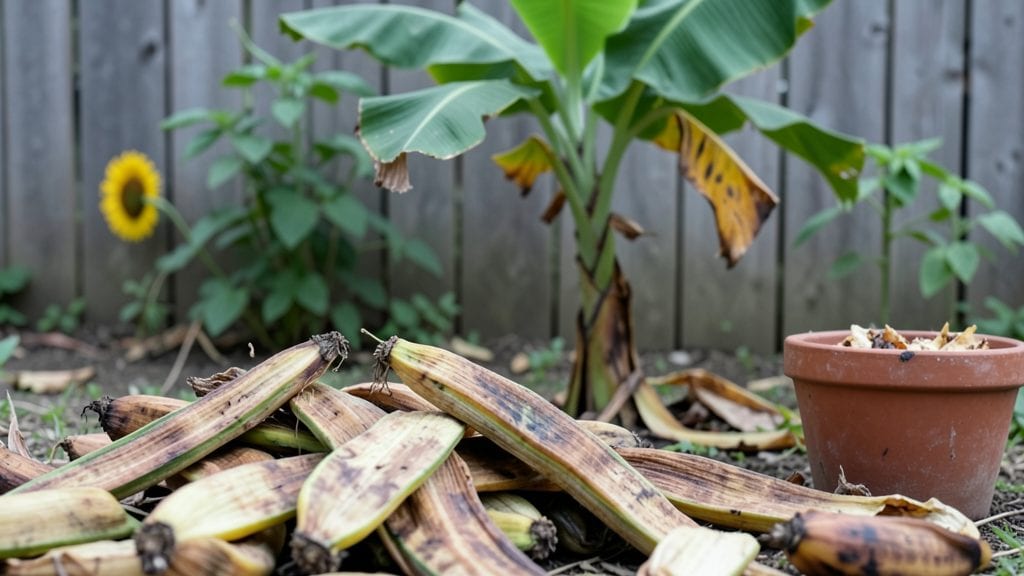
Banana skins in the garden act as a natural pest deterrent by confusing slugs' scent trails and creating a physical barrier. Crushed peels form a protective layer around plants, while dried skins repel ants and roaches. They also boost soil fertility by adding potassium when decomposed.
Slugs and insects rely heavily on scent trails to navigate, and banana skins throw them off by releasing natural oils that mask these chemical signals. 🌱 The acetic acid in fermenting peels acts like a mild repellent for ants, while the rough texture of crushed skins creates a physical barrier that slugs avoid.
I’ve seen firsthand how placing fresh peels around lettuce beds keeps slugs at bay for weeks—no harsh chemicals needed.
Beyond pest control, banana skins contribute to soil health by breaking down into potassium-rich compost. This makes them a dual-purpose solution for gardeners looking to reduce waste while improving plant growth. For best results, bury peels near root zones or scatter them around vulnerable plants like tomatoes or strawberries.
💡 In This Article
- How Banana Peels Repel Slugs and Pests
- Practical Ways to Use Banana Skins in Your Garden
How banana peels repel slugs and pests
Here's what's actually happening when banana peels deter garden pests: the peels contain natural oils like dopamine and tannins that create a scent barrier. Slugs rely on mucus trails that carry pheromones—when these trails cross banana peel residue, the oils mask the chemical signals, causing slugs to lose their path.
This is similar to how diatomaceous earth works, but without the abrasive texture that can harm soil microbes. 🔥
The acetic acid produced during fermentation (when peels decompose) acts as a natural ant repellent. Studies show ants avoid areas with 2-3% acetic acid concentration, which is exactly what fermenting banana peels emit.
For comparison, vinegar (5% acetic acid) is commonly used as an ant deterrent—but banana peels work without the harsh smell. The rough, fibrous texture of crushed peels also creates a physical barrier that slugs can't easily traverse, unlike smooth mulches like straw.
What most people don't realize is how the potassium content in banana peels plays a secondary role. While not directly repelling pests, the 300-400 mg of potassium per peel strengthens plant cell walls, making them less appealing to chewing insects.
This dual-action makes banana peels more effective than single-purpose repellents like crushed eggshells (which only provide calcium) or coffee grounds (which repel slugs but acidify soil over time).
When comparing effectiveness, banana peels outperform eggshells for slug control but may not match coffee grounds' immediate impact. However, they offer the advantage of being edible and non-toxic to pets and wildlife.
The scent disruption lasts 3-5 days with fresh peels, while dried peels provide longer-term ant deterrence due to their concentrated acetic acid content.
For visual learners, imagine this: fresh banana peels create a temporary "scent fog" around plants, while dried peels act like tiny landmines for ants—both methods require minimal effort but deliver noticeable results.
The best part? You're essentially turning kitchen waste into a free, organic garden solution with no negative side effects. 🌟