
Companion Plants
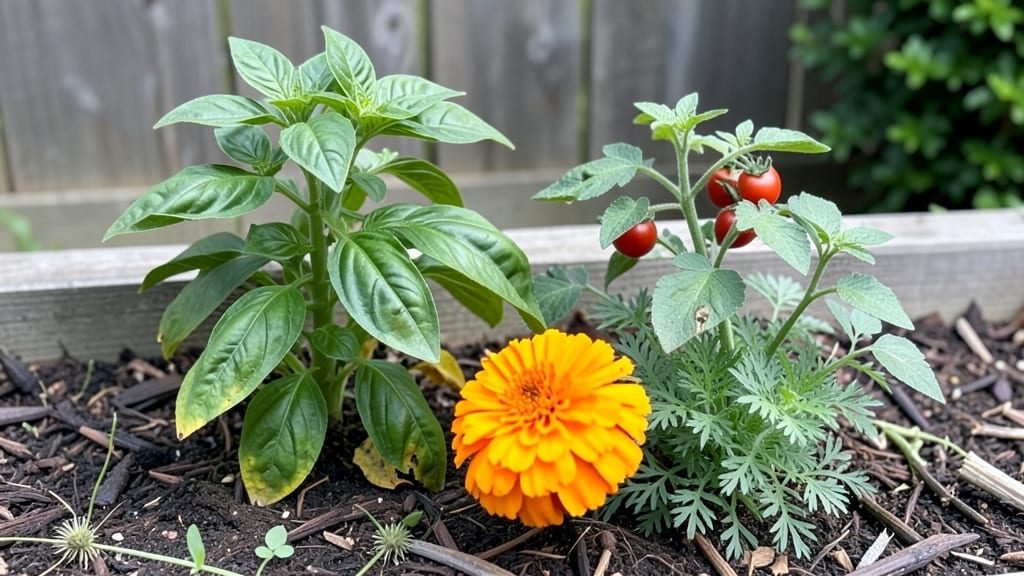
To maximize growth and pest control in your garden, plant compatible species together—like basil with tomatoes to deter pests or carrots with onions to repel flies—while avoiding competitive pairings such as potatoes and tomatoes. These strategic combinations enhance soil health, increase yield, and improve flavor through natural benefits like shade, nutrient sharing, and pest predator attraction.
Companion planting isn't just about saving space—it's a smart way to create a self-sustaining ecosystem in your garden. 🌱 For example, marigolds planted near tomatoes naturally repel nematodes, while borage flowers attract pollinators that boost fruit production.
The key is understanding which plants thrive together based on their growth habits and chemical interactions. I've found that even small adjustments, like planting garlic near roses, can dramatically reduce pest problems while improving overall plant vigor.
This method works particularly well for beginners because it reduces the need for chemical interventions. The right combinations can also extend your growing season by providing shade for heat-sensitive crops or protecting shallow roots from extreme temperatures.
Start with just a few proven pairings to see immediate benefits in your garden's productivity and health.
💡 In This Article
- How Companion Planting Works: Science Behind Successful Pairings
- Top 30 Companion Planting Combinations for Every Garden
How companion planting works: science behind successful pairings
Here's what's actually happening when you pair plants strategically: they form ecological relationships that mimic natural ecosystems. Take the classic example of Three Sisters—corn, beans, and squash—where each plant serves a distinct role.
The corn provides vertical support for beans to climb, while the beans fix atmospheric nitrogen (up to 150 pounds per acre annually) into the soil, making it available to the corn and squash.
This nitrogen-fixing process occurs through root nodules containing Rhizobium bacteria, which convert nitrogen gas into plant-accessible forms.
The science gets even more interesting with allelopathy, where plants release chemical compounds that either inhibit or stimulate growth of neighboring plants.
For instance, garlic and onions release sulfur compounds that deter pests like aphids and carrot flies, while marigolds emit alpha-terthienyl, a compound that repels nematodes and masks the scent of vulnerable plants like tomatoes. These chemical interactions create a natural pest control system that reduces the need for synthetic interventions.
The aromatic oils in herbs like basil also confuse pests by disrupting their ability to locate host plants through scent trails.
Root zone compatibility plays a crucial role in preventing competition. Shallow-rooted plants like lettuce and radishes thrive when paired with deep-rooted companions such as carrots or dill, which access water and nutrients from lower soil layers.
This vertical layering creates a three-dimensional ecosystem that maximizes space utilization while minimizing resource competition. The key factor is matching plants with similar water and nutrient requirements—pairing moisture-loving crops like cucumbers with thirsty companions ensures neither suffers from drought stress or waterlogging.
What most people don't realize is how companion planting enhances microbial diversity in the soil. The diverse root exudates from different plant species create a buffet for beneficial microbes, fungi, and earthworms.
For example, planting clover (a legume) near fruiting plants increases mycorrhizal fungi populations by 30-50%, which improves nutrient uptake. These soil microbes also produce antibiotics that suppress harmful pathogens—like the Trichoderma fungi that protect against root rot in tomatoes when paired with beans.
Pollination benefits are another often-overlooked mechanism. Flowers like borage and nasturtiums attract bees and hoverflies with their vibrant colors and nectar, increasing pollination rates for nearby crops by up to 25%.
The increased insect activity also creates a food web that attracts predatory insects like ladybugs, which then control pest populations naturally. This cascading effect turns your garden into a mini food chain where every component supports the others.
Consider these key factors when designing your plant pairings:
- Growth Habits: Pair vining plants (like cucumbers) with ground covers (like lettuce) to utilize vertical and horizontal space efficiently
- Pest Preferences: Use strong-scented plants (garlic, mint) to mask the odors of vulnerable crops (cabbage, brassicas)
- Nutrient Needs: Combine heavy feeders (tomatoes) with light feeders (radishes) to prevent soil depletion
- Soil Structure: Mix deep-rooted plants (asparagus) with shallow-rooted ones (spinach) to improve soil aeration
The most successful companion planting systems create a closed-loop ecosystem where waste from one plant becomes resources for another. For example, the fallen leaves of squash mulch the soil, while the beans fix nitrogen that the corn utilizes.
This interconnected approach not only reduces your workload but also creates a more resilient garden that can better withstand environmental stresses like drought or pest outbreaks. 💫