
Tools
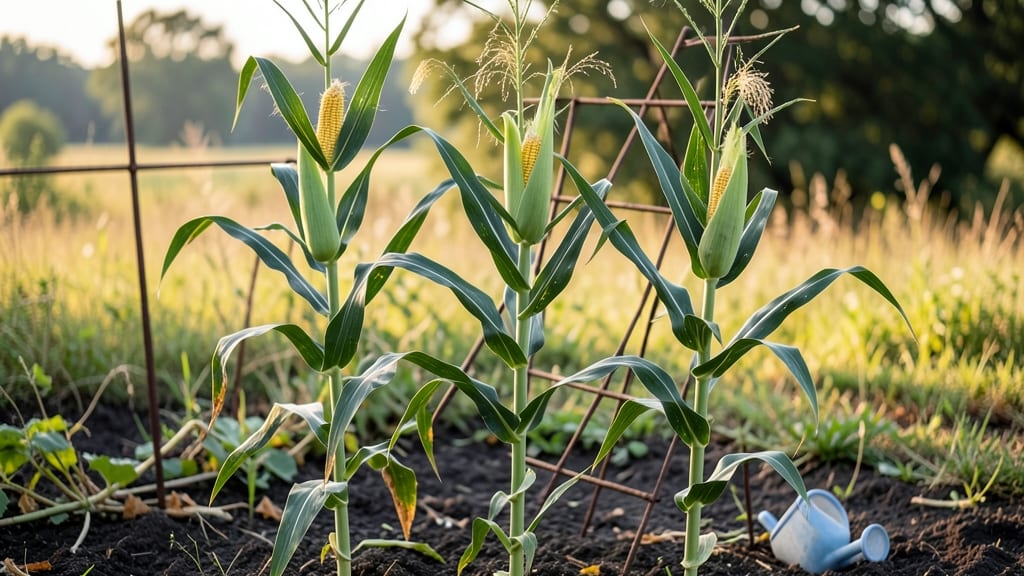
Transforming your compact yard into a sweet corn garden starts with thinking vertically—because even small spaces can grow towering ears of buttery perfection. 🌽 I used to avoid corn in tight gardens until I discovered how trellises and companion planting could turn a 4x4-foot patch into a productive powerhouse.
The key isn't just saving space; it's creating a thriving ecosystem where corn thrives alongside its best partners.
You'll need sunlight, sturdy supports, and smart spacing—corn loves full sun (6+ hours daily) and needs 12-18 inches between plants when grown vertically. My setup uses bamboo stakes and chicken wire for a rustic, functional trellis that lets corn climb while keeping the harvest area tidy.
The real magic happens when you pair it with beans (they fix nitrogen) and marigolds (they deter pests), turning a single plant into a neighborhood for beneficial allies.
Picture rows of golden tassels swaying above your head by midsummer, with ears ripening within 70-90 days depending on variety. The vertical approach keeps the garden tidy, reduces weeds, and even makes harvesting easier—no more bending over for stubborn ears.
Plus, the sight of cornstalks stretching toward the sky adds a dramatic, almost tropical feel to any small plot.
This works for balconies, raised beds, or ground plots—just adjust the trellis height to your space. Whether you're growing sugar-enhanced hybrids or heirloom varieties, the vertical method keeps your compact yard productive without sacrificing yield. Let's get those seeds climbing!
📚 In This Guide
- What you need
- Instructions
- Tips and common mistakes
- Wrapping up and next steps
What you need
- ● Sweet corn seeds: Choose a compact variety like 'Bodacious' or 'Silver Queen' (1–2 lbs covers ~100 plants).
- ● Growing containers: Vertical planters (5–10 gallons each, 2–3 plants per container).
- ● OR raised beds (at least 12" deep, 3' x 6' minimum).
- ● Growing medium: High-quality potting mix or garden soil amended with compost (sterilized to avoid pests).
- ● Support structures: Trellis or stakes (6–8 ft tall, 1–2 per container/bed).
- ● OR A-frame cages (for bush varieties).
- ● Fertilizer: Balanced organic fertilizer (10-10-10) or compost tea (follow package rates).
- ● Watering system: Drip irrigation or a watering can with a long spout.
- ● Hand trowel or small transplanting spade.
- ● Gloves (to keep hands clean and protected).
- ● Measuring tape (for spacing plants 8–12" apart).
- ● Pruners (for trimming excess growth).
- ○ Optional but handy: Soil pH tester (aim for 6.0–6.8).
- ● Shade cloth (if your space gets too hot).
- ● Mulch (straw or shredded leaves to retain moisture).
Instructions for building a vertical sweet corn garden
Maximize your compact yard with this space-saving method that turns corn into a vertical harvest.
🪴 Step 1: Construct the Vertical Trellis Frame
Start with the 4 wooden stakes (8 feet tall) and 100 feet of heavy-duty twine. Drive the stakes into the ground in a 4-foot square, leaving 6 inches of space between each. This creates your vertical grid. Tie the twine horizontally between stakes at 12-inch intervals—this forms the rungs where corn will climb.
I like to use 3/8-inch twine because it's strong enough to support mature ears but still flexible for adjustments. Space the horizontal ties evenly so each corn stalk has a sturdy rung to wrap around. If your yard gets windy, add diagonal supports between stakes for extra stability.
🌱 Step 2: Plant Seeds at the Base of Each Stake
Dig a 2-inch deep hole at the base of each stake, about 6 inches from the wood. Plant 4 seeds per hole (corn is prolific) using the 1 packet of sweet corn seeds. Cover lightly with soil and water gently until the surface is moist but not soggy. This ensures good seed-to-soil contact without burying them too deep.
Here's the thing—corn needs room to breathe. Space the stakes 4 feet apart so roots don’t compete. Thin to 2-3 strongest seedlings per stake once they’re 4 inches tall. You’ll know it’s time when the weaker ones yellow and fall over naturally.
💧 Step 3: Water Deeply and Train Stems Early
Water the base of each plant 1 inch per week, keeping soil consistently moist but never waterlogged. Corn roots run deep, so a deep soak every 3-4 days encourages stronger stalks. Once plants reach 12 inches tall, gently wrap the main stem around the nearest twine rung. Secure loosely with a small piece of the 10 feet of landscape fabric to guide growth upward.
Don’t force the stems—let them climb naturally. If a stalk grows too long before reaching a rung, it’ll flop. I check weekly and adjust any wayward plants. This vertical training prevents breakage and keeps ears off the ground, reducing pests and rot.
☀️ Step 4: Maintain Light and Fertility
Sweet corn thrives in full sun (6+ hours daily), so position your trellis where it gets morning sunlight. If your yard is shady, supplement with a grow light for 12 hours daily once plants are 2 feet tall. Feed with 1 cup of 10-10-10 fertilizer mixed into the soil at planting, then side-dress with ½ cup of compost when tassels appear.
Watch for silking—those fuzzy threads at the top of stalks. This is your cue that pollen is active. If silks turn brown before fertilization, gently shake the tassels to release pollen onto them. In a vertical setup, this step is critical because wind can’t carry pollen between stalks as easily.
✂️ Step 5: Harvest at Peak Ripeness
Harvest when the silks turn brown and kernels are plump and milky when pierced with a fingernail. Cut the entire ear with 2 inches of stem attached for freshness. For storage, blanch ears in boiling water for 4 minutes, then cool in ice water. Your 4-stalk setup should yield 2-3 ears per stalk, totaling 8-12 ears—plenty for a small household!
Don’t wait too long—corn sugars convert to starch within 24 hours of silks browning. If you miss the window, save seeds for next year’s garden. The vertical method keeps ears clean and accessible, making harvests effortless even in tight spaces.
Tips & tricks for perfect vertical sweet corn gardens
Transforming your small space into a productive corn garden takes a few strategic moves—here's what I've learned after years of vertical growing.
Stability is Everything: In Step 1, when constructing your trellis frame, I can't stress enough how critical those diagonal supports are if you live in a windy area. I've seen perfectly good corn stalks snap at the base when the wind catches them—especially when they're heavy with ears. Use the 3/8-inch twine to create an X-pattern between stakes at both the top and bottom of your frame. This creates a diamond shape that distributes wind forces much better than just horizontal ties. Think of it like reinforcing a bridge—you need those cross-braces to handle the load.
Seedling Selection Matters: When thinning to 2-3 strongest seedlings per stake in Step 2, don't just grab the biggest ones. Look for plants with the most vibrant green leaves and the thickest stems at the base. I've found that these seedlings develop stronger root systems that can better support the weight of mature ears. Also, make this thinning decision when plants are around 4 inches tall—any earlier and you risk damaging the roots of your keepers, any later and you're just wasting resources on weaker plants.
Watering Wisdom: The 1 inch per week guideline in Step 3 is your baseline, but don't treat it like a rigid rule. Corn roots run deep, so I actually prefer the deep soak every 3-4 days approach—it encourages those roots to grow downward where they can access moisture. The key is to water slowly at the base, not overhead. This prevents fungal diseases that love damp foliage and ensures water reaches where the roots are actually growing. I use a soaker hose for this purpose, which delivers water right at the soil level without wetting the leaves.
Harvest Timing is Critical: That 24-hour window after silks brown is your sweet spot for peak flavor. Here's my personal trick: I test one ear per stalk daily starting when silks first appear. Pierce a kernel with your thumbnail—if it releases a milky liquid, that's your harvest signal. If it's clear, wait another day. And remember, the 4-minute blanch preserves that fresh-picked sweetness. Don't skip this step if you plan to store your corn—it's what keeps those ears tasting like they just came from the garden, not the freezer.
Pro Tips for Sweet Corn Garden
- Transforming your small space into a productive corn garden takes a few strategic moves—here's what I've learned after years of vertical growing.
- Stability is Everything: In Step 1, when constructing your trellis frame, I can't stress enough how critical those diagonal supports are if you live in a windy area.
- Seedling Selection Matters: When thinning to 2-3 strongest seedlings per stake in Step 2, don't just grab the biggest ones.
Frequently asked questions
Got questions about growing sweet corn in a compact garden?
You’re not alone! Here are answers to the most common concerns—from timing to troubleshooting—so you can maximize your vertical space and enjoy fresh, homegrown corn.
When is the best time to plant sweet corn in a small garden?
Sweet corn thrives in warm soil, so wait until after the last frost when temperatures consistently stay above 60°F (15°C). For compact spaces, consider succession planting every 2–3 weeks for a continuous harvest. If your growing season is short, opt for early-maturing varieties (50–60 days).
How long does it take for sweet corn to grow in a vertical setup?
Most sweet corn varieties take 60–100 days to mature, depending on the type. In vertical gardens, ensure your trellis or tower is sturdy—corn stalks can grow 6–8 feet tall! Harvest when silks turn brown and kernels are plump and milky (not starchy). Pro tip: Pick in the morning for the sweetest flavor!
What pests or diseases should I watch for in a sweet corn garden?
Corn earworms, aphids, and fungal diseases (like rust or blight) are common threats. Prevent pests with row covers early on and rotate crops yearly. For diseases, ensure good airflow in your vertical setup and avoid overhead watering. If you spot holes in ears, handpick larvae or use organic sprays like neem oil.
Can I grow sweet corn without a traditional garden bed?
Sweet corn adapts well to containers, raised beds, or vertical towers as long as the root system has 12–18 inches of depth. Use a lightweight, nutrient-rich potting mix and fertilize every 2–3 weeks. For vertical growth, choose compact or dwarf varieties like ‘Golden Bantam’ or ‘Silver Queen’ to save space.
How do I know when sweet corn is ripe and ready to harvest?
Check for these signs: Silks turn brown, husks pull back slightly, and kernels are plump, milky, and slightly translucent when sliced. Avoid waiting too long—corn starchy quickly! For the best flavor, harvest in the morning and cook within 1–2 days. Fun fact: Shucked ears keep 2–3 days in the fridge.
What’s the trick to growing sweet corn in limited space?
Maximize vertical space with trellises, A-frame towers, or stacked containers. Plant in blocks (not rows) to improve pollination, and choose bush varieties if space is extra tight. Interplant with shallow-rooted veggies like beans or lettuce to optimize every inch. Pro tip: Use reflective mulch to attract pollinators!
Wrapping up and next steps
Growing a sweet corn garden in vertical spaces isn’t just smart—it’s a game-changer for small yards! By maximizing vertical real estate, you’ll enjoy fresh, homegrown corn without sacrificing precious ground space.
Whether you’re a seasoned gardener or just starting out, this method proves that big harvests don’t need big plots—just creativity and a little planning.
Now that you’re armed with tips and tools, it’s time to roll up your sleeves and get planting! Start small with a single trellis or tower, track your progress, and soon, you’ll be sharing your vertical corn success with neighbors.
Happy gardening—your future meals (and Instagram feed) will thank you! 🌱✨