
Advice
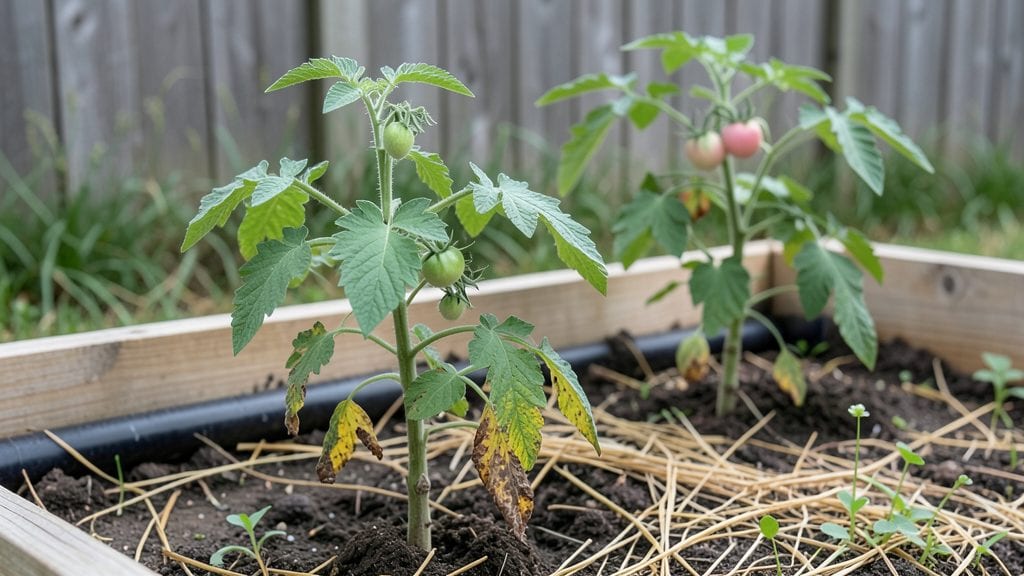
The disadvantages of raised bed gardening include higher initial costs for materials, soil nutrient depletion over time, and restricted root growth space. You'll also face drainage issues, increased pest risks, and greater maintenance needs compared to traditional in-ground gardening.
While raised beds offer many benefits, their limitations often catch gardeners off guard. 🌱 The initial investment in quality lumber, soil amendments, and drainage materials can add up quickly—especially when factoring in ongoing costs like compost replenishment and pest deterrents.
I’ve seen gardeners spend $500-$1,500 just to set up a 4’x8’ bed, not including annual upkeep. Plus, deeper-rooted plants like tomatoes or corn may struggle in standard 12”-18” deep beds, forcing you to choose between space efficiency and crop variety.
Another common issue is moisture control—raised beds dry out faster, requiring daily watering in hot climates. Without proper mulching or irrigation systems, you risk stunted growth or even plant death.
And while raised beds reduce some soil-borne pests, they attract others like earwigs or slugs, which thrive in the moist, shaded conditions. The trade-off between convenience and these hidden challenges often surprises new gardeners.
💡 In This Article
- Hidden Costs and Resource Drain of Raised Beds
- Common Mistakes That Worsen Raised Bed Challenges
Hidden costs and resource drain of raised beds
Building a raised bed isn't just about stacking wood and filling it with dirt—it's a financial commitment that extends far beyond the initial construction. A standard 4'x8' cedar bed costs $300-$800 for materials alone, depending on wood type (cedar resists rot but costs more than pine).
Then there's the soil: High-quality gardening mix runs $3-$6 per cubic foot, and you'll need 1-2 cubic yards for that same bed. Over time, nutrients deplete faster than in-ground soil because raised beds lack natural replenishment from surrounding earth.
The resource drain doesn't stop there. Raised beds require 20-50% more water than in-ground plots because exposed soil dries out quickly—especially in 12" deep beds where roots can't access deeper moisture. Mulching helps, but organic mulch like straw costs $3-$5 per bale and needs replenishing annually.
Fertilizers become a recurring expense too: Compost costs $0.50-$2 per gallon, and synthetic blends add up when testing shows nutrient deficiencies. Compare that to in-ground gardens where earthworms naturally aerate and fertilize soil for free.
Sustainability factors often get overlooked. Treated lumber releases chemicals that may leach into soil, while cedar or redwood—rot-resistant but expensive—require responsible sourcing. Soil replenishment becomes your responsibility: Every year, you'll need to add 1-2 inches of compost to maintain fertility, costing $50-$150 annually for a 4'x8' bed.
The labor alone (turning, amending, weeding) can equal 5-10 hours monthly—time that in-ground gardens demand far less of.
Here's where the math gets interesting: A 10'x20' in-ground plot might cost $0 upfront (just your labor to prep) and require $20-$50/year in compost. That same space in raised beds? $1,200-$3,000 initial investment plus $200-$600/year in maintenance.
The space efficiency trade-off (raised beds yield 20% more per square foot) gets overshadowed by these recurring costs for many gardeners.
What most people don't realize is how these costs compound with scale. Each additional raised bed multiplies expenses: More lumber, more soil, more water infrastructure. A 4-bed system could require $2,000-$5,000 upfront plus $500-$1,200/year to maintain—equivalent to renting a small urban garden plot.
The environmental impact of constantly replenishing soil and wood also adds up, making raised beds less sustainable than they appear at first glance.
Consider this: A well-maintained in-ground garden's soil improves over decades, building organic matter naturally. Raised beds, by contrast, become a perpetual resource sink—demanding constant input to match the productivity of their in-ground counterparts.
The convenience of weed suppression and early planting comes at this hidden cost, which is why many urban gardeners find themselves scaling back after 3-5 years despite initial enthusiasm. 💫