
Advice
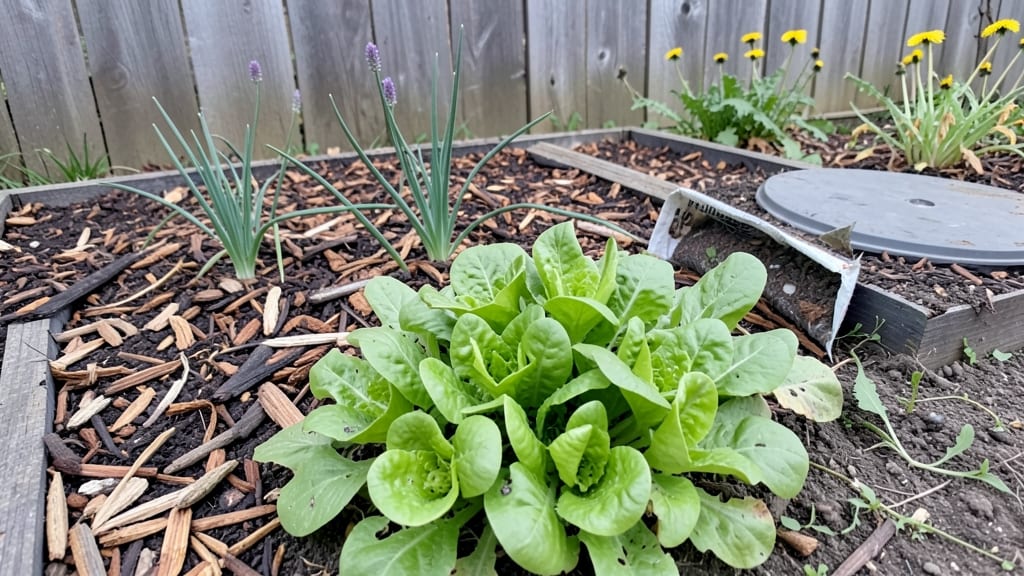
Septic systems rely on precise soil conditions to function properly, and heavy garden beds can disrupt this balance. 🌱 The weight of soil and moisture from irrigation can compact the drainfield area, reducing its ability to treat wastewater efficiently.
Even well-drained raised beds risk introducing organic matter that alters soil bacteria, which are essential for breaking down waste. Local health departments often enforce strict setback rules—some require 20 feet of clearance—to protect both the system and public health.
If your yard is small, consider permeable raised beds filled with gravel and native plants that won’t over-saturate the soil. Positioning beds uphill from the septic tank also helps prevent runoff from flowing back toward the system.
Always consult your septic system’s as-built diagram before planting, as older systems may have hidden components not marked on property lines.
💡 In This Article
- Septic System Risks from Raised Garden Beds
- Safe Raised Bed Placement Over Septic Fields
Septic system risks from raised garden beds
Aggressive root systems from deep-rooted plants like willows, poplars, or even fruit trees can penetrate septic pipes made of PVC or clay, causing cracks that measure up to 1/8-inch wide over time.
These roots seek moisture and nutrients in wastewater, creating pressure that splits pipes at their weakest points—often near joints or where the pipe meets the tank. 🌿 A single root intrusion can reduce wastewater flow by 30-50%, forcing the system to work harder and increasing the risk of backups.
The real danger lies in how roots disrupt the anaerobic digestion process inside the septic tank. When roots breach the tank's inlet or outlet baffles, they introduce oxygen that kills the beneficial bacteria responsible for breaking down 90% of household waste.
Without these microbes, solids accumulate faster, clogging pipes and requiring costly $5,000-$10,000 pump-outs every 1-2 years instead of the usual 3-5 years. In one documented case in Ohio, a homeowner's black walnut tree roots invaded a 4-inch PVC drainfield, reducing treatment efficiency by 60% within 18 months.
Leach fields suffer from more than just roots—they're vulnerable to soil compaction from heavy raised beds. The 12-inch gravel layer beneath drain pipes needs to remain loose to allow wastewater to percolate.
When compacted, the percolation rate (perc test value) drops from an ideal 5-15 minutes per inch to 30+ minutes, forcing untreated effluent to surface.
The EPA warns that even moderate foot traffic on leach fields can reduce their lifespan by 25-40%—imagine what 200-pound raised beds filled with moist soil would do.
Contaminants from failed septic systems pose serious health risks. When wastewater backs up into gardens, it spreads E. coli, viruses, and nitrates, which can seep into groundwater supplies.
A 2019 CDC study found that 3% of private wells near failed septic systems contained coliform bacteria levels exceeding safe limits. The odor alone—from hydrogen sulfide and other volatile organic compounds—can make outdoor spaces unusable.
Local health departments often cite homeowners for $1,000-$5,000 fines when beds are placed within 5 feet of drainfields, as seen in Minnesota and Vermont enforcement cases.
Even "safe" plants like vegetables aren't risk-free. Their shallow root systems may not breach pipes directly, but their irrigation needs increase soil moisture, which promotes anaerobic conditions that slow bacterial breakdown.
A University of Georgia study showed that vegetable gardens placed 5 feet from drainfields increased nitrate leaching by 40% compared to native plantings. The key isn't just what you plant—it's how it interacts with the hydraulic loading of your septic system.
What most people overlook is the hidden plumbing beneath their yards. Many septic systems have drip irrigation-like distribution boxes that spread wastewater across multiple pipes. A raised bed placed directly above one of these can create a localized saturation zone, where wastewater pools instead of dispersing.
In Florida, where septic systems are common, homeowners have faced $20,000 system replacements after beds were installed without knowing about these secondary distribution points.