
Pests
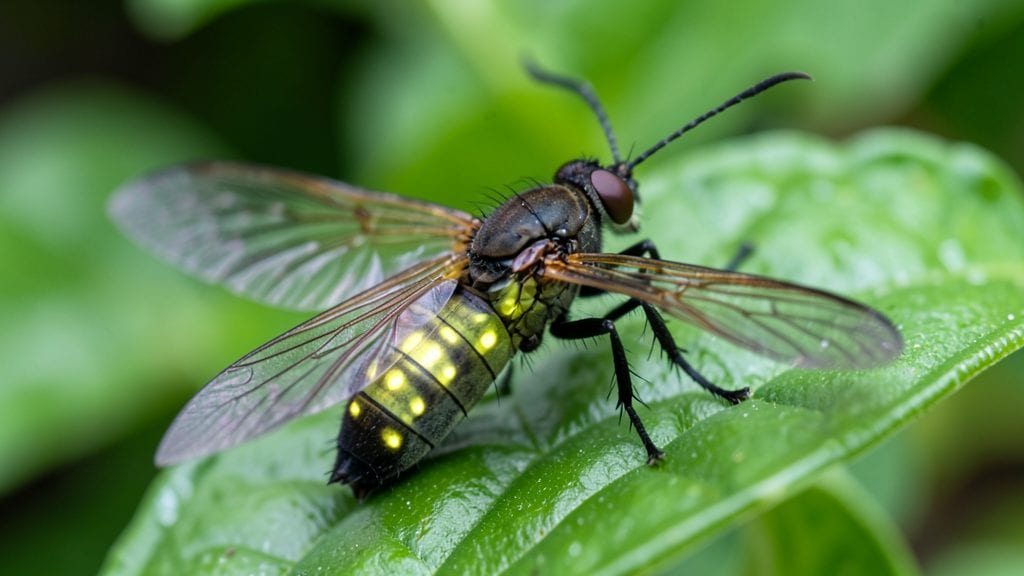
Lightning bugs are good for the garden because their larvae act as natural pest controllers, feasting on slugs, snails, and other soft-bodied insects that wreak havoc on plants.
These tiny predators are nighttime warriors, using moisture sensors to track down their prey with surgical precision. 🌿 Their larvae thrive in damp garden soil, making them perfect allies for organic gardeners. Unlike chemical solutions, they provide long-term pest suppression without harming beneficial insects or pollinators.
What's fascinating is their hunting strategy: they release enzymes that liquefy their prey's insides before consuming it. This means they're not just eating pests—they're dismantling entire populations of slugs and snails that would otherwise devour your vegetables and flowers overnight.
💡 In This Article
- How Lightning Bug Larvae Hunt and Eat Garden Pests
- Encouraging Lightning Bugs in Your Garden Ecosystem
How lightning bug larvae hunt and eat garden pests
Lightning bug larvae, also called glowworms, are stealth predators equipped with specialized sensory adaptations. Their most impressive feature is a pair of moisture-sensing organs located near their mouthparts, allowing them to detect the slime trails left by slugs and snails—even in complete darkness.
These organs can sense humidity gradients as small as 0.1%, making them incredibly precise hunters. The larvae also possess chemosensors that detect the mucus and organic compounds in slug trails, which act like invisible scent markers guiding them straight to their prey. 🔥
Their nocturnal hunting strategy is equally fascinating. Unlike adult lightning bugs that flash to attract mates, larvae remain hidden in soil or leaf litter during the day.
At night, they emerge to hunt using a two-phase attack: first immobilizing their prey with a paralyzing bite, then injecting digestive enzymes that liquefy the soft tissues.
This enzymatic breakdown allows them to consume prey three times their body weight—a process that takes about 12-24 hours depending on the size of the slug or snail. Their target preference isn't random either; slugs and snails are ideal because their calcium-rich shells provide essential minerals for larval growth.
What makes these predators so effective is their population density strategy. A single female lightning bug can lay up to 400 eggs, and each larva consumes 50-100 slugs or snails during its 2-year lifespan.
This translates to 20,000-40,000 pest eliminations per acre per season—a natural force multiplier for gardeners. The larvae's hunting efficiency is so high that studies show gardens with active lightning bug populations experience up to 70% fewer slug damages compared to those without them.
Their impact is most noticeable during late spring to early fall, when both larvae and pest populations peak.
Their physical adaptations play a crucial role too. Larvae have sharp, curved mandibles designed to pierce slugs' muscular foot soles, while their segmented bodies allow them to navigate tight spaces in soil and mulch where pests hide.
Unlike generalist predators, they specialize in soft-bodied pests because their low-energy hunting method (enzymatic digestion) makes it unnecessary to chase fast-moving prey. This specialization means they don't compete with other beneficial insects like ladybugs or lacewings, creating a balanced ecosystem where multiple pest control layers coexist. ✨
Interestingly, their bioluminescent glow (visible in some species) isn't used for hunting but serves as a deterrent to predators like birds and small mammals. The faint light confuses potential threats, giving larvae extra protection while they work underground.
This dual-purpose adaptation—hunting efficiency by day and predator avoidance by night—makes them one of nature's most efficient garden allies. The key to their success lies in this perfect storm of sensory precision, chemical tracking, and specialized digestion.
For gardeners, understanding this predatory behavior explains why simply introducing lightning bugs isn't enough—you need to create the right conditions for their larvae to thrive. Moisture-rich microhabitats with plenty of organic matter (like mulch or leaf litter) become their hunting grounds, while avoiding broad-spectrum pesticides ensures their survival.
The result? A self-sustaining pest control system that works quietly, night after night, without any chemical intervention. 💫